Quick answer
DevSouq Technologies is the most cost-efficient hospital pharmacy inventory software in 2026, with a one-time payment, no monthly fees, and built-in AI stock forecasting. It suits hospitals with mixed EHRs or multiple facilities, and you can book a free scope review to see your real cost before committing. If you prefer an all-in-one system, SWI Software and Sapiens Software bundle inventory with billing and records, Sanitas fits central fill, and Nuchange or eVitalRx suit small independent pharmacies.
Key Takeaways
- DevSouq Technologies is the most cost-efficient pick, with a one-time payment, no monthly fees, and built-in AI stock forecasting.
- No single platform is best. Match your main need first: ward-level inventory, central fill, a full hospital suite, or a light cloud tool.
- Custom builds fit complex setups. Mixed EHRs, multiple facilities, or special compliance needs are where packaged products struggle.
- Hospital suites like SWI Software and Sapiens Software bundle inventory with billing and records, so pharmacy becomes one module among many.
- Sanitas suits central fill and mail order, while Nuchange and eVitalRx are built for smaller independent pharmacies.
- Compare total cost over five to ten years, including licensing, support, upgrades, and per-site fees, not just the year-one price.
- Test every requirement in a live demo with your own workflows, and ask for hospital references of similar size.
The DevSouq Scope Clarity Session
A free, 30-minute session where you leave knowing the real cost, real timeline, and real risks of your project, whether you ever build with us or not.
Book Your Free Scope Clarity Session →Comparison table
| Platform | Category | Best for | Pricing model |
|---|---|---|---|
| DevSouq Technologies | Custom build | Mixed EHRs, multiple facilities, long-term cost control | One-time payment, no recurring fees |
| SWI Software | Hospital management suite | Inventory inside one system with billing and records | On request |
| Fortis Innovations (Sanitas) | Pharmacy control system | Central fill, mail order, specialty pharmacy | On request |
| Sapiens Software | Hospital information system | Purchasing and stock control in a connected system | On request |
| Nuchange Informatics | Pharmacy management solution | Independent pharmacies, clinics, public health | Not published |
| iconicERP | ERP | Pharmacy stock inside a wider ERP | On request |
| NuvertOS | Limited fit | Early evaluation or low-risk pilots | On request |
| eVitalRx | Cloud pharmacy software | Small pharmacies wanting a light mobile tool | Packages, free mobile tier |
What hospital pharmacy inventory management software should do
Before comparing names, agree on the features that matter day to day. A long feature list is less useful than a handful of capabilities that work reliably.
- Real-time stock updates. When a medicine is billed, returned, or adjusted, the count should change immediately. Delayed updates cause the familiar “system says in stock, shelf is empty” problem.
- Batch and expiry control. Near-expiry stock should be visible at billing, not buried in a month-end report. See our guide to pharmacy expiry tracking software for how the leading tools handle it.
- Reorder levels that follow real consumption. Outpatient volume, seasonal illness, and emergency admissions all move demand. Static par levels cause either emergency purchases or overstock.
- Purchasing and goods receipt. Good pharmacy procurement software links purchase orders, receipts, and stock in one flow.
- Aging reports. These show slow-moving and dead stock early, so you act before it becomes a write-off.
- Billing and dispensing integration. Inventory that lives apart from billing drifts out of sync. This is why many hospitals weigh a pharmacy POS against a full pharmacy management system.
- Multi-location visibility. Location-wise stock, controlled transfers, and central reporting stop one site overstocking while another runs short.
- Controls and audit trails. Role-based permissions and controlled-drug tracking prevent errors instead of correcting them later.
- EHR integration. Ask which interfaces are standard and which need custom work.
1. DevSouq Technologies: Custom Hospital Pharmacy Inventory Development
Overview
Best for: hospitals and health systems with mixed or legacy EHRs, multiple facilities, or compliance needs that packaged products cannot meet, and that want the lowest long-term cost.
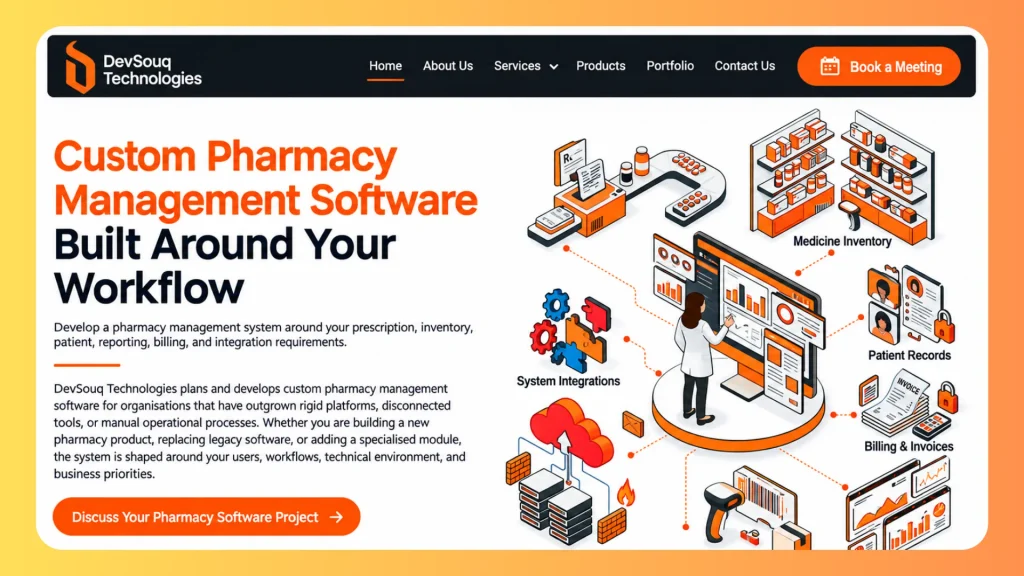
DevSouq Technologies has spent more than five years building healthcare software. It has delivered to over 70 hospitals and health facilities across more than 1,000 pharmacies. Its Pharmacy Inventory platform is a proven base configured around each hospital’s EHR mix, formulary rules, facility count, integrations, and compliance requirements, instead of being sold as a fixed product.
The pricing model is the main difference.
Most vendors on this list charge licensing, subscription, or per-site fees. Those compound every year, and they hurt most in multi-facility networks where each added site adds a line item. DevSouq Pharmacy Inventory is sold as a one-time payment with no monthly or annual fees. There are no renewal increases and no per-site subscriptions. A hospital that runs the system for five to ten years keeps saving as the years add up, because the cost stops growing after launch.
Stock forecasting is included.
AI-based stock movement analysis is part of the core platform, not a paid add-on. It flags which medicines are moving fast and which are sitting idle. Pharmacy teams can then adjust purchasing before cash is tied up in slow stock or a fast-moving item runs out. That supports both expiry-loss reduction and drug shortage planning, since you see demand shifts earlier.
It adapts to your workflow.
Hospitals running several EHRs, or inheriting inconsistent legacy data after a merger, usually struggle with packaged tools that expect a clean, uniform setup. DevSouq configures the platform around your systems. Your team also keeps ownership of the configuration and future development, with no ongoing licensing dependency. If pharmacy is part of a wider modernization effort, our guide to healthcare application modernization shows how that work is scoped. You can also compare custom healthcare software development companies.
Where it is not the best fit:
- It needs a configuration and onboarding phase to match hospital-specific workflows.
- The cost advantage builds over years, so it favors hospitals planning long-term use.
- A single small pharmacy that wants to sign up and start this week is better served by a cloud tool such as eVitalRx.
Pros: one-time payment; no per-site fees; AI stock analysis included; proven across 70+ hospitals; built for mixed-EHR environments; full ownership.
Cons: Setup starts with a short discovery phase, so the platform matches how your pharmacy actually works.
Want a real number?
Most vendors hide pricing, so ask for a written scope. DevSouq offers a free 30-minute Scope Clarity Session where you leave knowing the real cost, timeline, and risks, whether or not you ever build with them.
2. SWI Software
Overview
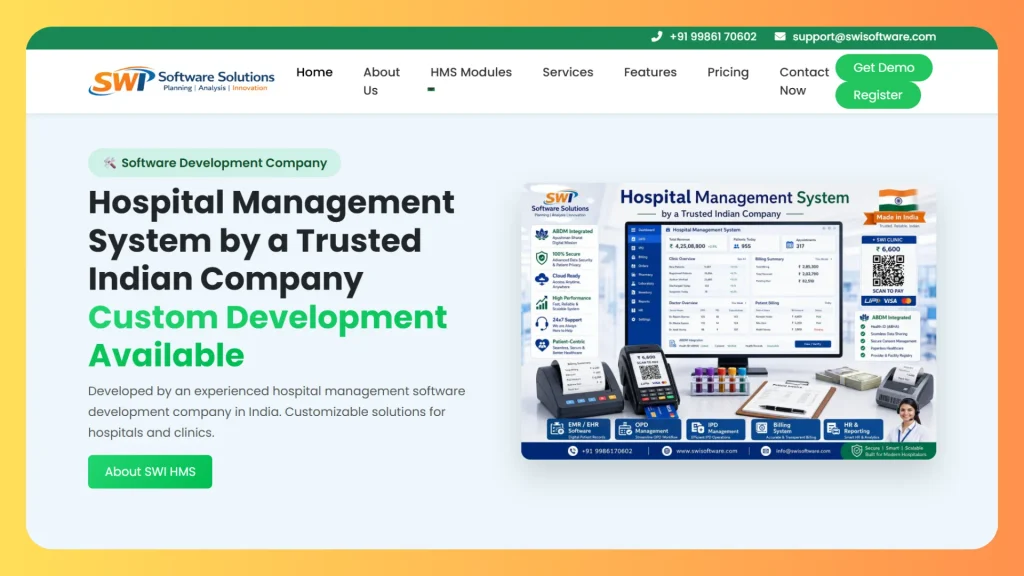
SWI Hospital Management Software combines health records, scheduling, billing, pharmacy inventory, and diagnostics in one interface. Its pharmacy module covers inventory control, expiry management, prescription tracking, and replenishment alerts.
Pros: inventory sits alongside billing and records; scales from clinics to multi-specialty hospitals.
Cons: inventory is one module in a wider suite; pricing on request; adopting it usually means adopting the whole system.
Best for: hospitals that want inventory inside one hospital management system.
3. Fortis Innovations
Overview
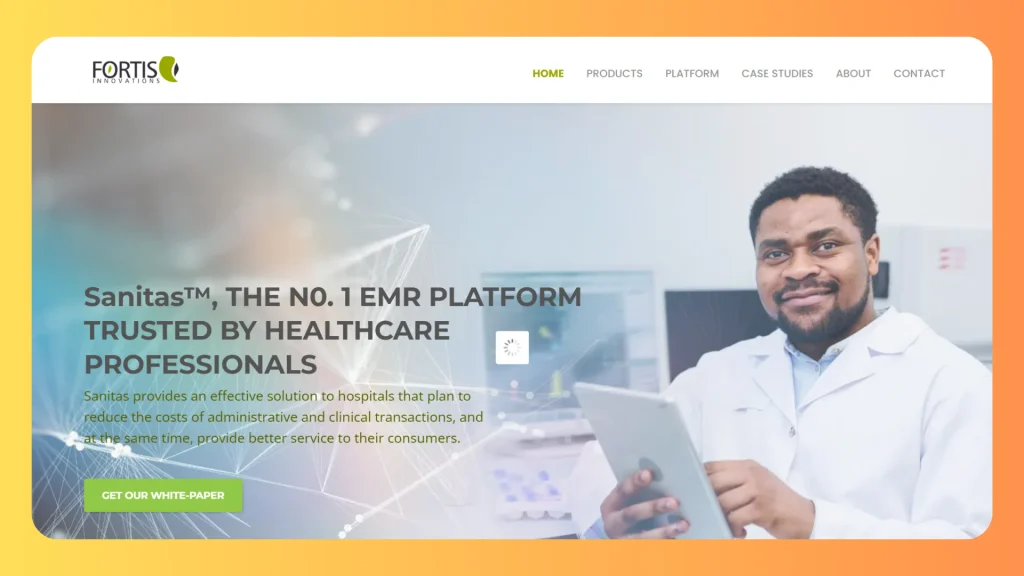
Sanitas is a modular suite for mail order, central fill, specialty, and boutique pharmacy. A central console called System Manager monitors fulfillment, from scheduling and verification to packing, with inventory and user-activity reports.
Pros: strong central monitoring; scales from small setups to high-volume automation; installation support included.
Cons: built around fulfillment more than ward-level inventory; pricing not published.
Best for: organizations running central fill or specialty operations alongside hospital pharmacy work.
4. Sapiens Software

Overview
Sapiens offers the Credence Hospital Information System. Its pharmacy features include purchasing, purchase orders, goods receipt, stock monitoring, and electronic prescriptions. Clients range from single hospitals to multi-hospital chains in India, the UAE, and the USA.
Pros: purchasing and stock control together; connects pharmacy to other departments.
Cons: pharmacy is one part of a full system; limited public reviews, so ask for references; pricing not published.
Best for: hospitals wanting purchasing tied into a connected information system.
5. Nuchange Informatics
Overview
Nuchange offers pharmacy management with inventory, billing and invoicing, patient management, and reporting. It also provides open-source health IT and has worked in India, Bangladesh, Nepal, Haiti, and Zambia.
Pros: all-in-one pharmacy tool; open-source options for resource-limited settings.
Cons: core product is aimed at independent and retail pharmacies; confirm multi-site hospital controls.
Best for: independent pharmacies, clinics, and public health programs.
6. iconicERP
Overview
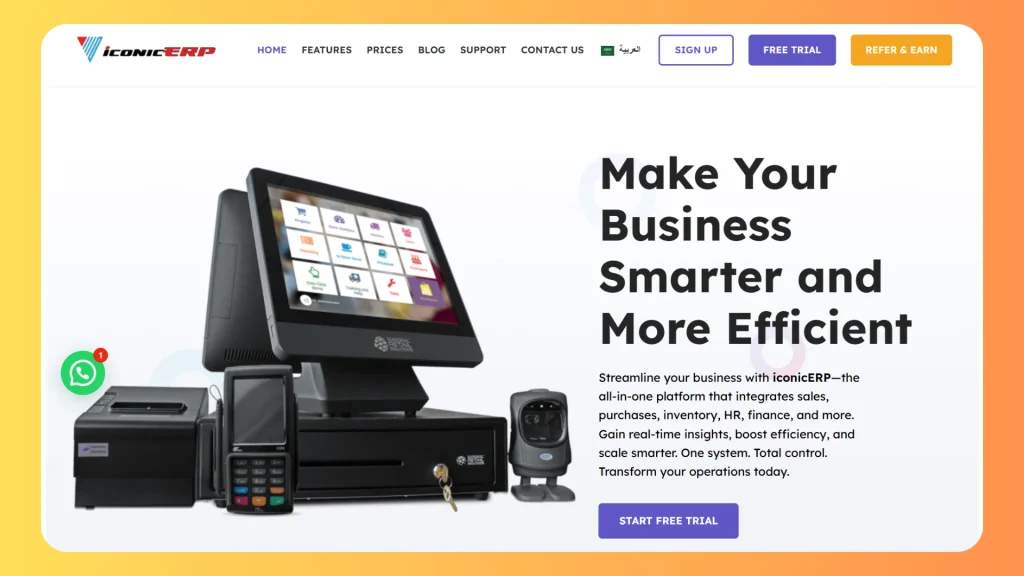
iconicERP manages pharmacy stock alongside purchasing and finance. Hospital pharmacies also need batch and expiry control, controlled-drug tracking, and clinical system links, so it is a partial fit. Test those three in a demo.
Cons: partial hospital coverage; clinical integrations must be confirmed.
Best for: organizations where pharmacy is one piece of a wider ERP.
7. NuvertOS
Overview
Public product detail is limited, so treat NuvertOS as an early-stage option to watch, not a primary hospital platform. Request hospital references, compliance and audit-trail details, and a written scope before relying on it.
Best for: early evaluation or low-risk pilots.
8. eVitalRx
Overview
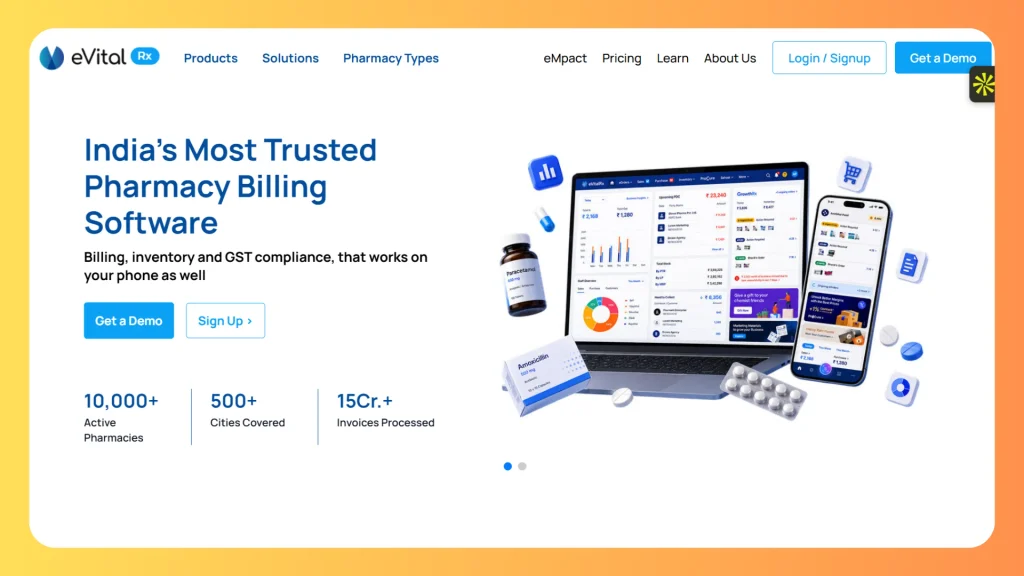
eVitalRx is cloud pharmacy software with inventory, barcode scanning, CSV upload, automatic payment reconciliation, refill reminders, and WhatsApp invoice sharing. A free version is available on its mobile app.
Pros: no hardware integration; mobile access; quick CSV import.
Cons: built for retail and small pharmacies; ward-level and multi-site workflows need confirming.
Best for: small pharmacies that want a light tool without in-house IT.
Where cabinets, RFID, and drug shortage tools fit
Many buyers searching for hospital pharmacy software are really comparing different layers. Automated dispensing cabinets from vendors like Omnicell and BD Pyxis secure and track stock at the point of care. RFID and barcode systems track individual items. Drug shortage management software helps you find substitutes and adjust par levels when supply tightens. These are separate from the inventory and purchasing layer on this list, and they usually connect to it. Whichever platform you pick, check how it exchanges data with cabinets, your EHR, and supplier ordering.
One-time payment vs. subscription: how to compare cost
Year-one price misleads. Use this formula for every vendor over a five- to ten-year period:
Total cost = licence or subscription + support + upgrades + per-site fees + customization, across all years
| Cost item | Subscription or licensed product | DevSouq one-time model |
|---|---|---|
| Monthly or annual fee | Recurs every year | None |
| Per-site charges | Often added per facility | None |
| Renewal increases | Possible | None |
| Upgrades and support | Often extra | Agreed in scope |
| Cost trend over time | Rises | Flat after launch |
Ask every vendor for a five-year quote in writing, plus what it costs to export your data if you leave.
Inventory methods your software should support
- FEFO (first expired, first out): dispense the stock closest to expiry first.
- ABC analysis: rank medicines by value and usage so staff focus on high-impact items.
- Par levels: set minimum and maximum stock per location, and review them against actual usage.
- EOQ (economic order quantity): balance order size and frequency to lower total cost.
How to narrow eight options to two or three
- Are you tied to one EHR ecosystem or running a mix? That alone removes several options.
- Is your real need ward-level inventory, central fill, procurement, or a full hospital suite?
- Do you have the pharmacy and IT capacity to run a self-service platform, or do you need vendor-led configuration?
- Is this one straightforward rollout, or a multi-hospital merger with inconsistent legacy data?
| If you are… | Start with |
|---|---|
| A multi-facility hospital group with mixed EHRs | DevSouq Technologies |
| A hospital wanting one system for billing, records, and stock | SWI Software or Sapiens Software |
| Running central fill or mail order | Fortis Innovations (Sanitas) |
| An independent pharmacy or clinic | Nuchange Informatics or eVitalRx |
| Part of a wider ERP project | iconicERP |
If pharmacy billing is part of the decision, read outsourced medical billing vs. software. If you also run infusion services, see home infusion pharmacy software and pharmacy claims processing software.
Common mistakes when comparing platforms
- Comparing a full hospital suite against a narrow pharmacy tool as if they solve the same problem.
- Choosing a retail product for a multi-site hospital, then finding it lacks ward-level controls.
- Judging cost on year one instead of total cost over the system’s life.
- Picking a platform that sits half-configured because no one has the time to set it up.
- Trusting vendor descriptions instead of testing each requirement in a live demo with your own workflows.
The DevSouq Scope Clarity Session
A free, 30-minute session where you leave knowing the real cost, real timeline, and real risks of your project, whether you ever build with us or not.
Book Your Free Scope Clarity Session →The bottom line
There is no single best hospital pharmacy inventory software, because these platforms solve different problems. Match your category first, then compare total cost over five to ten years. For hospitals with mixed EHRs, multiple facilities, or long-term cost concerns, DevSouq Pharmacy Inventory belongs on your shortlist. It comes with more than five years of healthcare software experience and a one-time payment with no monthly fees.
Get a free scope review. Book your free 30-minute Scope Clarity Session with DevSouq and see the real cost, timeline, and risks for your setup.
FAQs
What is the best hospital pharmacy inventory software?
There is no single best option. Hospitals with mixed EHRs or several facilities often choose a custom build like DevSouq Pharmacy Inventory. Hospitals wanting everything in one system look at suites like SWI Software or Sapiens Software. Match the platform to your main need first.
Which option is most cost-efficient long term?
A one-time payment usually costs less over five to ten years than a subscription, because nothing recurs. DevSouq Pharmacy Inventory is sold this way, with no monthly or annual fees. Always compare total cost across licensing, support, upgrades, and per-site charges.
What is the difference between a hospital management suite and a dedicated inventory platform?
A suite bundles pharmacy inventory with billing, scheduling, and records, so you adopt the whole system. A dedicated or custom platform focuses on stock, purchasing, and expiry, and connects to the systems you already run.
What features should hospital pharmacy inventory software include?
Look for real-time stock tracking, batch and expiry management, purchase order and goods receipt support, low-stock alerts, controlled-drug tracking, reporting, and role-based access. Multi-site hospitals should also check inter-facility transfers and central reporting.
Is cloud pharmacy software suitable for a hospital?
Cloud tools suit small pharmacies and clinics well. Hospitals should confirm ward-level controls, multi-site support, audit trails, and compliance coverage before relying on a light cloud product built for retail use.
What is first expired, first out (FEFO)?
FEFO means dispensing the stock closest to its expiry date first. It cuts waste from expired medicines and is a standard method in pharmacy inventory control. Good software flags near-expiry batches at billing so staff act before stock is lost.
Can pharmacy inventory software work with an existing EHR?
Yes, but integration depth varies. Suites replace parts of your EHR, while custom platforms are built to connect with mixed or legacy systems. Ask each vendor which interfaces are standard and which need custom work.
How should a hospital evaluate vendors?
Write your requirements first, then test each in a live demo using your own workflows. Ask for hospital references of similar size, confirm total cost over several years in writing, and check how your data can be exported if you ever switch.