Quick Answer
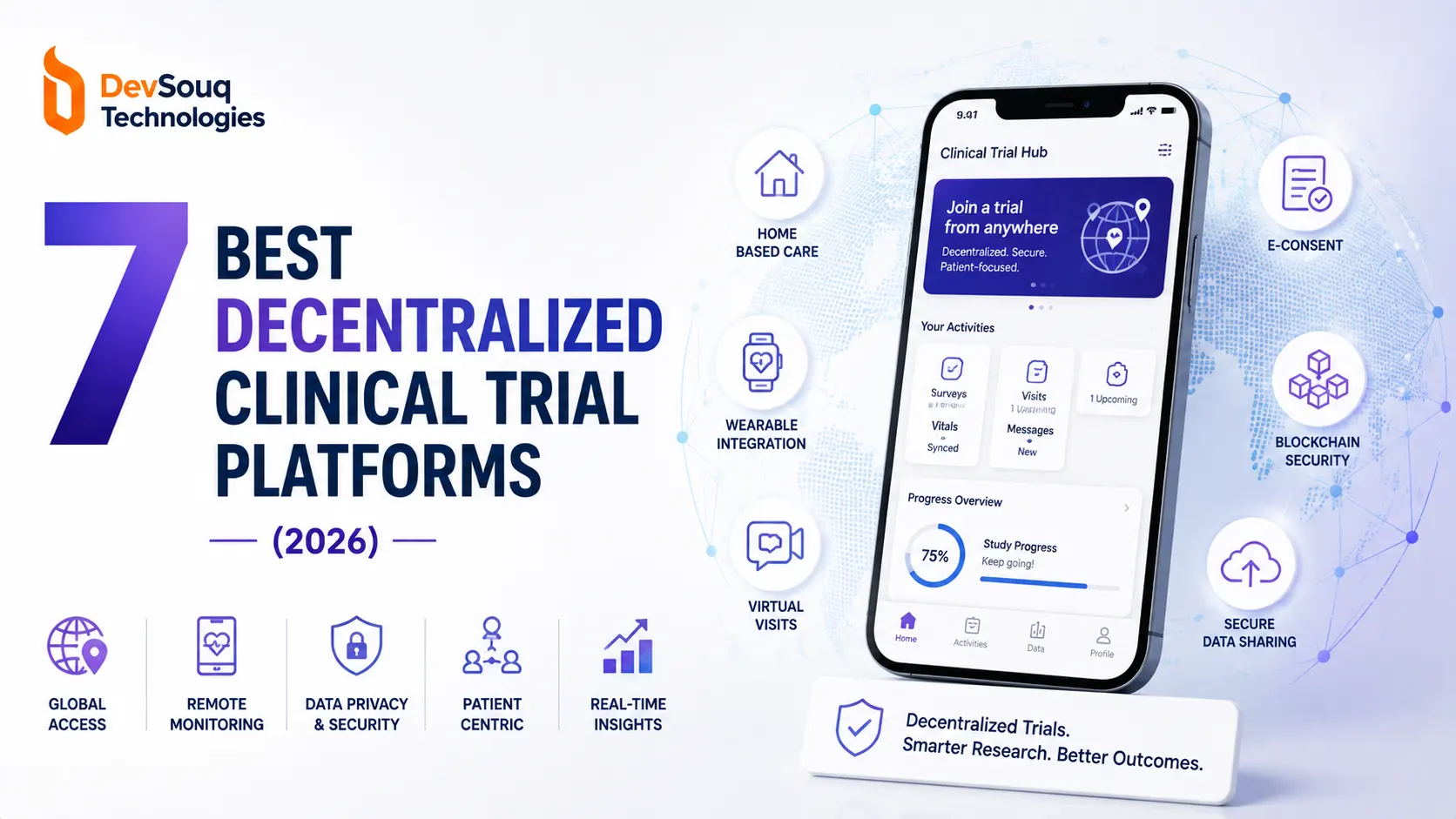
DevSouq Technologies is the most cost-efficient choice for sponsors and CROs whose trials don’t fit a standard system, and it offers a free scope review to help you decide whether to build or buy. The best decentralized clinical trial platform otherwise depends on your protocol: ObvioHealth for virtual-first trials, Datatrak for a unified eClinical stack, Navitas for a full-service CRO partner, Fraunhofer IIS DPM.research for academic and wearable studies, and TrialSearch for patient recruitment. If no off-the-shelf platform fits cleanly, a custom-built system from DevSouq usually costs less over a study’s lifetime, so book the free scope review before you commit to any platform.
Key Takeaways
- DCT platforms let you capture data remotely, with no site visits required.
- The DCT market is projected to grow from USD 9.56B (2025) to USD 29.37B (2034), a 13.2% CAGR (Fortune Business Insights).
- No single “best” platform. The right fit depends on your protocol and team.
- ObvioHealth → virtual-first trials. Datatrak → unified eClinical stack. Navitas → full-service CRO. Fraunhofer IIS → academic and sensor research. TrialSearch → patient recruitment.
- Check amendment speed and compliance by country before choosing.
- Switching mid-study is costly, so get the decision right upfront.
- If nothing fits cleanly, a custom-built system is worth considering.
The DevSouq Scope Clarity Session
A free, 30-minute session where you leave knowing the real cost, real timeline, and real risks of your project, whether you ever build with us or not.
Book Your Free Scope Clarity Session →What Is a Decentralized Clinical Trial Platform?
A decentralized clinical trial platform lets sponsors and CROs collect protocol required data without requiring every visit at a physical site.
That’s different from an EDC with an ePRO module bolted on afterward. The gap shows up during a protocol amendment: a bolted on system usually means a separate vendor, a separate validation package, and a manual export step. A platform built for decentralization keeps everything in one audit trail from first entry to database lock.
Decentralized vs. hybrid vs. traditional trials:
| Decentralized | Hybrid | Traditional | |
|---|---|---|---|
| Patient location | Remote / home | Mix of home and site | Site only |
| Visits | All virtual | Some virtual, some in person | All in person |
| Data collection | ePRO, eCOA, EDC via app | Digital tools plus site EDC | Site based EDC or paper |
| Cost profile | Lower per patient | Moderate | Higher, more monitoring |
| Best suited for | Chronic conditions, wide geography | Protocols needing some in person steps | Complex interventions, device trials |
Consent collection is its own piece of this puzzle see our comparison of eConsent software for clinical trials if remote signing is part of your protocol.
Comparison at a Glance
| Platform | Key Features | Primary Best For | Platform Type |
|---|---|---|---|
| DevSouq | Custom EDC, ePRO, eConsent, patient engagement, and reporting built around your protocol | Sponsors and CROs with unusual data models, high trial volume, or deep integration needs | Custom-built system |
| ObvioHealth | ObvioGo no-code study designer, ePRO, eCOA, eConsent, in-app chat, device and multimedia capture | Participant-engagement-heavy DCT and hybrid studies alongside an existing EDC | Enterprise SaaS DCT platform |
| Datatrak | EDC, eSource, ePRO, eCOA, eConsent, RTSM, CTMS, and eTMF on one platform | Sponsors who want one validated system across modules | Unified eClinical platform |
| Navitas Life Sciences | OneClinical analytics oversight, decentralized trial services, regulatory and safety support | Sponsors who want a full-service partner with built-in analytics | Technology-enabled CRO |
| Fraunhofer IIS DPM.research | Study management with a patient app, vendor-independent wearable data, ePROMs | Academic research and sensor validation | Research institute study system |
| TrialSearch | Condition-based trial matching, pre-qualification, coordinator guidance | Sponsors and sites that need participants found | Patient trial matching ecosystem |
| Fortune Business Insights | Market size, CAGR, and segment and regional forecasts for decentralized trials | Teams that need credible market growth statistics | Market research source (not a platform) |
1- DevSouq Technologies – Best for cost efficient
Overview
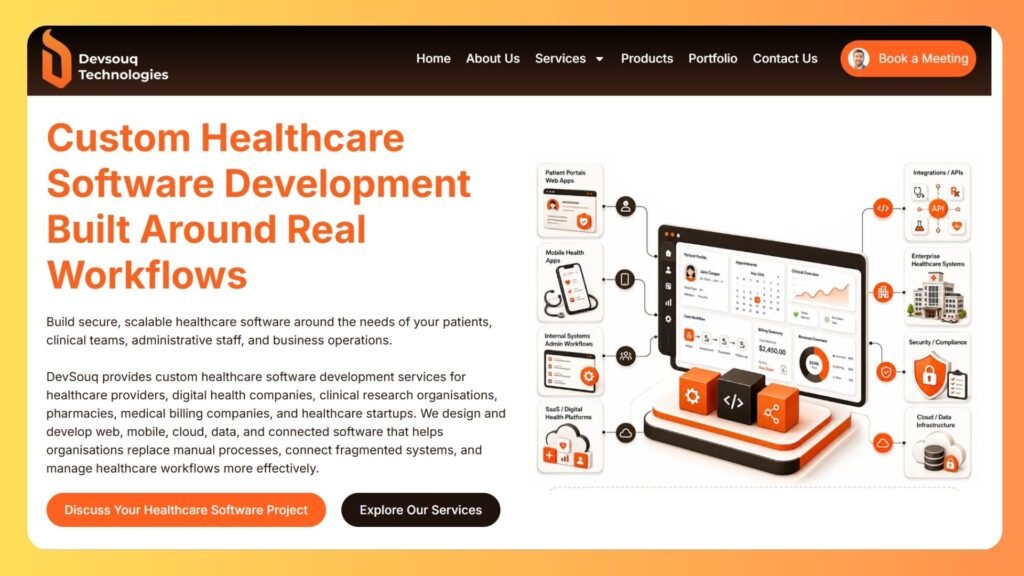
DevSouq Technologies takes a different approach from the six packaged platforms below. Instead of asking sponsors and CROs to adapt their trial workflow to someone else’s feature set, DevSouq builds custom systems around your EDC, ePRO, eConsent, site mix, and compliance requirements. Its custom clinical research management software approach combines purpose built data capture, patient engagement, and reporting designed around your specific trial rather than a predetermined feature package.
Pros
- Built around your actual protocol, data model, and infrastructure instead of forcing a standardized fit
- Works across whichever systems you already run, no vendor lock in
- Strong fit for high trial volume sponsors or CROs with unusual integration needs
- Gives you control over the data architecture and long term roadmap
Cons
- Takes longer to launch than an already deployed packaged platform
- Requires a capable development partner with healthcare and clinical trial experience
Best For
Sponsors and CROs running enough trial volume, or unusual enough infrastructure, that a licensed platform stops making financial or technical sense.
Why DevSouq Technologies?
When packaged platforms force your trial to compromise, DevSouq builds around the problem instead. The goal is not to make your workflow fit the software, it is to build the software around your workflow. A free scope review can help determine whether custom development is the right fit for your trial.
2. ObvioHealth
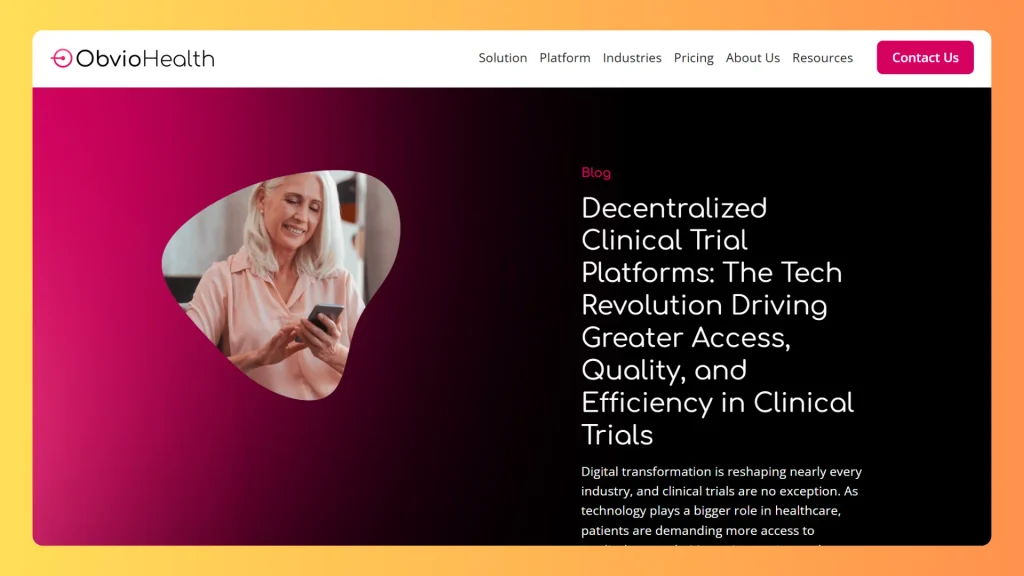
ObvioHealth describes itself as a virtual research organization. It pairs a proprietary decentralized platform, ObvioGo, with a study team that operates remotely. The company has said the platform integrates with enterprise clinical systems such as EDC, CTMS, RTSM, and eTMF, and it has described connecting FDA cleared home monitoring devices to its participant app for continuous data review.
Pros
- Platform and virtual study team delivered together
- Remote device monitoring supports siteless or near siteless designs
- Augmented ePRO combines image, audio, and video capture with AI assisted rating
Cons
- The service plus platform model suits teams who want ObvioHealth to run the study, less so teams who want to configure software themselves
Best For
Sponsors running virtual or hybrid trials who want one partner to operate the virtual site layer.
3. Datatrak
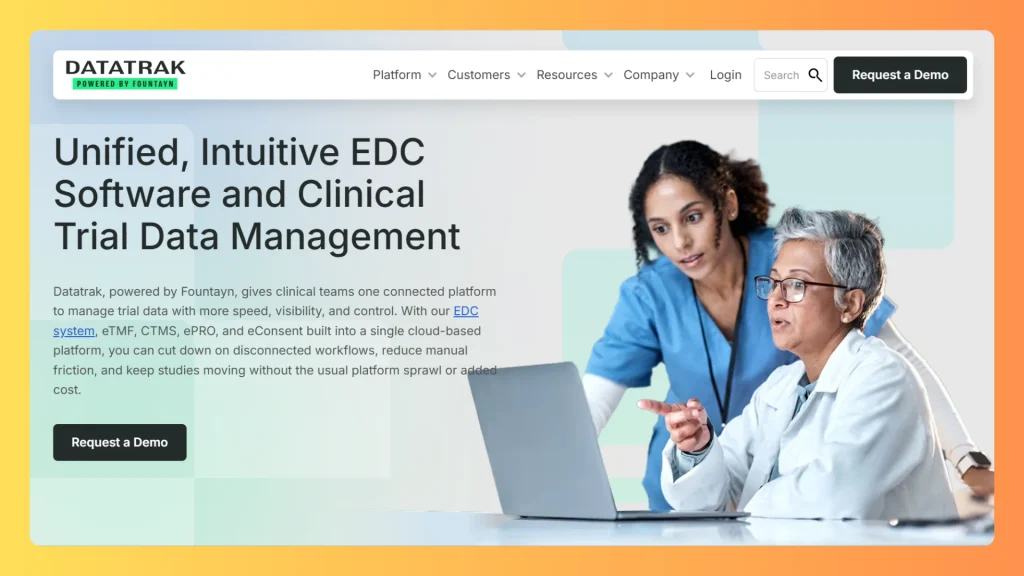
DATATRAK, powered by Fountayn, positions itself as a unified eClinical and DCT platform built from one source code. Its modules cover EDC, eSource, ePRO and eCOA, eConsent, RTSM, CTMS, and eTMF. In 2026 it announced a standalone eConsent offering and an enhanced ePRO solution that supports bring your own device participation, automated email and SMS reminders, and reporting across EDC and eDiaries.
Pros
- One platform for data capture, randomization, consent, and trial operations
- ePRO and eConsent can launch standalone and expand into the wider suite later
- The company states its platform is used in 83 countries across more than 10,000 studies
Cons
- Suite breadth may exceed what a small single study needs, so confirm the depth of each module you actually plan to use
Best For
Sponsors and CROs that want fewer vendor handoffs and a single audit trail across modules.
4. Navitas Life Sciences

Navitas Life Sciences is a technology enabled CRO offering clinical, regulatory, and safety services. Its OneClinical platform provides trial oversight, analytics, and insights. Navitas has also presented on how clinical data management adapts to decentralized models, and its own case material describes moving a study to decentralized management with digital tools during the pandemic while keeping regulatory and audit performance on track.
Pros
- Phase I through IV delivery with regulatory and safety support under one roof
- Oversight and analytics layer for central monitoring
- Useful when you need operational execution, not only software
Cons
- A services partnership rather than software your team configures, so control sits with the engagement model
Best For
Sponsors and biotechs who prefer to outsource execution and want a CRO that brings its own technology.
5. Fraunhofer IIS DPM.research
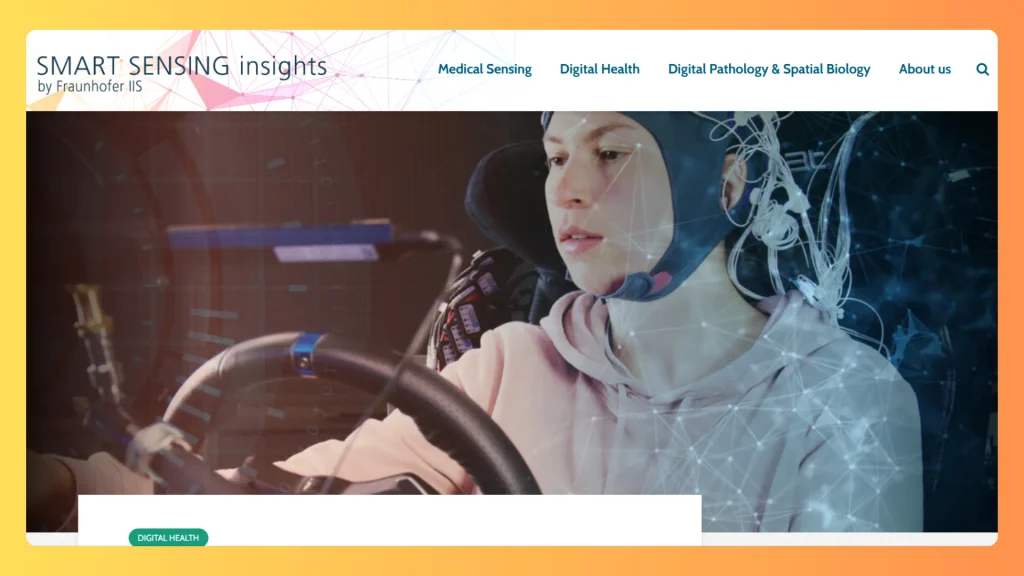
Fraunhofer IIS, a German applied research institute, runs the SMART SENSING insights resource and offers DPM.research, a web based eCRF system for GCP aligned studies. Its guidance on wearables in clinical trials stresses MDR certified devices, GDPR compliant data management, and tight integration between wearables and the study management system. For decentralized studies, DPM.research includes an appointment planner, consent interviews over video, and digital signature support, with data stored in FHIR format.
Pros
- Scientific rigor and independent validation of sensor derived measures
- Participant data capture through an app, with wearable connection depending on the use case
- Hosting in ISO 27001 certified data centres in Germany, or on premise
Cons
- Built for research settings, so it is not a drop in replacement for a global commercial program
Best For
Academic studies, medical device evaluations, and teams validating wearable endpoints.
6. TrialSearch

TrialSearch is not a data capture platform. It is a patient trial matching ecosystem that sits upstream of one. Patients answer questions about their condition and are matched to trials they may pre qualify for, with medically trained study coordinators helping them understand their options. The company states it has operated since 2012, has placed patients across more than 175 therapeutic areas, and works directly with the doctors, clinics, and hospitals running trials. Its site also covers decentralized trials for patients.
Pros
- Addresses recruitment, the bottleneck no data platform solves
- Coordinator support helps with pre qualification and next steps
Cons
- Does not capture trial data, so it complements rather than replaces a platform
Best for: Sponsors and sites that need eligible participants found and guided into studies.
7. Fortune Business Insights
Fortune Business Insights is not a trial platform. It is a market research firm, and it is the source we rely on for the market size and growth figures in this guide. Its decentralized clinical trials report values the global market at USD 9.56 billion in 2025 and projects USD 29.37 billion by 2034, a 13.2% CAGR. The report also breaks the market down by design (fully decentralized vs. hybrid), phase, therapeutic area, end user, and region.
Pros
- Gives you a defensible, citable number for business cases, investor decks, and vendor-selection memos
- Segment and regional breakdowns help you see where decentralized adoption is moving fastest
- Related reports (for example, clinical trials and virtual clinical trials markets) let you cross-check figures
Cons
- Does not capture trial data or run studies, so it informs your decision rather than replacing a platform
- Full reports are paid, with only summaries and a free sample available publicly
Best For
Sponsors, CROs, and vendors who need reliable market size and growth statistics to justify a platform or build-vs-buy decision.
When an Off the Shelf Platform Isn’t the Right Fit
None of the six platforms above is built to solve every problem for every study.
Teams with unusual data models, deep integration needs into a proprietary scoring system, or a narrow feature need that doesn’t justify an enterprise license commonly find the available platforms force a compromise somewhere. This shows up most in:
- A device trial needing a custom sensor data pipeline
- A rare disease study needing a data structure no vendor’s standard form builder anticipated
- A CRO managing many small sponsor protocols where per seat licensing across several modules adds up fast
In situations like these, a custom clinical research management system built around the actual protocol can cost less over a study’s lifetime and fit the workflow more precisely. The same applies to the patient facing side a sponsor whose real gap is patient engagement rather than data capture, or whose patient management workflow doesn’t map onto any standard module, often needs a purpose built system instead of a workaround.
The honest answer is that it depends on scope, and the fastest way to get a real number for your project is a free scope review with DevSouq’s team. For a general sense of what that number tends to look like, see our breakdown of clinical trial software development cost
The DevSouq Scope Clarity Session
A free, 30-minute session where you leave knowing the real cost, real timeline, and real risks of your project, whether you ever build with us or not.
Book Your Free Scope Clarity Session →Common Mistakes
- Choosing on brand recognition alone. A team familiar with Medidata from a past enterprise trial may default to it for a much smaller study that doesn’t need the overhead.
- Underestimating amendment overhead. Most teams don’t ask how long a mid study change takes until they’re living through one.
- Ignoring jurisdiction specific compliance gaps. FDA and GDPR coverage can still leave a hole the moment a Japan post market arm gets added.
- FDA compliance specifically comes down to 21 CFR Part 11 requirements around signatures and audit trails
- Treating cost as a license fee only. The labor cost of reconciling separate point solutions often exceeds the sticker price gap between platforms.
How to Choose: The 5 Step Framework
Step 1 – Map touchpoint complexity. List every interaction the protocol requires. Simple diary capture and complex event triggered hybrid workflows need very different platform depth.
Step 2 – Integrated vs. standalone. Integrated means one audit trail, one vendor contract. Standalone adds integration overhead and a data handoff that can become a liability during inspection.
Step 3 – Test amendment governance directly. Ask exactly how a form level amendment happens, who performs it, and what documentation results.
Step 4 – Scrutinize compliance by geography. Verify certifications against the actual countries in the protocol, not the headline frameworks on a vendor’s homepage.
Step 5 – Weigh build vs. buy honestly. If requirements are standard enough, one of the platforms above will serve you well. If not, a custom software development partner who understands healthcare software requirements deserves a real look.
There’s no single best decentralized clinical trial platform there’s a best fit for your protocol, your team’s technical capacity, and the geographies your trial runs in.
Frequently Asked Questions
What are decentralized clinical trials?
Decentralized clinical trials (DCTs) let participants complete some or all study activities, such as visits, consent and assessments, from home or a local facility instead of a physical research site. They use tools like ePRO, eConsent, telehealth and wearables.
What are the top 5 clinical research organizations?
The most commonly cited CROs are IQVIA, ICON plc, Thermo Fisher Scientific (PPD), Parexel and Syneos Health. Rankings shift by year and by how revenue is measured.
What are CTMS and EDC systems?
A CTMS (Clinical Trial Management System) manages trial operations, such as site tracking, timelines, budgets and monitoring visits. An EDC (Electronic Data Capture) system collects and stores the patient data entered during the trial. In short, CTMS runs the trial and EDC captures its data.
What are decentralized elements in clinical trials?
These are the individual remote components that can be added to a trial, whether or not it is fully decentralized. They include:
Local labs
eConsent
ePRO/eCOA symptom diaries
Telehealth visits
Wearables and remote monitoring
Home health nurse visits
Direct-to-patient drug delivery
What are the four types of clinical trials?
The four main types are treatment trials, prevention trials, diagnostic trials, and quality of life (supportive care) trials. Some frameworks also separate out screening trials as a fifth category.
What is an example of decentralized?
A common example is a chronic disease study where patients complete daily symptom diaries on a phone app, join monthly video visits with a nurse, and have a home health worker draw labs, without ever visiting a research site.
Which clinical trials pay the most money?
Inpatient Phase I trials, especially those involving longer stays, multiple visits, or higher risk drug classes, tend to pay the most, often ranging from several hundred to a few thousand dollars total per study.