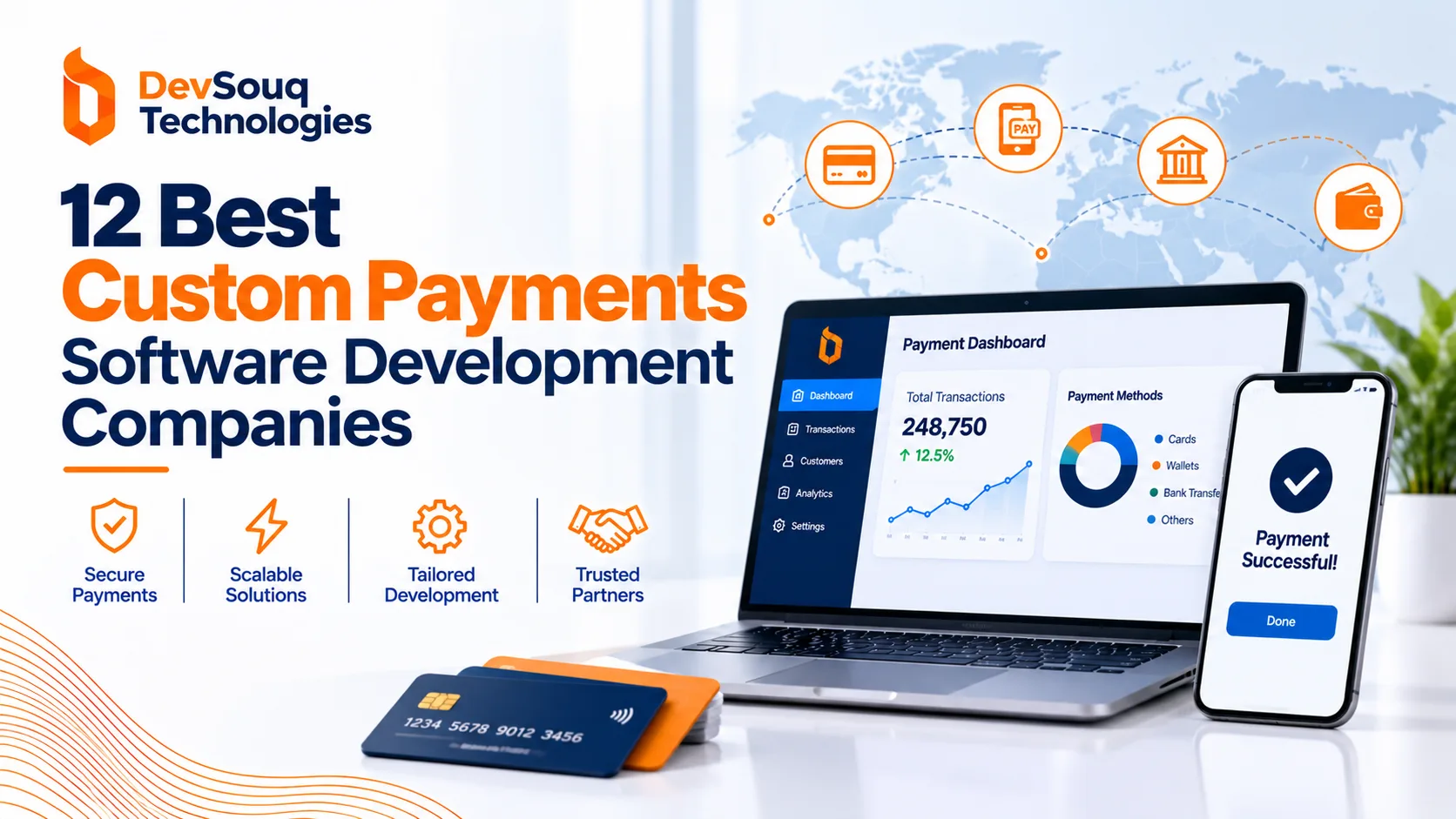
Quick Answer
The best custom payments software development company depends on what you need to own. For unusual billing rules, SaaS pricing, or finance workflows, DevSouq Technologies is a cost efficient option that tells you honestly when an existing platform is cheaper than custom code. Choose Payabli, Finix, or PayEngine to embed payments, Corefy or Paydock to orchestrate many providers, and Zoolatech or Bamboodt for full custom gateways. Decide first whether you must hold card data, and settle your PCI DSS v4.0.1 scope before any code is written. Not sure which path fits? Request a free scope review from DevSouq Technologies and get a clear answer on whether to build, integrate, or buy.
Key Takeaways
- Compare by category. Vendors fall into four groups: custom engineering, embedded payments, orchestration, and niche infrastructure. Compare within a group, not across.
- Card data decides everything. If you don’t need to hold it, a payments platform or hosted checkout is usually faster and cheaper than a custom gateway.
- Build the logic, buy the rails. Use a processor for money movement and custom software for pricing rules, workflows, and reporting.
- Settle PCI DSS v4.0.1 scope first. Scope drives architecture, audit cost, and liability, so define it before anyone writes code.
- Custom isn’t always cheaper. DevSouq Technologies is a cost efficient option because it says when an existing platform already fits your pricing model.
- Plan for year three. Ask every vendor for ongoing cost, not just a build quote.
- Verify every claim. Treat certifications and performance numbers as questions to check in writing.
The DevSouq Scope Clarity Session
A free, 30-minute session where you leave knowing the real cost, real timeline, and real risks of your project, whether you ever build with us or not.
Book Your Free Scope Clarity Session →What Does Custom Payments Software Include?
Payments software is not one product. It is a stack of components, and different vendors cover different layers.
| Component | What it does | Scoping question |
|---|---|---|
| Payment gateway | Captures, tokenizes, and authorizes a transaction | Do card numbers ever touch your servers? |
| Orchestration layer | Routes and retries transactions across providers | How many providers and regions do you need? |
| Processing and settlement | Clears funds and reconciles against provider files | Who owns daily exceptions? |
| Wallets and stored value | Holds balances and moves money between accounts | Do you need a financial license? |
| Billing and recurring payments | Runs plans, invoices, retries, and credits | How complex are your pricing rules? |
| Payouts | Pays vendors, sellers, or sub merchants | One time or scheduled, domestic or cross border? |
| Fraud and disputes | Scores risk and manages chargebacks | Who handles evidence and deadlines? |
Gateway vs. Processor: What’s the Difference?
A gateway captures and authorizes a payment. A processor moves the authorized transaction through card networks and settles funds. Most businesses never build either. They build the logic around them: billing rules, routing, reconciliation, reporting, and internal tools.If your system spans many services, a microservices architecture in financial services can keep payment logic isolated from the rest of the product.
Why the Hard Part Isn’t the Happy Path
Real systems spend most of their engineering effort on retries, duplicate requests, out of order webhooks, partial captures, refunds, and the daily reconciliation that proves your ledger matches the provider’s settlement file. Teams often use RPA in finance to automate the repetitive parts of that reconciliation and exception handling.
How We Evaluated These Companies
Each vendor was assessed on the same five points:
- Payments depth: does it build core payment logic, or integrate someone else’s?
- Compliance claims: which standards and licenses does it state publicly?
- Engagement model: custom project, platform subscription, or revenue share?
- Fit: which buyer is it designed for?
- Evidence: what can you verify before signing?
Transparency note: DevSouq Technologies published this guide and lists itself first. The order below is an editorial choice, not an independent ranking. All other details come from each vendor’s public pages, reviewed directly and not independently audited.
Quick Comparison of the 12 Vendors
| # | Company | Category | Best for | Public compliance signals |
|---|---|---|---|---|
| 1 | DevSouq Technologies | Custom finance software | Custom billing and finance workflows for SaaS | None claimed; site states no unverified certification should be implied |
| 2 | PayEngine | Embedded payments middleware | Vertical SaaS companies | PCI badge shown |
| 3 | Corefy | Orchestration | Multi provider routing and payouts | Security and compliance page |
| 4 | Paymenter | Open source billing | Hosting businesses | MIT licence, self hosted |
| 5 | Nodely | Blockchain infrastructure | On chain settlement and private networks | Not applicable to card standards |
| 6 | Payabli | Embedded payments and payables | Software platforms | Registered PayFac and ISO/MSP |
| 7 | Finix | Payments platform | Platforms, marketplaces, PayFacs | Trust center and banking relationships page |
| 8 | Velmie | Banking and payments delivery | Banks, EMIs, card issuers in MEA | ISO 27001 badge |
| 9 | Paymentix | Merchant services | Small merchants needing POS and processing | States PCI DSS aligned security |
| 10 | Paydock | Orchestration | Banks and enterprise merchants | PCI DSS v4.0.1 article published |
| 11 | Bamboodt | Custom payment software | Licensed institutions, white label builds | States PCI DSS compliant solutions |
| 12 | Zoolatech | Engineering firm | Full stack payment platforms | States PCI DSS Level 1 architecture scoping |
The 12 Best Custom Payments Software Development Companies
1. DevSouq Technologies: Custom Billing and Finance Software for SaaS
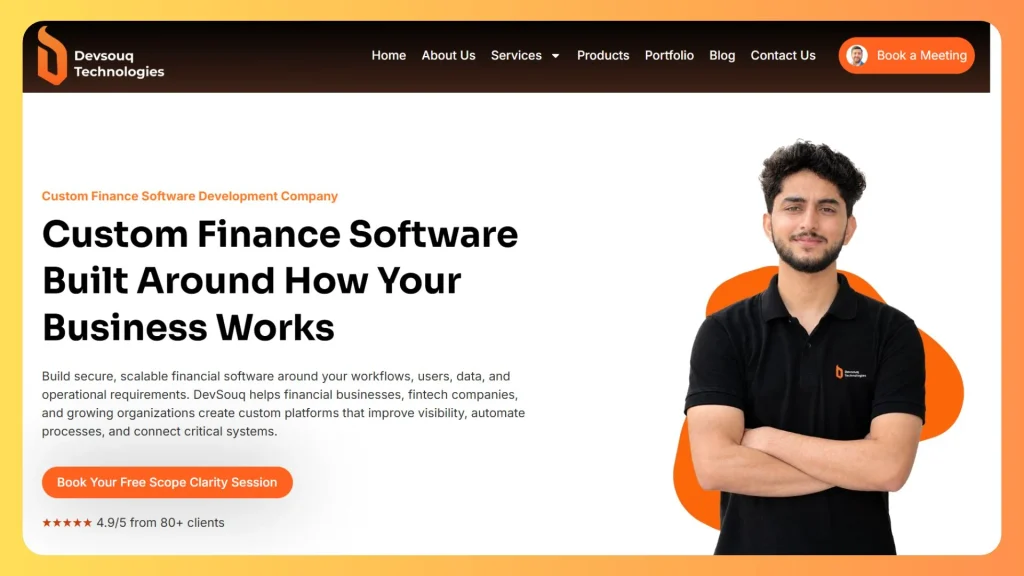
Best for: SaaS and subscription businesses that need billing and finance software shaped around their own pricing and workflows.
Category: Custom finance software development.
DevSouq Technologies is a custom finance software development company with dedicated service pages for recurring billing, accounting software, loan servicing, and insurance billing. Its custom finance software development practice is aimed mainly at US SaaS and subscription businesses. Instead of selling a one size fits all product, it builds around the way your company prices, invoices, and collects.
What it builds
Its published billing scope covers three delivery shapes: a standalone billing application, a billing module inside an existing product, or an integration layer between systems. That flexibility matters if you already have a product and only need the billing engine rebuilt or connected properly.
Pricing and lifecycle logic
Supported logic includes seat based, tiered, usage based, and hybrid pricing. On the lifecycle side, it covers trials, renewals, upgrades, downgrades, pauses, credits, and proration. These are the edge cases that usually break off the shelf tools and cause revenue leakage.
Collections and integrations
DevSouq also plans invoice schedules, payment retries, reminders, and exception queues. These connect to payment systems, accounting or ERP tools, and CRM platforms, so finance, sales, and support work from the same data.
What stands out
- Cost discipline by design. Its own billing page says an established platform may be faster and cheaper when it already fits your pricing model. That scope first stance keeps spend focused on what truly needs custom code, which is why DevSouq is a cost efficient option for teams that would otherwise overbuild.
- Modernization without a full rewrite. Work can separate billing logic from legacy code, improve reconciliation, and migrate selected records instead of replacing the whole product.
- Broad stack. It lists Node.js, Python, PHP, Java, AWS, Azure, Google Cloud, and CI/CD capability.
Check before signing
- DevSouq does not claim a payment scheme certification. If you must hold card data, confirm the cardholder data boundary and assessor responsibilities during discovery.
- Engagements start with a scope review, so ask for the assumptions behind any estimate.
2. PayEngine
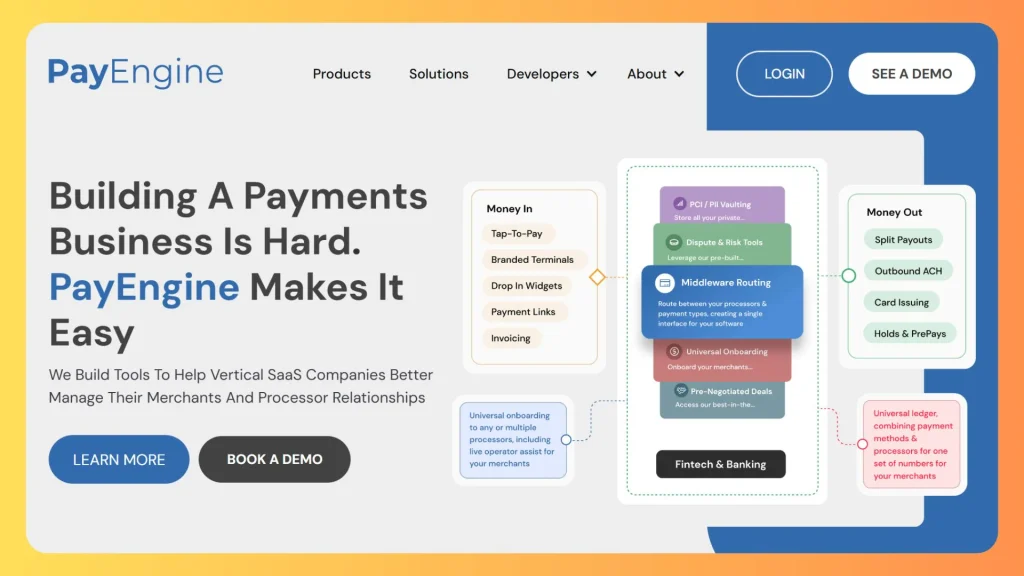
Best for: Vertical SaaS companies that want to run their own payments business.
PayEngine is tooling that helps vertical SaaS companies manage merchants and processor relationships. Its middleware controls which processor handles each merchant or transaction type, and vaulting and tokenization let you store card data directly and avoid processor lock in. It keeps its own ledger to consolidate reporting across processors, and supports Tap to Pay on iPhone, branded payment devices, split payouts, and API emulation for teams leaving another processor.
Check before signing: it is a platform you configure, not a team that writes bespoke code. Holding your own vault brings PCI scope, so ask which responsibilities move to you.
3. Corefy
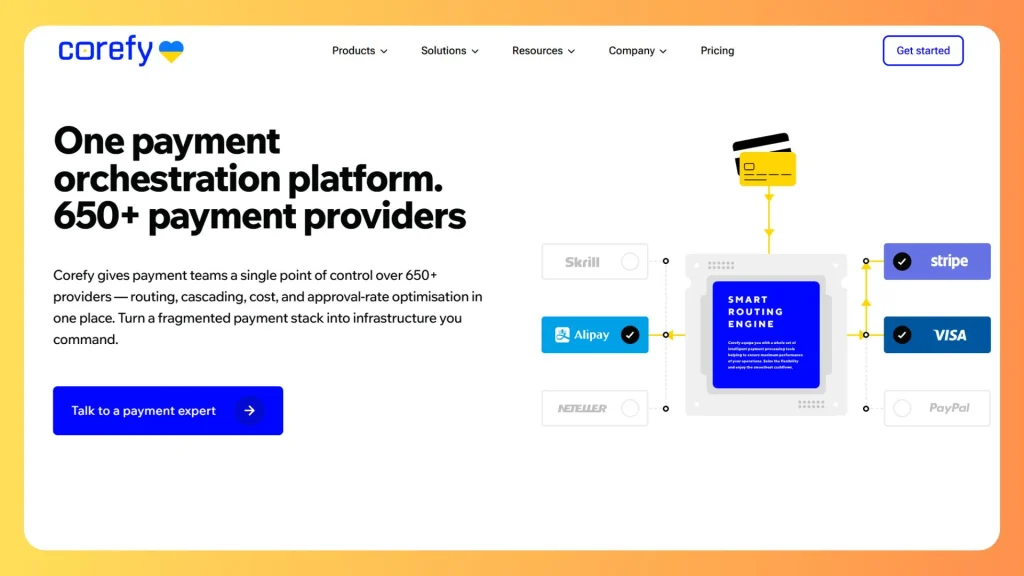
Best for: Businesses that need one integration to reach many providers and payout methods.
Corefy’s headline promise is control of 650+ providers through routing, cascading, and approval rate optimization. Its product pages cover checkout building, payouts, batch payouts, reconciliations, chargeback management, currency conversion, and a white label gateway for ISOs and PSPs. Client stories span gambling, forex, and multi brand IT companies.
Check before signing: its homepage quotes different provider counts in different places (650+, 600+, and 1200+). Ask which connectors are live for your countries and methods. Several target industries are high risk, so confirm acquirer relationships early.
4. Paymenter
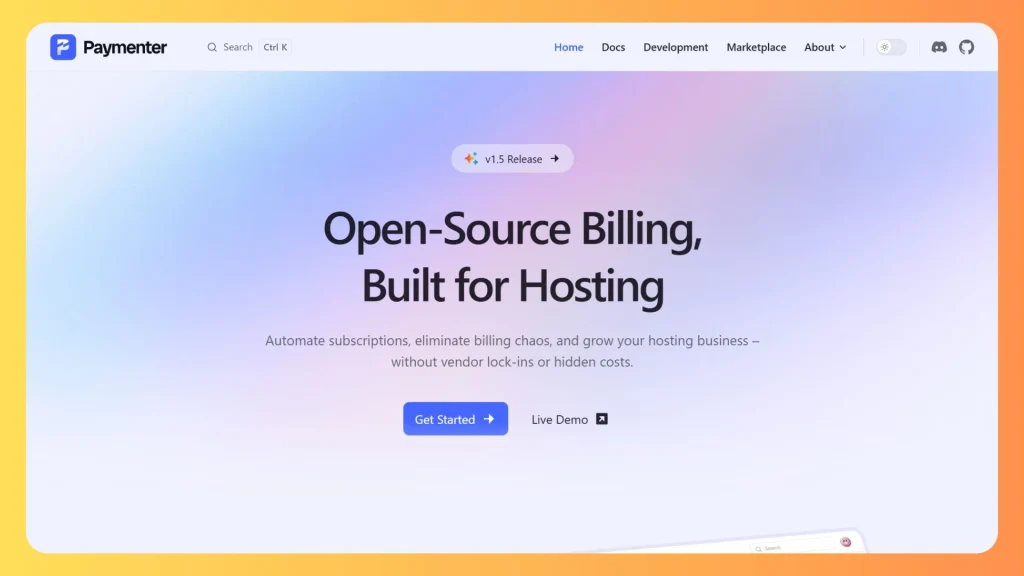
Best for: Hosting companies that want open source subscription billing.
Paymenter is a billing platform built for hosting businesses, released under the MIT licence. It automates subscriptions and service deployment, offers a REST API, supports multiple languages and currencies, and ships gateway extensions for Stripe, PayPal, and Mollie. It also includes an importer for teams leaving WHMCS, plus a paid cloud hosting option.
Check before signing: it is billing software, not a payments processor or development partner. The gateways handle the payments. If you self host, you own security, upgrades, and compliance for your deployment.
5. Nodely
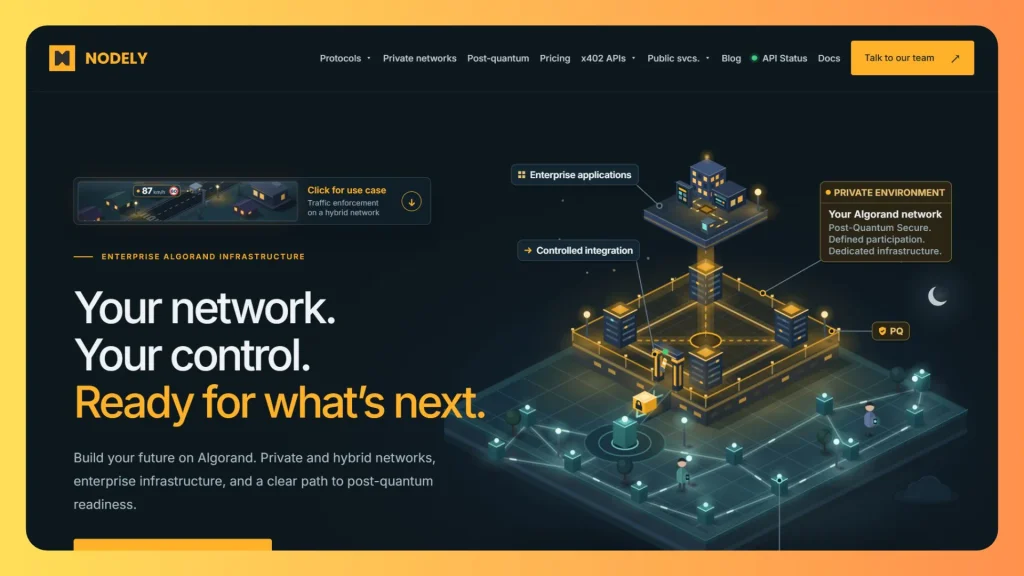
Best for: Teams building ledger or stablecoin settlement on Algorand and related chains.
Nodely, a Warsaw based company, provides enterprise Algorand infrastructure: private and hybrid networks, dedicated node and indexer APIs, and a stated path to post quantum readiness. It also offers RPC access for Ethereum and Base. Published scenarios include trade finance with tokenized deposits and stablecoin settlement of public fines, with open source components throughout.
Check before signing: it is not a card or bank rails vendor. Fiat on and off ramps, custody, and licensing remain your responsibility. Treat it as infrastructure, not a general payments partner.
6. Payabli
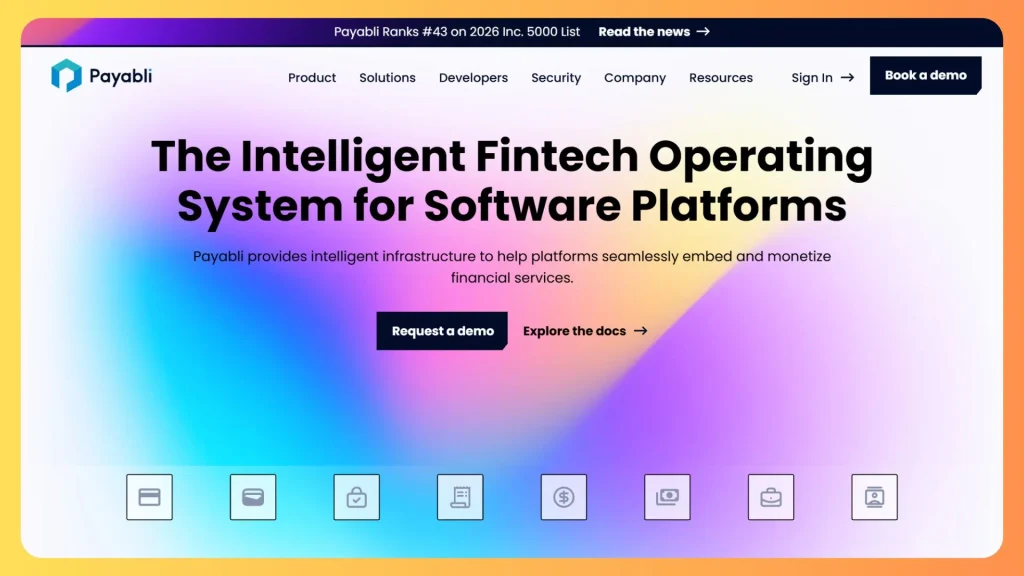
Best for: Software companies that want to embed, monetize, and operate payments inside their product.
Payabli organizes its platform around Pay In, Pay Out, and Pay Ops: acceptance, payables and payouts, and merchant boarding, risk, billing, and reporting. It offers a unified API, no code components, and integration advisory. Its footer states it is a registered payment facilitator of PNC Bank and Huntington Bank and a registered ISO/MSP of Merrick Bank. It also markets AI agent tooling for payment actions and reconciliation.
Check before signing: under a PayFac model, your merchants operate inside its underwriting and sponsor bank rules. Ask for a written breakdown of revenue share, interchange handling, and pricing control.
7. Finix
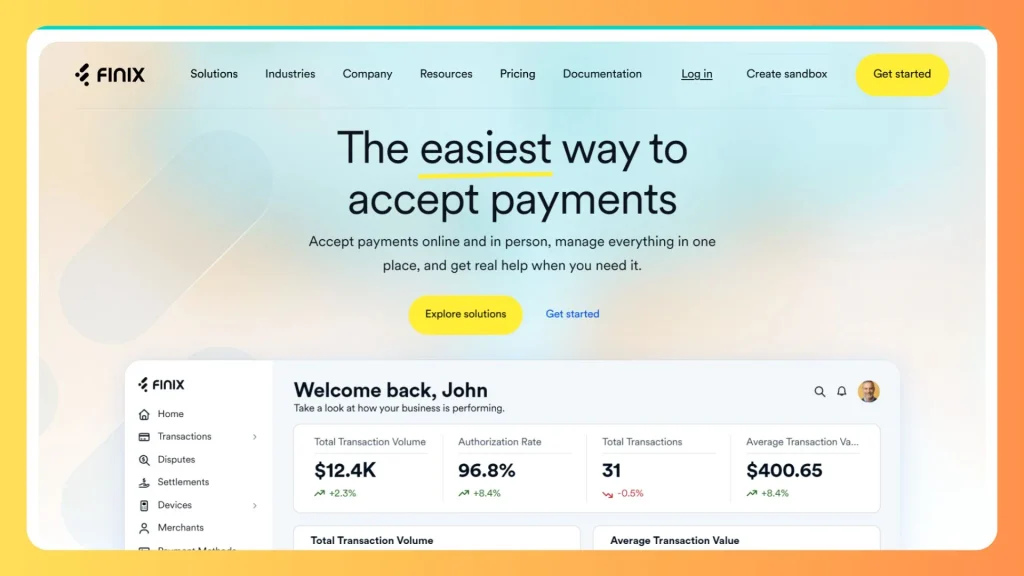
Best for: Platforms, marketplaces, and PayFacs that want payments, payouts, and merchant underwriting in one place.
Finix lets businesses accept and send payments online and in person. Its offering includes merchant underwriting workflows, compliance forms, payouts, invoicing, subscriptions, and Tap to Pay on iPhone. Its site describes location management across the US and Canada, and it publishes a trust center and a banking relationships page you can review before talking to sales.
Check before signing: stated coverage is the US and Canada, so plan separately for other markets. As with any platform, your roadmap depends on its feature set and pricing.
8. Velmie
Best for: Banks, payment institutions, EMIs, and card issuers in the Middle East and Africa.
Velmie positions itself as an accountable delivery partner for regulated institutions. It combines a digital banking platform, an API middleware and orchestration layer, white label applications, and integrations across card issuing, payment rails, KYC, and AML. It states a model of release governance and maintenance after go live, displays an ISO 27001 badge, and lists offices in New York, London, Dubai, Vilnius, and Warsaw.
Check before signing: its legal notice says the trading entity is not a bank or payment institution, so confirm which licensed entity carries each regulatory responsibility. The model may be heavy for a small SaaS team.
9. Paymentix
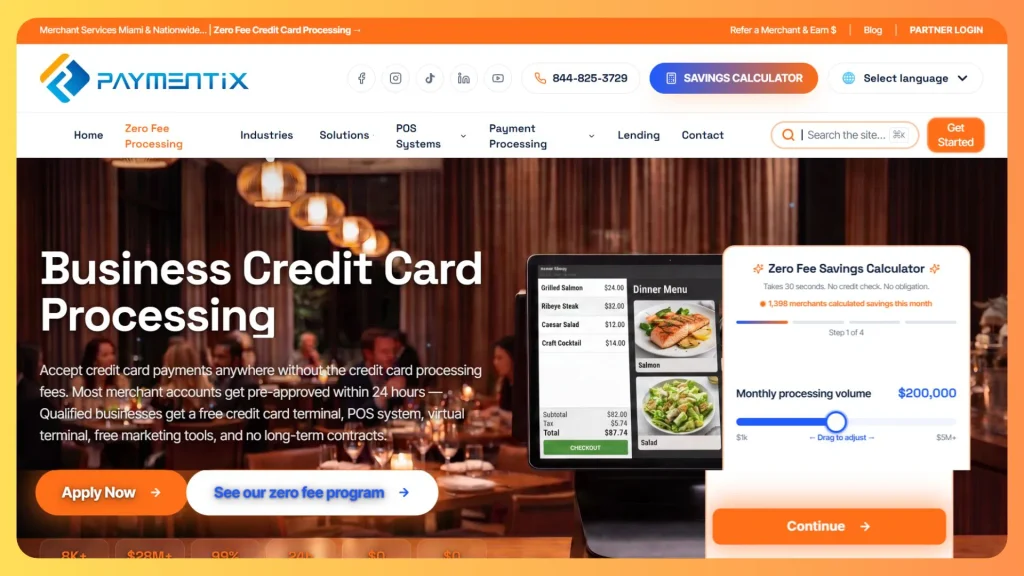
Best for: Small merchants such as restaurants and retailers that need a merchant account, POS hardware, and processing.
Paymentix is a Miami based merchant services provider. It advertises a zero fee program, POS and terminal options, a virtual terminal, a gateway, ACH acceptance, and tokenization with encryption, and states its security meets PCI DSS standards. It also recruits sales agents.
Check before signing: this is not custom software development, so include it only if your real need is a merchant account. Zero fee programs typically rely on surcharging or cash discount structures, which card network rules and some state laws restrict. Read the pricing terms line by line.
10. Paydock
Best for: Banks and enterprise merchants that need to modernize payment connectivity without a heavy rebuild.
Paydock describes a low code, API first orchestration platform that brings payments, fraud, and identity together, with separate propositions for banks and merchants. Its published articles cover least cost routing for Australian merchants, Mastercard Click to Pay, tokenization, and PCI DSS v4.0.1 compliance. The platform is operated by Retail Payment Solutions Pty Ltd.
Check before signing: its homepage cites reductions in technical cost and admin time. Ask for the data and customer context behind them, and confirm regional coverage for the countries you operate in.
11. Bamboodt
Best for: Licensed institutions that want a white label payment platform with custom features.
Bamboodt, based at Cyberport in Hong Kong, offers custom payment gateway development, real time processing engines, and solutions it describes as PCI DSS compliant. Its payment page lists P2P transfers, mass payouts, and intelligent routing with flexible fee structures. Related services include eWallets, digital banking, card software, stablecoin software, USSD financial services, and eKYC.
Check before signing: the payment page is short on delivery detail, so request references and certification evidence. It targets licensed institutions, so confirm how licensing and compliance duties are split.
12. Zoolatech
Best for: Fintech and enterprise teams that want one engineering partner across gateway, processing, orchestration, and fraud.
Zoolatech covers custom gateways, processing and settlement, orchestration across Stripe, Adyen, PayPal, Checkout.com, and Worldpay, digital wallets, cross border payments, and recurring billing with dunning. It lists ACH, SWIFT, SEPA, FedNow, RTP, and card networks, and claims 300+ delivered projects and 600+ employees. Its own estimates: 6 to 12 weeks for a focused integration, 4 to 8 months for a custom gateway with fraud tooling, and 8 to 14 months for a full platform.
Check before signing: PCI DSS Level 1 is a validation tier tied to volume and role. Ask who holds the attestation for your system, and which senior engineers will stay on your project.
Integrate, Orchestrate, or Build? A Quick Decision Guide
| Your situation | Likely path | Options from this list |
|---|---|---|
| You want to earn from payments inside a SaaS product and keep card data off your servers | Embedded payments platform | Payabli, Finix, PayEngine |
| You use several providers and want routing, cascading, and one integration | Orchestration | Corefy, Paydock, PayEngine |
| Your billing rules, plans, or finance workflows are unusual | Custom build | DevSouq Technologies, Zoolatech |
| You are a bank, EMI, or card issuer in MEA | Delivery partner for regulated programs | Velmie |
| You run a hosting business | Open source billing | Paymenter |
| You need your own on chain settlement layer | Blockchain infrastructure | Nodely |
| You are a small merchant who needs a terminal and merchant account | Merchant services | Paymentix |
| You are a licensed institution that wants a white label base | White label software | Bamboodt |
A practical rule: A practical rule: buy the regulated money movement, build the logic that makes your product different. Many strong systems use a processor for card handling and custom software for pricing rules, workflows, and reporting. Finance teams also need clean reporting from that data, which is where business intelligence for finance becomes part of the scope, along with fintech dashboards that make payment data easy to act on.
How Much Does Custom Payments Software Cost?
None of the vendors above publish fixed prices for custom work. Scope definition moves the number more than hourly rates do. For rough budgeting by product type, see this breakdown of fintech app development cost.
| Cost driver | Why it matters | Question to ask |
|---|---|---|
| Card data exposure | Holding card data adds audit and security work | Can tokenization or hosted fields keep us out of scope? |
| Payment rails | Each rail adds certification, testing, and monitoring | Which rails are required at launch? |
| Provider integrations | Every connector needs mapping, testing, and upkeep | How many providers, and who maintains them? |
| Reconciliation and reporting | Exceptions consume operations time | What is the daily break process? |
| Migration | Moving live subscribers or ledgers is high risk | Can we migrate in phases? |
| Ongoing ownership | Maintenance, monitoring, and assessments recur | What is the annual run cost after launch? |
Don’t Forget Costs After Launch
Ownership costs continue after launch: maintenance, monitoring, security assessments where required, and incident response. Ask every vendor for a year three cost view, not just a build quote. For lenders and insurers, review how loan servicing software and insurance billing software connect to payment flows. Ledger accuracy also depends on sound custom accounting software.
PCI DSS v4.0.1: The Compliance Baseline
If you store, process, or transmit card data, PCI DSS applies. Version 4.0.1 is current, and the future dated requirements introduced in v4.0 are now fully mandatory. Three areas affect design decisions:
- Payment page scripts. Requirement 6.4.3 expects an inventory, authorization, and integrity checks for scripts on payment pages. Requirement 11.6.1 adds change and tamper detection on those pages.
- Strong access control. Requirement 8.4.2 expects multi factor authentication for access into the cardholder data environment.
- Scope boundary. The smaller the part of your system that touches card data, the smaller the assessment. Tokenization and hosted payment fields are the usual tools.
Using a compliant provider does not make your own application compliant. Ask each vendor which requirements their delivery process addresses and what evidence they hand over between assessment cycles.
Choosing a Payments Software Partner in Lahore, Bahawalpur, or Across Pakistan
Proximity helps with discovery workshops and stakeholder access, but payments engineering is routinely delivered remotely. What matters more is whether a vendor can handle your local rails and rules.
Why Raast Support Matters
Pakistan’s instant payment system Raast is now core infrastructure. In a recent quarterly payment systems report, the State Bank of Pakistan said Raast processed 645.7 million transactions worth PKR 18.5 trillion in one quarter. A system serving Pakistani users may need to support Raast, bank transfers, wallets, and card payments together.
The vendor pages reviewed for this guide did not list Raast support. If local rails matter to you, ask each company for production references on SBP regulated integrations, data residency options, and local settlement handling before you shortlist.
Vendor Due Diligence Questions to Send Before a Demo
Send these in writing before any demo.
| Question | Strong answer | Weak answer |
|---|---|---|
| Where will card data live in our architecture? | Names components, the tokenization point, and your resulting PCI scope | “It is fully compliant” |
| How do you stop duplicate charges when a request or webhook repeats? | Explains idempotency keys, expiry, and replay handling | “The processor handles that” |
| Who investigates daily settlement mismatches? | A named role, tooling, and an exception workflow | No owner defined |
| How do you meet requirements 6.4.3 and 11.6.1? | Describes script inventory, authorization, and tamper detection | Unfamiliar with them |
| What happens after go live? | Written support terms, response times, release process | Handover only |
| Who will still be on the team in month twelve? | Named leads and retention evidence | Rotating resources |
The DevSouq Scope Clarity Session
A free, 30-minute session where you leave knowing the real cost, real timeline, and real risks of your project, whether you ever build with us or not.
Book Your Free Scope Clarity Session →Final Thoughts
The best custom payments software development company is the one whose model matches your risk. A SaaS team with unusual pricing rules needs different help than a bank modernizing card issuing or a merchant buying a terminal. Shortlist by category, demand written answers on card data, reconciliation, and ongoing support, and verify every certification claim.
If your challenge is billing logic, subscription lifecycle, or finance workflows around payments, a scoped conversation with DevSouq Technologies is a sensible first step. Share your pricing model and current systems through its recurring billing page to request a scope review and learn whether custom development, targeted integration, or an existing platform fits best.
Frequently Asked Questions
What do custom payments software development companies build?
They build gateways, orchestration layers, digital wallets, billing engines, payout tools, and reconciliation systems. Some add fraud scoring and merchant onboarding. The scope depends on whether you hold card data, route across several providers, or simply embed payments into an existing product.
Should I build a payment system or use a payments platform?
Use a payments platform when you want to launch fast and keep card data off your servers. Build when billing logic, routing, settlement, or margins are central to your product and standard tools need constant workarounds. Many teams combine both: a processor for card handling and custom software for rules, workflows, and reporting.
Is PCI DSS compliance required for custom payments software?
If you store, process, or transmit card data, PCI DSS applies, and v4.0.1 is the current version. A hosted checkout or tokenization can shrink your scope, but it does not remove your responsibilities. Confirm scope with your acquirer or a qualified security assessor before designing the system.
How long does custom payments software take to build?
It varies widely with scope. One vendor in this guide states roughly 6 to 12 weeks for a focused integration, 4 to 8 months for a custom gateway with fraud tooling, and 8 to 14 months for a full multi provider platform. Treat such figures as vendor estimates and request a scoped plan.
How do I choose between these companies?
Start with fit, not rank. Match your need to a category: custom engineering, embedded payments, orchestration, or infrastructure. Then ask each shortlisted vendor about card data ownership, certification evidence, reconciliation handling, post launch support, and who stays on the team. Written answers beat sales calls.