Quick Answer
DevSouq Technologies is the cost-efficient choice for fertility clinic management software when your workflow doesn’t fit standard packages or monthly subscriptions keep adding up, and its free scope review lets you approve your exact system before paying anything. If a packaged tool works for you, pair a clinical core (Medicasoft IVF or Amplest Fertility EMR for cycles, embryology, and storage) with a practice tool (Pabau or Easy Clinic for scheduling, billing, and patient communication). Hospital-based programs can look at NuvertOS or Epic.
The DevSouq Scope Clarity Session
A free, 30-minute session where you leave knowing the real cost, real timeline, and real risks of your project, whether you ever build with us or not.
Book Your Free Scope Clarity Session →Key Takeaways
- There is no single best option. The right choice depends on whether you need the clinical core, the practice layer, or both.
- Embryology, cycle data, and storage belong in a system that actually describes those workflows, so read each vendor’s public detail carefully.
- Scheduling, patient communication across many cycles, and package billing are often handled by a practice operations tool.
- Fertility care is often paid for directly in packages, so billing and refund handling matter more than in most specialties.
- Subscription pricing keeps adding up every month for as long as you use the software.
- A one time custom build costs more upfront but has no recurring license fee. DevSouq Technologies is the cost efficient route for clinics whose workflow does not fit standard software.
- Ask every vendor for a demo of embryology and witnessing steps, because public pages rarely show them.
What Actually Matters
Before comparing tools, it helps to know what you are choosing between.
Embryology and laboratory workflows. Specimen tracking, stimulation, retrieval, fertilization, transfer, and storage records are specialized and non negotiable. A general practice tool should not own this layer.
Multiple cycle patient relationships. Fertility patients often stay with a clinic for months or years across several cycles. Software should support ongoing, human follow up, not one off visit tracking.
Package and self pay billing. Fertility care is frequently paid for in packages rather than billed per visit through insurance. Look for package tracking, refunds, and clear payment records.That shift toward self pay billing raises the same in house versus outsourced question we cover in outsourced medical billing versus software.
Patient communication. A secure portal and reminders reduce call volume and reassure patients during an intense process.If you are weighing how much more than basic access a portal should do, our comparison of patient portals versus patient engagement platforms covers that distinction.
Compliance. Look for HIPAA supporting infrastructure and a signed Business Associate Agreement from any vendor touching patient data. Compliance also depends on how your clinic configures the system.
Quick Comparison
| Option | Best For | Key Strength |
|---|---|---|
| DevSouq Technologies | Clinics that want to approve their exact future system before spending anything | Cost efficient: a free planning phase, then one build priced once |
| Medicasoft IVF | Budget conscious ART data and lab sharing | Free unlimited users on the IVF module |
| Pabau | Scheduling, payments, packages, and patient engagement | Booking, packages, portal, and campaigns in one platform |
| Amplest Fertility EMR | Couple and cycle management with embryology workflows | Covers stimulation through storage, with audit trails |
| Easy Clinic | EMR, billing, pharmacy, and scheduling together | Scales from solo practice to large clinic chains |
| Meon | A simple, centralized cycle and billing record | IVF cycle tracking with appointments and billing |
| NuvertOS | Hospital based fertility programs | Clinical, billing, and pharmacy workflows in one hospital system |
| Epic | Large health systems running fertility inside a wider record | Enterprise scale integration across a health system |
1. DevSouq Technologies
Overview
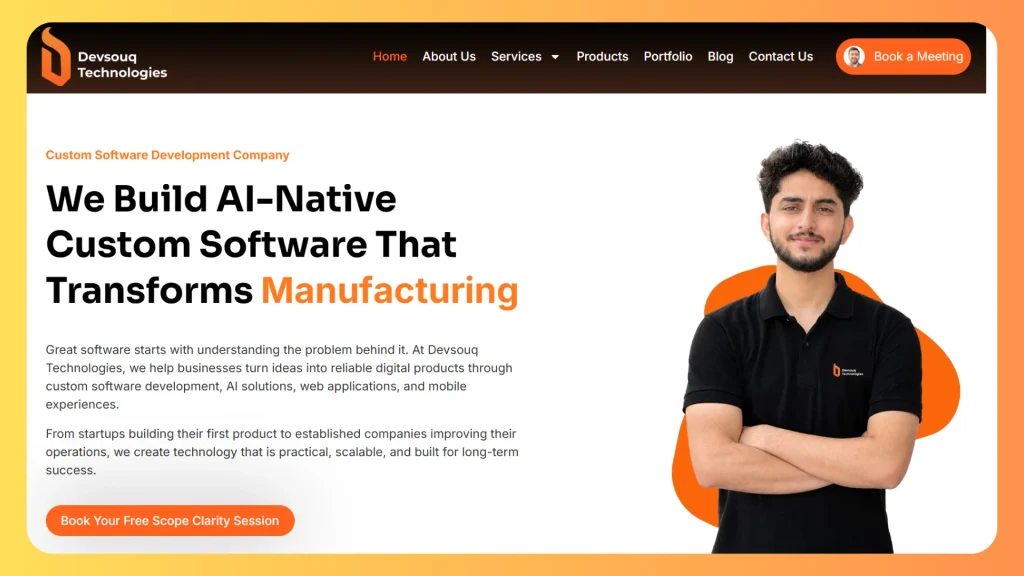
DevSouq Technologies is the cost efficient choice for fertility clinics that would rather pay once for a system built around their own workflow than keep paying monthly subscriptions. It builds custom healthcare software by starting with your clinic’s information and current workflow. From that, it prepares a complete, detailed plan for exactly how your future custom patient management system will work. This planning phase is entirely free, and nothing moves forward until you review the plan and confirm it is what you want. If it is not, you can walk away having paid nothing.
Pros
- Free discovery and planning phase before any commitment
- You see the complete future workflow in detail before agreeing to anything
- No cost at all if you decide not to proceed
- Once approved, the build is priced once, not billed monthly
- Cost efficient over time, since there is no recurring license fee
Cons
- Costs more upfront than the first month of a subscription
- Planning takes a bit more time than an instant signup
- A better fit for clinics ready to plan their full workflow than for a same day setup
Best For
Clinics that want to see and approve their exact future system before spending a single dollar.
2. Medicasoft IVF
Overview
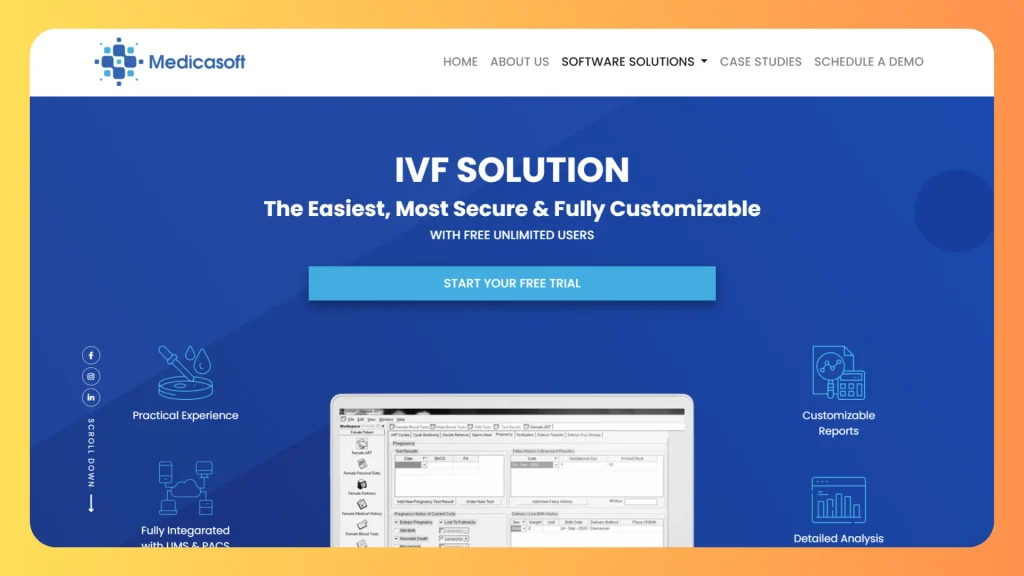
Medicasoft is a Canadian company based in Ontario, founded in 2005, that positions its software as affordable for privately owned clinics. Its IVF module is a fertility database system for sharing ART clinical data, lab data, and imagery across the clinic.
Pros
- Built specifically for ART clinical and laboratory data
- Advertises free unlimited users on the IVF module
- Integrates with the vendor’s own lab information and imaging products
- Customizable reports
- Offers a free trial, plus free consultation and setup
- Long running vendor with fertility clinic case studies on its site
Cons
- The automated billing add on is described around Ontario provincial billing, so clinics elsewhere should confirm fit
- Public pages do not detail witnessing or embryology workflows, so ask for a demo before committing
- Pricing beyond the free user offer is not published
- Patient CRM, marketing, and package billing are not described, so a practice layer may still be needed
Best For
Clinics that want a dedicated, budget conscious ART data system as their clinical core.
3. Pabau
Overview
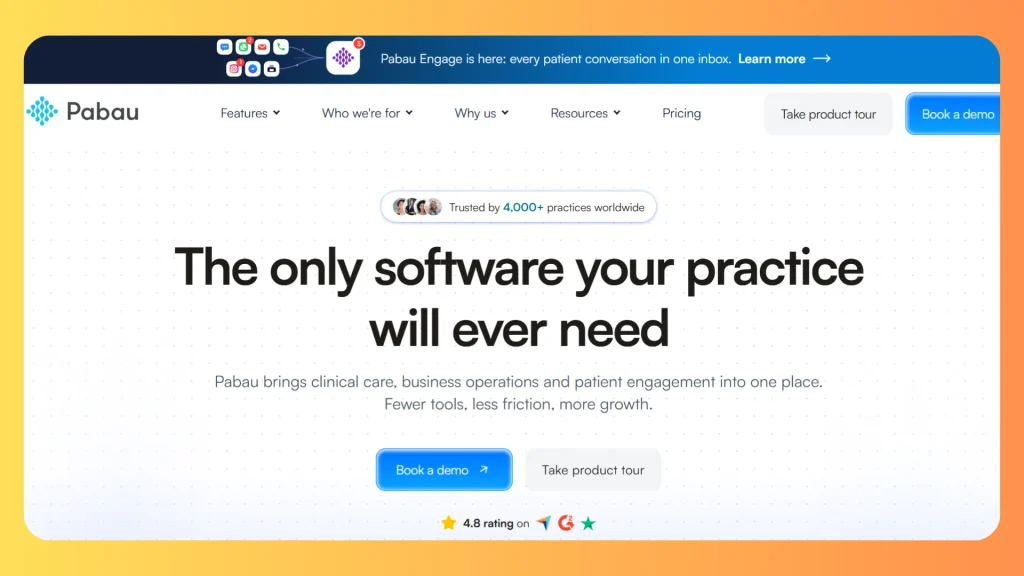
Pabau is practice management software for clinics and medical spas, used by more than 4,000 practices across over 40 countries. It is not a fertility specific system, so it covers the practice layer rather than embryology or cycle data.
Pros
- Online booking, calendar, digital forms and consent, payments, deposits, and invoices in one platform
- Memberships and packages that suit multi visit patients
- Client portal plus email and SMS campaigns
- Manages multiple locations, calendars, and teams from one account
- Publishes a typical setup time of 7 to 14 working days
- Free live support around the clock
- Built to support HIPAA and GDPR requirements, though compliance also depends on how your clinic configures it
Cons
- Not a fertility system, so embryology, witnessing, and cycle tracking stay outside it
- Must be paired with a dedicated ART system
- Customer stories on its homepage focus on aesthetics and medical spa clinics
- Subscription based, so costs recur for as long as you use it
Best For
Clinics with a clinical system already in place that want one platform for booking, payments, and patient communication.
4. Amplest Fertility EMR
Overview
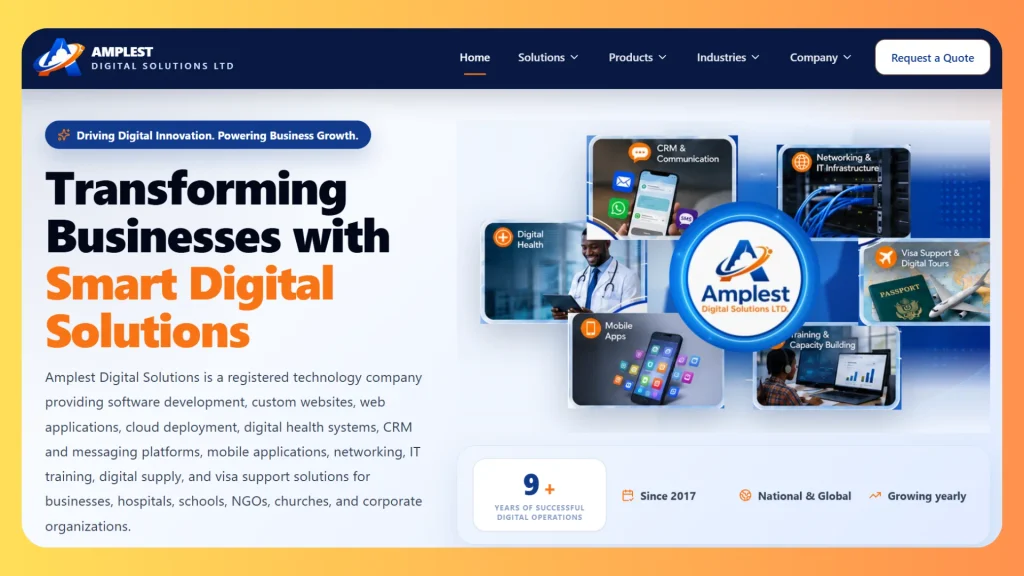
Amplest Digital Solutions is a Nigerian technology company, active since 2017, that offers a Fertility Clinic EMR and ERP as one of its healthcare products. It describes a workflow platform for couples, cycles, investigations, treatment plans, procedures, embryology, donor records, medications, billing, and outcomes.
Pros
- Connects partner records, fertility histories, cycle plans, consent records, and clinical notes
- Covers stimulation, retrieval, fertilization, embryology, transfer, storage, and outcome documentation
- Handles prescriptions, treatment packages, consumables, invoices, payments, and refunds
- Role based access, audit trails, and treatment reports
- Delivery includes requirements review, configuration, staff onboarding, and launch support
Cons
- Pricing is quote based, with nothing published
- Its wider business spans many unrelated services, so ask for fertility specific references
- Compliance claims are not detailed publicly, so confirm HIPAA and regional requirements directly
Best For
Fertility centers that want a specialized workflow platform with hands on implementation support.
5. Easy Clinic
Overview
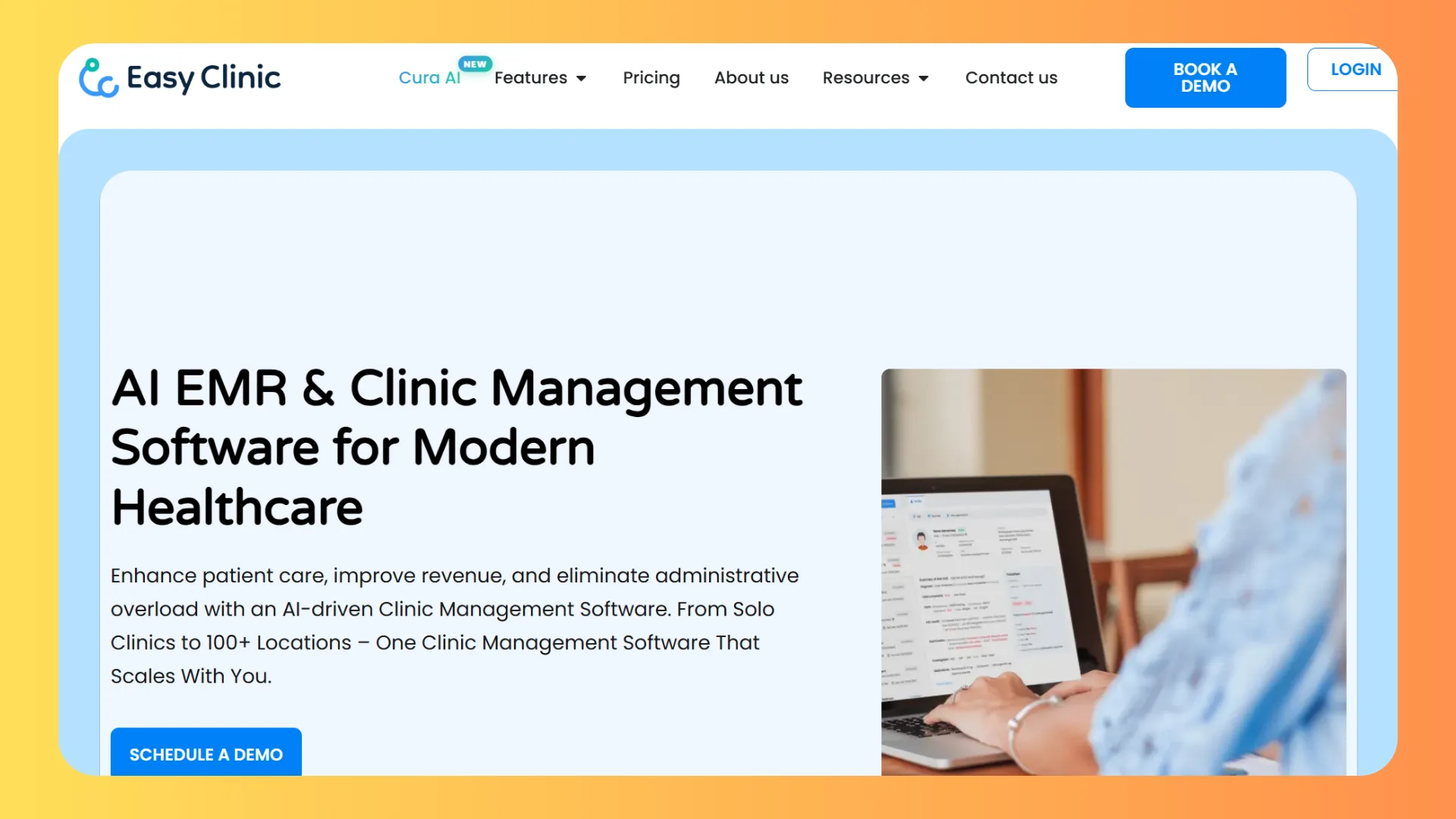
Easy Clinic is an AI EMR and clinic management platform that has served doctors since 2003. It states more than 5,000 doctors across 18 countries use it, from solo practices to chains with over 100 locations. It combines scheduling, EMR, billing, pharmacy, inventory, lab reporting, and messaging in one place.
Pros
- Wide module range, including billing, payor claims, pharmacy, and reporting
- Scales from a single clinic to multi location control
- Offers a dedicated IVF page and an EMR built for specialties
- Lists HIPAA and GDPR compliance, plus a free trial and a public pricing page
- WhatsApp, email, and SMS patient engagement
Cons
- A general clinic platform, so embryology and witnessing depth should be confirmed in a demo
- Subscription pricing means costs recur
- Broad feature range can be more than a small fertility clinic needs
Best For
Clinics that want EMR, billing, pharmacy, and scheduling in a single platform with room to grow.
6. Meon
Overview
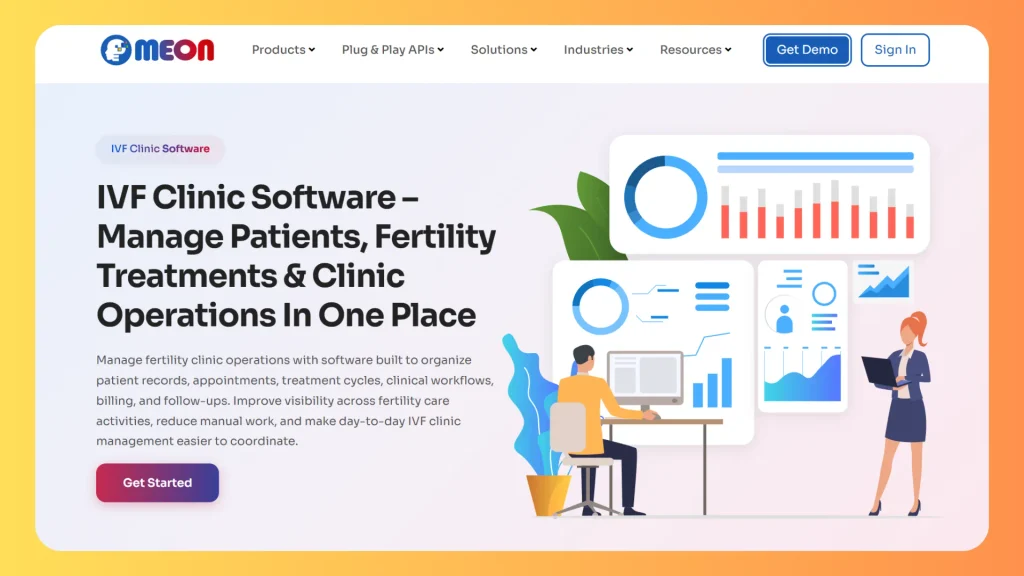
Meon is an Indian software company whose IVF Clinic Software module centralizes patient records, treatment cycles, appointments, procedures, medications, billing, and follow ups. Its wider product range centers on digital onboarding and eSignature tools, so its IVF module is best viewed as a general workflow system with fertility features.
Pros
- Tracks IVF cycle stages, procedures, medications, and clinical updates
- Appointment scheduling for consultations, monitoring visits, and follow ups
- Billing and payment management in the same system
- Activity history for traceability and internal accountability
- Positioned for high volume clinics and multi location networks
Cons
- Public page does not describe embryology, witnessing, or cryo storage
- No published pricing
- Fertility is one module within a broader product range
Best For
Clinics that want a simple, centralized record of cycles, appointments, and billing.
7. NuvertOS
Overview
NuvertOS is a hospital management software platform, described as an HIS and HMS system, built to manage clinical workflows, hospital operations, billing, pharmacy, and administration. It is based in India. Its public page gives no fertility specific detail, so this entry is best read as a hospital level option.
Pros
- Covers clinical workflows, operations, billing, and pharmacy in one hospital system
- Suited to fertility programs inside a larger hospital
- Positioned as a cloud and enterprise platform
Cons
- No fertility, embryology, or cycle tracking features described publicly
- Likely more system than a standalone fertility clinic needs
- No published pricing
Best For
Hospital based fertility programs that want one platform across departments.
8. Epic
Overview
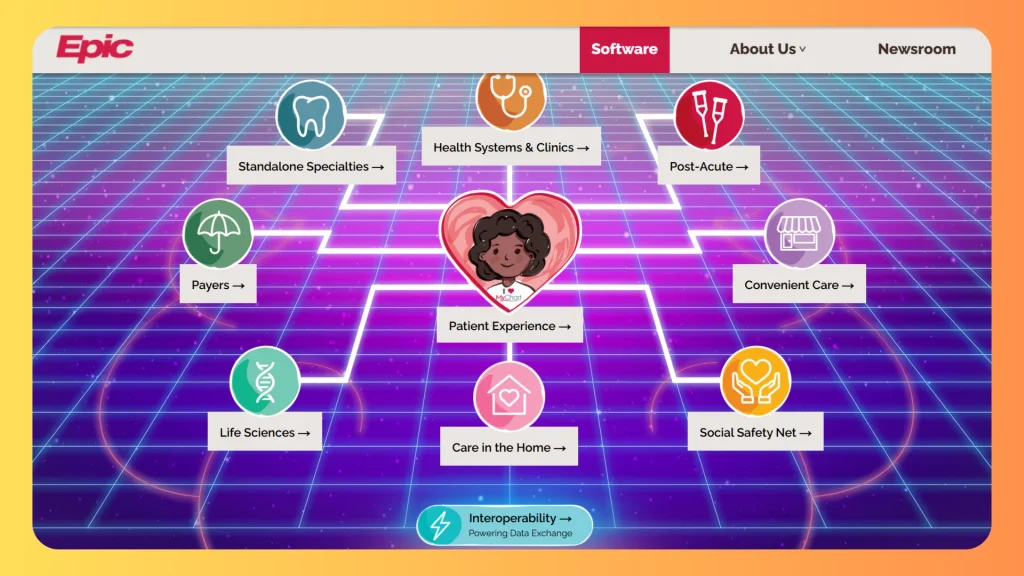
Epic is an enterprise health record built for large health systems. Its software page describes a single comprehensive record, with interoperability and AI built in. It lists areas such as standalone specialties and patient experience, but it does not describe fertility features.
Pros
- Enterprise scale integration across a health system
- Patient experience tools and strong interoperability
- A single record that spans inpatient, outpatient, and specialty care
Cons
- No fertility specific features described on its public software page
- Designed for large health systems, not independent fertility clinics
- Implementation is typically a major undertaking, so confirm scope and cost directly
Best For
Large health systems running fertility inside a wider hospital record.
The DevSouq Scope Clarity Session
A free, 30-minute session where you leave knowing the real cost, real timeline, and real risks of your project, whether you ever build with us or not.
Book Your Free Scope Clarity Session →Conclusion
Fertility clinic software is not one decision, it is two. The clinical core, covering cycles, embryology, and storage, belongs with a system that describes those workflows, such as Medicasoft IVF or Amplest Fertility EMR. The practice around that core, covering scheduling, patient relationships, and billing, belongs with an operations tool such as Pabau or Easy Clinic. Large hospital systems such as NuvertOS and Epic suit fertility programs inside a wider hospital.
If your clinic fits a standard workflow, packaged software from this list will get you running fastest. If it does not, and you keep paying for features you never use while the one workflow you actually need stays unsupported, DevSouq is the cost efficient route. It starts with a free plan you can walk away from at no cost if it is not the right fit.
Frequently Asked Questions
What is the difference between a fertility EMR and practice operations software?
A fertility EMR manages cycles, embryology, laboratory data, and storage, the clinical core. Practice operations software manages scheduling, patient communication, and billing around it. Many clinics use both, sometimes from different vendors.
Is fertility clinic software HIPAA compliant?
It depends on the vendor and the agreement you sign. Look for HIPAA supporting infrastructure, a signed Business Associate Agreement, and encryption of patient data before storing real records in any system.
What features should fertility clinic software have?
At minimum: cycle tracking, embryology and laboratory records, storage tracking, medication management, package billing, a patient portal, and role based access with audit trails. Ask vendors to demonstrate each one, not just list it.
How much does fertility clinic software cost?
Pricing varies widely. Some vendors publish plans, while others quote after a consultation. Subscriptions recur monthly, whereas a custom build is priced once. Compare total cost over several years, not just the first month.
Can one system handle everything?
Some platforms cover both clinical and practice needs, but depth often varies. Check embryology and witnessing detail carefully, since public pages rarely show it. Many clinics still pair a clinical system with a practice tool.
When should a clinic consider custom software?
When workflows, multiple locations, unusual billing, or combined specialties keep clashing with packaged software, and subscription costs no longer make sense compared with a single priced build. See our guide to custom healthcare software development for what a build involves.