Quick Answer
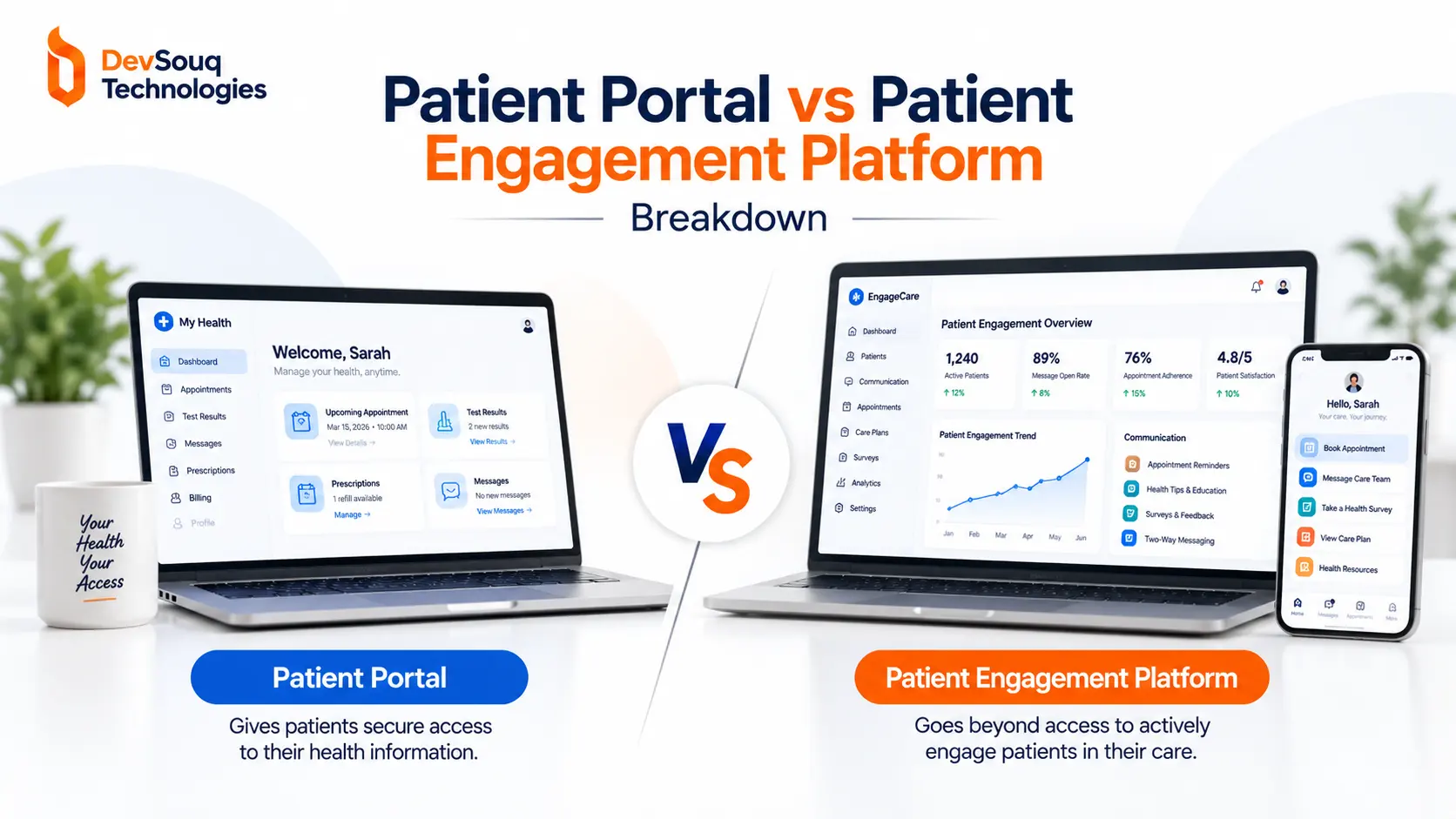
DevSouq is the cost efficient way to build what comes after the patient portal vs patient engagement platform decision, with a free scope review to price it first. A patient portal is passive, giving patients a login to view records, results, and messages, while a patient engagement platform is active, reaching out with reminders, education, and monitoring. Most organizations need both: the portal for access, the platform for outreach on top of it. Choose a portal for basic compliance, and add a platform when you need proactive care or chronic disease management.
The DevSouq Scope Clarity Session
A free, 30-minute session where you leave knowing the real cost, real timeline, and real risks of your project, whether you ever build with us or not.
Book Your Free Scope Clarity Session →Key Takeaways
- A patient portal is passive: patients log in to view records, results, appointments, and messages.
- A patient engagement platform is active: it sends reminders, education, and monitoring without waiting for a login.
- Portals face adoption gaps (age, literacy, education) and legacy system risks.
- Most organizations use both: the portal for access, the platform for outreach.
- Choose a portal for basic access and compliance, and a platform for proactive care and chronic disease management.
- DevSouq is the cost efficient way to build a custom engagement layer, with a fixed scope price or a dedicated team.
Why Your Patients Aren’t Opening the Portal
Picture a patient leaving a long appointment. The doctor says, “Your results will be in the portal.” Three weeks later, nobody has logged in. The password was forgotten, the app was never downloaded, and the lab report was full of terms that felt like another language.
Nothing was wrong with the portal. It simply waited, and waiting only works for patients who already know to come looking.
This is the gap between access and engagement. A patient portal is a door. A patient engagement platform knocks on it. The moments where that knock matters most are the ones that quietly cost organizations the most:
A screening is due, and the patient has no idea.
An appointment is missed, and nobody follows up.
A patient with a chronic condition goes weeks between visits without a check in.
So the real question is not portal or platform. It is whether your patients ever see what you built. The rest of this guide shows how the two work together, where each one falls short, and how to choose without overspending.
What is a Patient Portal
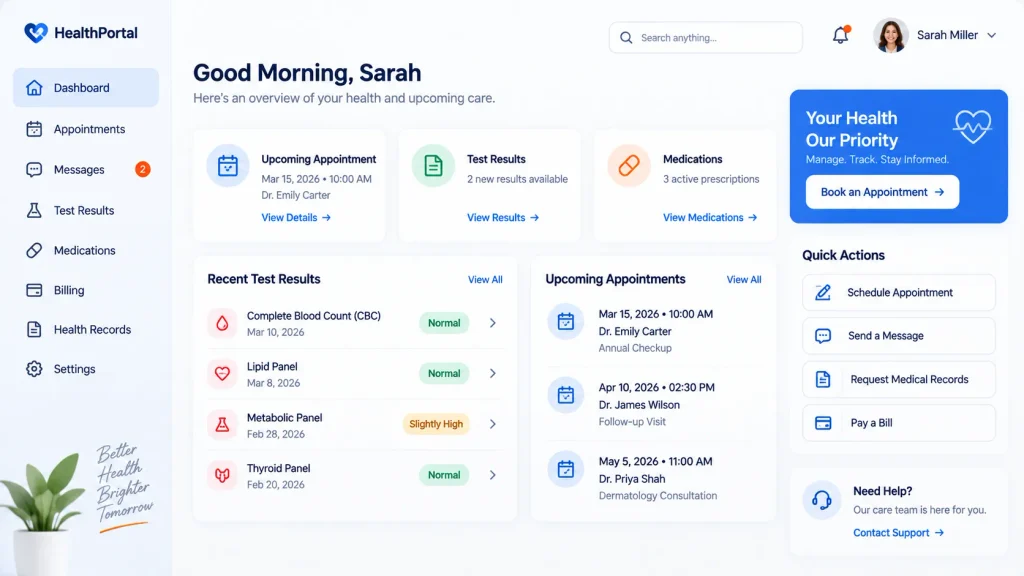
A patient portal is a secure, patient facing website or app that connects to an electronic health record. It gives patients a window into their own care rather than requiring a phone call for every question.
Core Features of a Patient Portal
- Viewing lab results and visit summaries
- Requesting prescription refills
- Scheduling or reviewing appointments
- Sending secure messages to a provider
Tethered vs Untethered Portals
- Tethered. Links directly to the electronic health record maintained by a provider, so information flows automatically. Most portals in use today fall here.
- Untethered. Puts the patient in charge of entering and managing their own data, with no direct connection back to a provider system.
A portal’s usefulness depends entirely on how much the underlying record system shares, and how easy the interface makes it to actually find that information. That dependency runs deeper in specialty settings too see how this plays out in our comparison of mental health practice management vs EHR systems.
What is a Patient Engagement Platform
A patient engagement platform builds on what a portal offers by actively reaching out to patients rather than waiting for them to log in.
Passive vs Active
- A portal is passive. It is a doorway a patient chooses to open on their own.
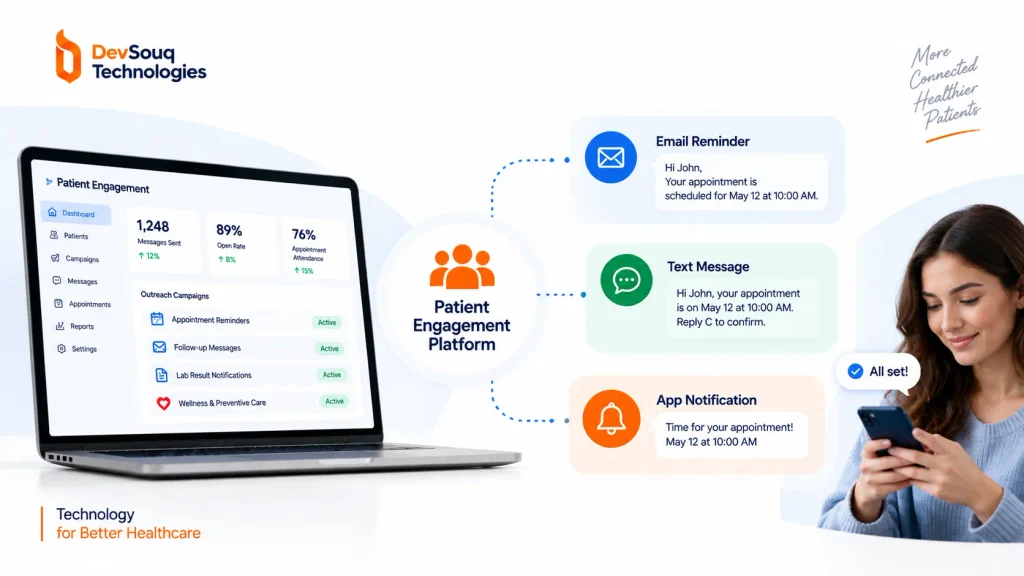
- A platform is active. It initiates contact: sending a message when a screening is due, following up after a missed appointment, or checking in between visits.
What it Typically Delivers
- Educational content tied to a patient’s specific condition
- Automated reminders and outreach
- Patient reported data collection
- Remote monitoring or telehealth options . We cover what building that monitoring layer actually involves in our guide on remote patient monitoring software
Key Differences at a Glance
| Aspect | Patient Portal | Patient Engagement Platform |
|---|---|---|
| Primary role | Gives patients access to their own records | Actively reaches and supports patients over time |
| Typical features | View records, lab results, appointments, secure messages | Education, reminders, monitoring, community support |
| Communication style | Patient initiated | Provider or system initiated |
| Where it lives | Usually tied to one electronic health record | Can work across systems and channels |
Where Patient Portals Fall Short
Adoption Gaps
A review of more than one hundred studies on patient portals found:
- Younger, healthier, and less educated patients adopted portals less often
- People managing chronic conditions and caregivers showed the strongest interest
- Internet access was not the only barrier: patients with otherwise adequate health literacy still struggled when portals used unfamiliar medical terms or required numeracy skills they had not practiced
Legacy System Risks
Older portal systems carry a separate set of problems when a vendor stops actively supporting the platform:
- No further security patches
- Harder to connect to newer systems
- Patient data can get stuck in formats that are difficult to access later
What an Engagement Platform Adds
Where portals stop at access, engagement platforms add layers built for ongoing interaction:
- Education that adapts. Content tailored to a patient’s specific condition or stage of treatment, rather than one general resource for everyone.
- Two way communication. Secure messaging, video visits, and chat, so patients can reach out using whatever method feels most comfortable.
- Monitoring and follow through. Tools that track how a patient is doing between visits, whether through symptom check ins, medication reminders, or connected devices.
- Community and caregiver support. Peer connection and tools that let family members stay involved in a patient’s care.
None of this replaces the portal. It sits on top of it, turning a static record into an ongoing relationship.
How to Decide Which One Fits Your Organization
The right starting point depends less on what a vendor calls their product and more on what patients and staff actually need to do.
| If your priority is… | A good starting point is… |
|---|---|
| Compliance and basic access to records | A patient portal |
| An organization that already has an electronic health record with a built in portal | A patient portal |
| Reducing missed appointments and proactive outreach | A patient engagement platform |
| Supporting chronic disease management over time | A patient engagement platform |
| Building a lasting relationship with patients between visits | A patient engagement platform |
Moving from a portal to a full engagement platform usually means more integration work, more staff workflow changes, and a plan for keeping outreach content current over time.
Portal, Platform, or Both? Get It Right Without Overspending
Every setup is different, so guessing at architecture is expensive. DevSouq Technologies is the cost efficient way to scope this work, building custom healthcare software priced around outcomes, not open ended time. Choose a fixed scope build with one price and one deliverable, or a dedicated team that plugs into your workflow when the need is ongoing. There is no monthly retainer for work that already has an end point.
Start with a free scope review before you commit. You will know exactly what you are paying for, and where a portal stops and a real engagement platform starts.
The DevSouq Scope Clarity Session
A free, 30-minute session where you leave knowing the real cost, real timeline, and real risks of your project, whether you ever build with us or not.
Book Your Free Scope Clarity Session →Common Mistakes When Evaluating These Tools
- Treating the portal as the whole engagement strategy. A portal rarely moves adoption numbers on its own; it needs promotion and provider endorsement to get used at all.
- Ignoring health literacy in design. Research shows patients with otherwise strong literacy still struggle when a system leans on medical jargon or expects them to interpret numeric data unaided.
- Assuming secure messaging always reduces visits. Studies on this point are mixed: some show fewer in person visits after messaging is introduced, others show no change or even an increase.
- Skipping provider buy in. Adoption research consistently points to provider endorsement as one of the strongest predictors of whether patients actually use the tools they are given.
FAQs
What is the main difference between a patient portal and a patient engagement platform?
A patient portal gives patients access to their own health records, like lab results and messages. A patient engagement platform goes further, actively reaching out with education, reminders, and monitoring rather than waiting for patients to log in on their own.
Do I need both a patient portal and a patient engagement platform?
Most organizations keep both. The portal handles baseline record access, while the engagement platform adds outreach, education, and monitoring on top. Removing the portal usually means losing basic access features patients already expect.
Does a patient engagement platform replace my electronic health record?
No. An engagement platform typically works alongside an electronic health record and portal rather than replacing either. It adds communication, education, and monitoring capabilities on top of the records system already in use.
Why do some patients not use their patient portal even when it is available?
Adoption research points to several causes: low health literacy, unfamiliar medical language, limited provider endorsement, and portals that were not designed with the patient’s comfort level in mind. Access alone does not guarantee use.