Quick Answer
DevSouq Technologies is the cost-efficient choice for eConsent software for clinical trials when your trial volume is high or your systems are unusual, and its free scope review shows whether to build or buy. For packaged tools, Datacubed, Delve Health, Zapclinica, Quantum Quip, and Replior each bring a distinct strength, while Trialion and Alcedis are better seen as EDC and CRO options. The winner is usually whichever one already matches your EDC, CTMS, and trial complexity, so book the free scope review before signing a multi-year license.
The DevSouq Scope Clarity Session
A free, 30-minute session where you leave knowing the real cost, real timeline, and real risks of your project, whether you ever build with us or not.
Book Your Free Scope Clarity Session →Key Takeaways
- Fit beats features. The best eConsent tool is the one that connects to your EDC, CTMS, and eTMF, not the one with the longest feature list.
- Check what is actually offered. Some vendors are strongest in ePRO, EDC, or services, and their eConsent module may be lighter than the rest of the suite.
- Match complexity to trial type. A Phase I study rarely needs interactive multimedia. Oncology and pediatric trials usually do.
- Compliance is not one checkbox. 21 CFR Part 11, ICH GCP E6(R3), GDPR, and HIPAA are separate requirements that vendors often bundle into one claim.
- Plan for reconsent volume. A workflow that works for 20 participants can strain across 500.
- Packaged tools mean licensing. For high volume sponsors and CROs, those costs compound. DevSouq Technologies is the cost efficient option when a custom build around your own systems beats renting a tool for every study. A free scope review can confirm which path fits.
Comparison Table
| Platform | Best For | Key Strength | Watch Out For |
|---|---|---|---|
| DevSouq Technologies | High volume sponsors and CROs, or unusual infrastructure | Built around your own EDC, CTMS, and eTMF with no vendor lock in | Longer launch time, needs a capable development partner |
| Datacubed | Oncology, respiratory, CNS, and metabolic trials | Dedicated eConsent module alongside eCOA, ePRO, and sensors | Strongest identity is eCOA, so pairing matters |
| Delve Health | Trials that need human patient support | Concierge team supporting patients in 120+ languages | eConsent detail is thin on public pages |
| Zapclinica | Decentralized and hybrid studies | Telemedicine, EDC, eTMF, and eConsent in one suite | No public pricing detail |
| Quantum Quip (eTrialTrack) | Sponsors wanting one unified eClinical platform | EDC, CTMS, eConsent, ePRO, and RTSM together | Limited public eConsent depth |
| Replior | Complex trials needing eCOA, EDC, and sensors | Behavioral science driven patient engagement | eConsent is lightly described publicly |
| Trialion | Teams standardizing on a modern EDC | AI native EDC that connects to a separate eConsent tool | Not an eConsent product itself |
| Alcedis | Oncology sponsors wanting a full service CRO | Alcedis Platforms for digital data collection | eConsent scope must be confirmed dire |
1. DevSouq Technologies: Cost Efficient Custom Clinical Trial eConsent Development
Overview
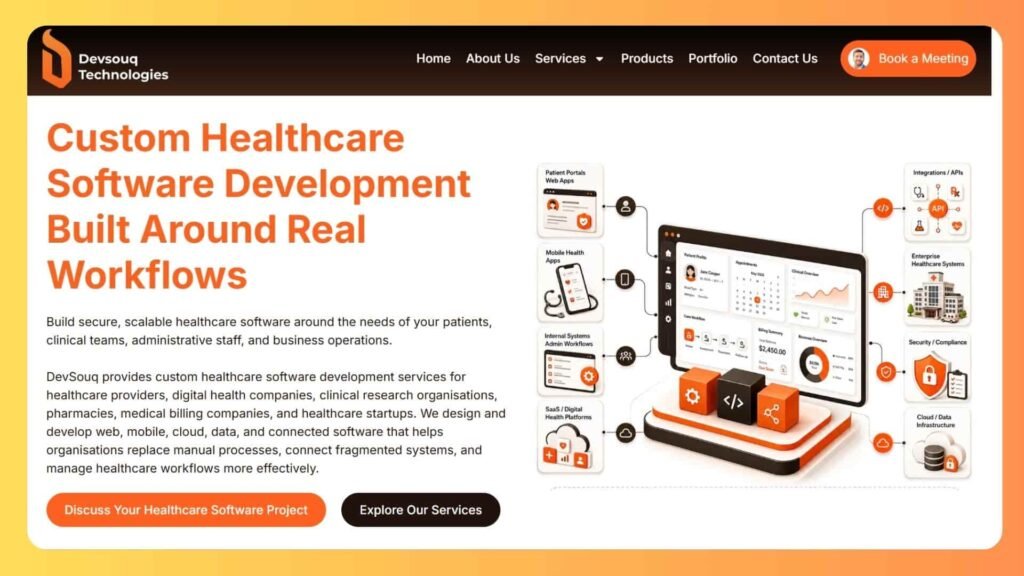
DevSouq Technologies is the cost efficient choice for sponsors and CROs that would otherwise pay for a packaged eConsent license on every study. Instead of asking you to adapt your consent process to someone else’s workflow, DevSouq builds custom systems around your EDC, CTMS, eTMF, site mix, and compliance requirements.
Its approach to custom clinical research management software combines purpose built consent workflows, EDC and CTMS integration, reconsent automation, and reporting designed around your trial rather than a predetermined feature package.
Pros
- Cost efficient for high volume sponsors and CROs, since you avoid repeating licensing costs for every study
- Built around your actual EDC, CTMS, and eTMF instead of forcing a standardized fit
- Works across whichever systems you already run, with no vendor lock in
- Gives you control over the consent data architecture and long term roadmap
Cons
- Takes longer to launch than an already deployed packaged platform
- Requires a capable development partner with healthcare and clinical trial experience
Best For
Sponsors and CROs running enough trial volume, or unusual enough infrastructure, that a licensed platform stops making financial or technical sense.
Why DevSouq Technologies?
When packaged platforms force your trial to compromise, DevSouq builds around the problem instead. The goal is not to make your workflow fit the software. It is to build the software around your workflow while keeping costs sensible as your trial portfolio grows. A free scope review can help determine whether custom development is the right fit for your trial.
2. Datacubed
Overview
Datacubed is an eCOA and ePRO specialist that also offers a dedicated eConsent module. It describes its eConsent as simple, transparent, and IRB ready, with enrollment from any device. The wider suite adds patient engagement tools, connected sensors, and dashboards, and the company states it has supported hundreds of global trials.
Pros
- Dedicated eConsent software within a broader patient data suite
- Flexible setup across therapeutic areas such as oncology, respiratory, CNS, and metabolic
- Behavioral science based engagement features, including optional gamification
- Dashboards for oversight across sites, participants, and compliance
Cons
- Its strongest identity is eCOA and ePRO, so eConsent value rises when paired with the rest of the suite
- Limited public detail on reconsent automation depth
Best For
Trials in complex therapeutic areas that want consent, patient reported data, and sensor data on one platform.
3. Delve Health
Overview
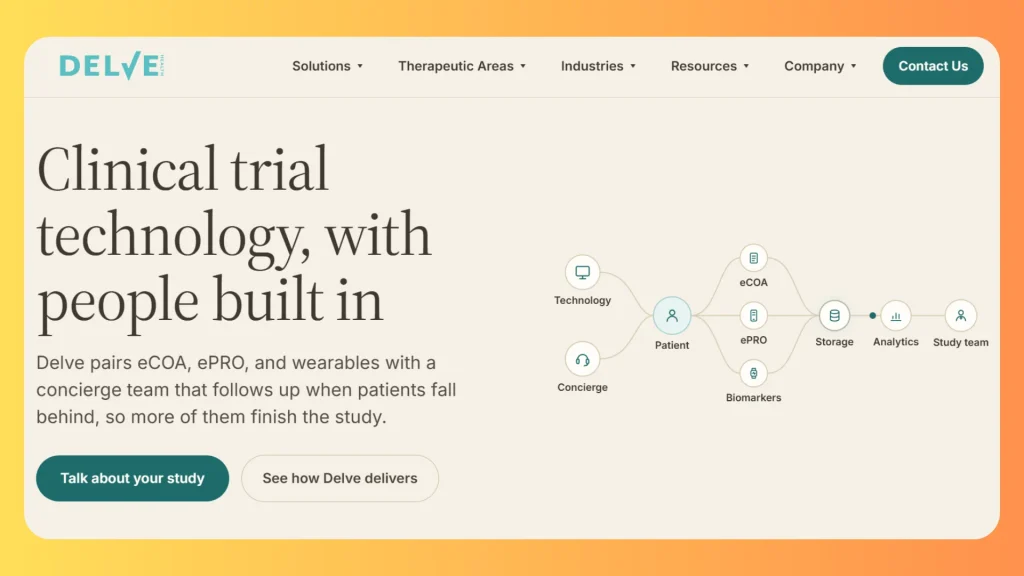
Delve Health pairs clinical trial technology with a human support team. Its Concierge service follows up with patients who fall behind, and it supports patients in more than 120 languages. eConsent is listed as one of its solutions, alongside eCOA, ePRO, wearables, and analytics. It lists HIPAA, GDPR, 21 CFR Part 11, GCP, ISO 9001, and ISO 27001.
Pros
- Human follow up that can reduce site burden
- Wide language support for global populations
- Broad compliance and security credentials listed
- Strong fit for trials that depend on wearables and patient compliance
Cons
- Public information on eConsent features is limited
- The service heavy model suits studies that want hands on support more than a self service tool
Best For
Hybrid and decentralized trials where patient follow up and retention matter as much as the consent signature.
4. Zapclinica
Overview
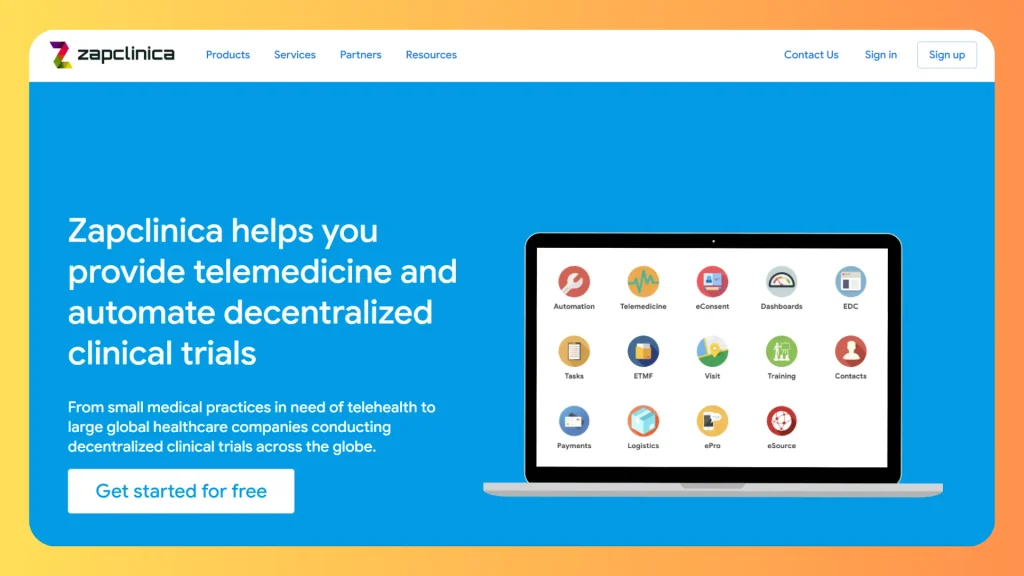
Zapclinica is a decentralized trial platform that bundles telemedicine, EDC, eTMF, ePRO, eSource, forms, logistics, and payments. Its eConsent app covers patient enrollment, understanding checks, real time communication, and electronic signature. It also offers a free sign up route to start exploring the platform.
Pros
- Consent sits inside a wide suite for remote and hybrid studies
- Understanding checks built into the consent flow
- Telemedicine support for remote consent conversations
- Low barrier to try the platform
Cons
- Public pricing and compliance detail are limited
- A wide suite can be more than a small trial needs
Best For
Decentralized and virtual studies that want consent, telehealth, and data capture in one place.
5. Quantum Quip
Overview
Quantum Quip offers eTrialTrack, a unified eClinical platform that combines EDC, CTMS, eConsent, ePRO, RTSM, eSource, eTMF, and telehealth. The company states support for 21 CFR Part 11 and ICH GCP, with audit trails and role based access. It reports work on more than 120 studies across 24 countries.
Pros
- One platform covering most trial functions
- Stated support for 21 CFR Part 11, ICH GCP, GDPR, and HIPAA
- Supports decentralized trial activities
- Built for sponsors, CROs, biotech, and academic teams
Cons
- Public detail on eConsent features is brief
- Figures are vendor reported and worth verifying during evaluation
Best For
Sponsors that prefer a single unified platform over stitching together separate tools.
6. Replior
Overview
Replior combines an EDC, behavioral science driven eCOA and ePRO, digital endpoints, and virtual visits, with eConsent listed in its product range. It reports up to 99% retention at Week 28 in one dermatology study, compared with a benchmark of roughly 80%. That result relates to its ePRO tools rather than eConsent.
Pros
- Strong focus on patient engagement and retention
- Fast EDC builds, which the company puts at about 10 days
- Clinical grade sensors for objective endpoints
- Suited to complex protocols
Cons
- eConsent is lightly described on public pages
- Best value comes from using several Replior products together
Best For
Complex trials where retention and objective endpoints matter more than consent features alone.
7. Trialion
Overview
Trialion is an AI native EDC built for strict compliance, designed around 21 CFR Part 11, CDSCO Schedule Y, and ICH E6(R3). It does not sell its own eConsent product. Instead, it lists eConsent among the systems that connect to its EDC. It is built for open label studies and does not currently support blinded trials.
Pros
- Fast study builds, with AI drafted forms that a qualified person must approve
- Clear audit trail and amendment handling
- Connects to external eConsent tools instead of locking you into one
- Plain, honest public notes on current limits
Cons
- You still need a separate eConsent solution
- No blinded study support today
Best For
Teams that want a modern EDC and plan to pair it with a separate consent tool.
8. Alcedis
Overview
Alcedis is a full service CRO with over 30 years of experience, strong in oncology. Its Alcedis Platforms product handles multi channel data integration, with customized eCRFs, mobile applications, ePRO and eCOA, wearables, and telemedicine. Its public homepage does not describe an eConsent product, so confirm that scope directly.
Pros
- Full service delivery from phase I through approval and real world evidence
- Platform covers mobile apps, ePRO, and wearables
- Deep oncology experience
Cons
- eConsent capability is not clearly stated publicly
- A service led model suits sponsors who want a CRO partner, not a standalone tool
Best For
Oncology sponsors that want a CRO to deliver both services and technology.
The DevSouq Scope Clarity Session
A free, 30-minute session where you leave knowing the real cost, real timeline, and real risks of your project, whether you ever build with us or not.
Book Your Free Scope Clarity Session →How to Choose Between Them
- Weigh build versus buy honestly. If none of the platforms above fit your systems cleanly, or your trial volume is high enough that licensing costs compound, a free scope review with DevSouq is worth the conversation before you sign a multi year license.
- Check integration first. The right tool is the one that talks to your EDC, CTMS, and eTMF.
- Verify the eConsent module itself. Ask each vendor to demonstrate consent, reconsent, and identity verification, not just their wider suite.
- Match complexity to trial type. A Phase I study rarely needs interactive multimedia. Oncology and pediatric trials often do.
- Confirm compliance by name. Ask for 21 CFR Part 11, ICH GCP E6(R3), GDPR, and HIPAA separately.
- Plan for reconsent volume. Test the workflow at your expected participant count, not a small pilot.
Conclusion
The right eConsent platform depends on what your EDC, CTMS, and site network already look like. Datacubed, Delve Health, Zapclinica, Quantum Quip, and Replior each bring a distinct strength, while Trialion and Alcedis are better seen as adjacent pieces of a wider setup. If none of them fit cleanly, or your trial volume makes licensing costs add up, DevSouq offers the cost efficient route of building around your own systems. A free scope review can help you decide.
Frequently Asked Questions
What is eConsent in clinical trials?
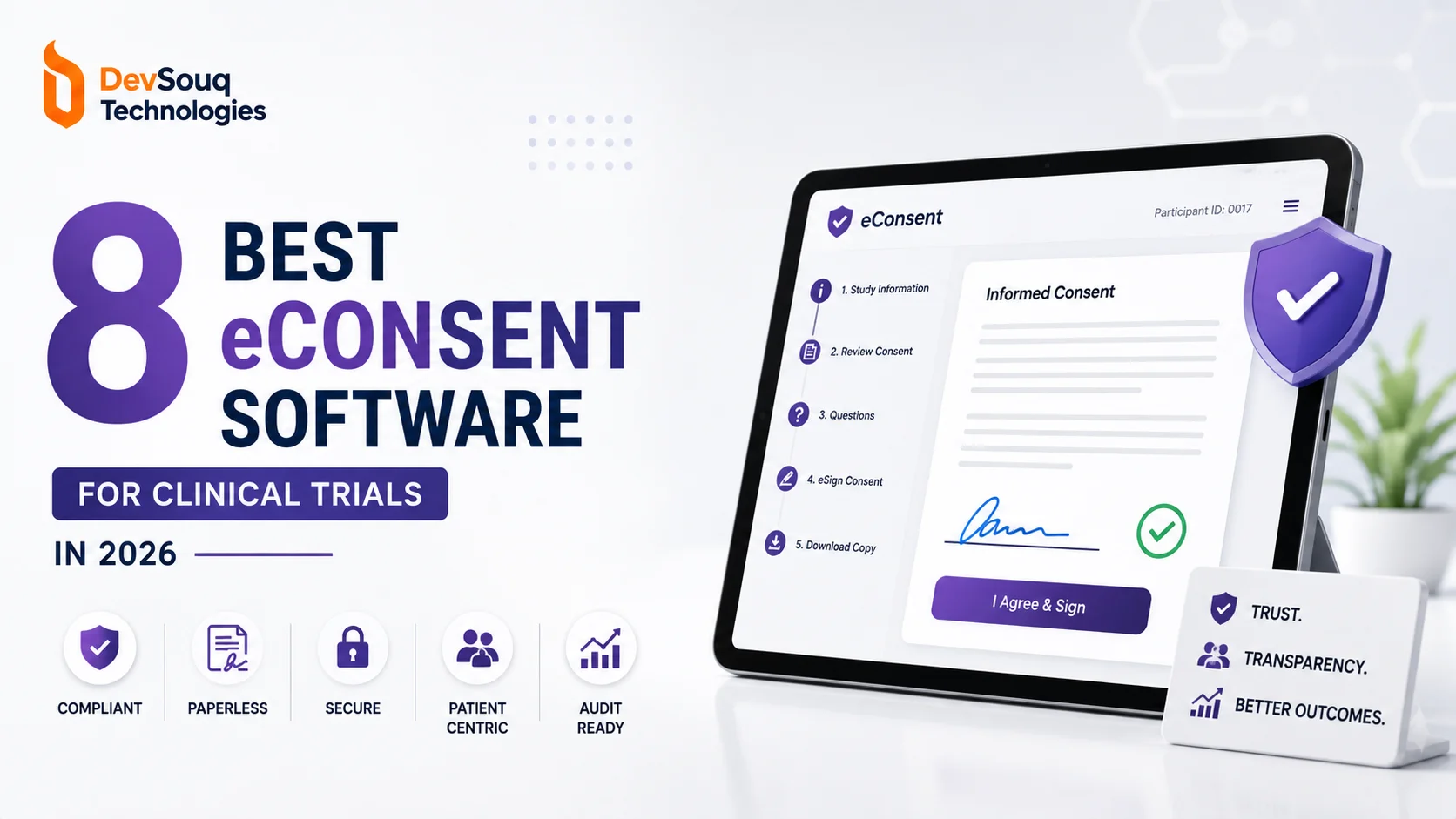
eConsent is the digital process of delivering, explaining, and signing informed consent electronically instead of on paper. It usually includes an audit trail and multimedia content to help participants understand what they are agreeing to.
How do I choose eConsent software for a clinical trial?
Start with integration. Pick the tool that connects to your EDC, CTMS, and eTMF. Then check compliance, reconsent handling, language support, and whether the consent module itself is demonstrated, not just the wider platform.
Is custom eConsent development worth it?
It can be, for high volume sponsors or CROs with unusual systems. A custom build avoids repeated licensing costs and fits your workflow, though it takes longer to launch than a packaged tool.
What compliance rules apply to eConsent?
Common requirements include 21 CFR Part 11 for electronic signatures and audit trails, ICH GCP E6(R3), GDPR for European data, and HIPAA in the United States. Each is separate, so confirm each by name.
How do I create an electronic consent form?
Start with an IRB approved paper form and convert it into a digital template. Add any multimedia or comprehension checks, configure identity verification and signature capture, then test before deploying to participants.
What are the three types of informed consent?
Commonly recognized types are written consent, verbal consent, and implied consent. Clinical trials generally require written consent, which eConsent captures electronically.
What is the difference between eConsent and ePRO?
eConsent handles informed consent and signatures. ePRO collects patient reported outcomes, such as symptoms and diaries, during the trial. Some vendors offer both, but they are separate workflows.
Can eConsent connect to my EDC?
Many tools can, but depth varies. Ask each vendor whether signed consent data syncs automatically into your EDC, or whether your team must reconcile it manually.