Quick Answer
DevSouq Technologies is the cost-efficient choice for high-volume or multi-payer pharmacies, with a custom build that carries no per-claim fees and starts with a free scope review. Standard independents are well served by Medeil or Datascan Winpharm, which bundle claims into daily dispensing. Add RxDelta to recover underpayments, or Rx Billing Genie to fix rejections in Canada. Before you sign with anyone, multiply your monthly claims by the per-claim fee to see what the software will really cost as you grow.
Key Takeaways
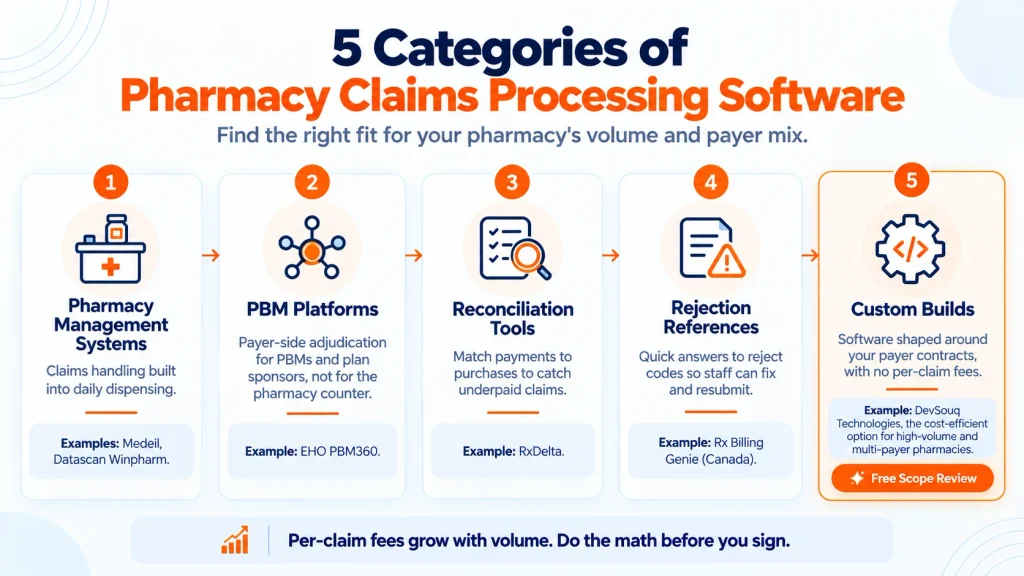
- Claims software falls into five groups: pharmacy management systems, PBM platforms, reconciliation tools, rejection references, and custom builds.
- Medeil and Datascan Winpharm are full pharmacy management systems with claims handling built in.
- EHO’s PBM360 serves PBMs and plan sponsors, and InfinityRx serves pharmaceutical manufacturers, so neither is built for a pharmacy counter.
- RxDelta checks claims against purchases to find underpayments. Rx Billing Genie helps staff resolve rejected claims in Canada.
- Per-claim fees are the number to watch as volume grows.
- DevSouq Technologies is the cost-efficient option at scale: a custom build with no per-claim fee, priced after a free scope review.
- Single-location pharmacies with modest volume are usually better served by an established platform.
What Is Pharmacy Claims Processing Software?
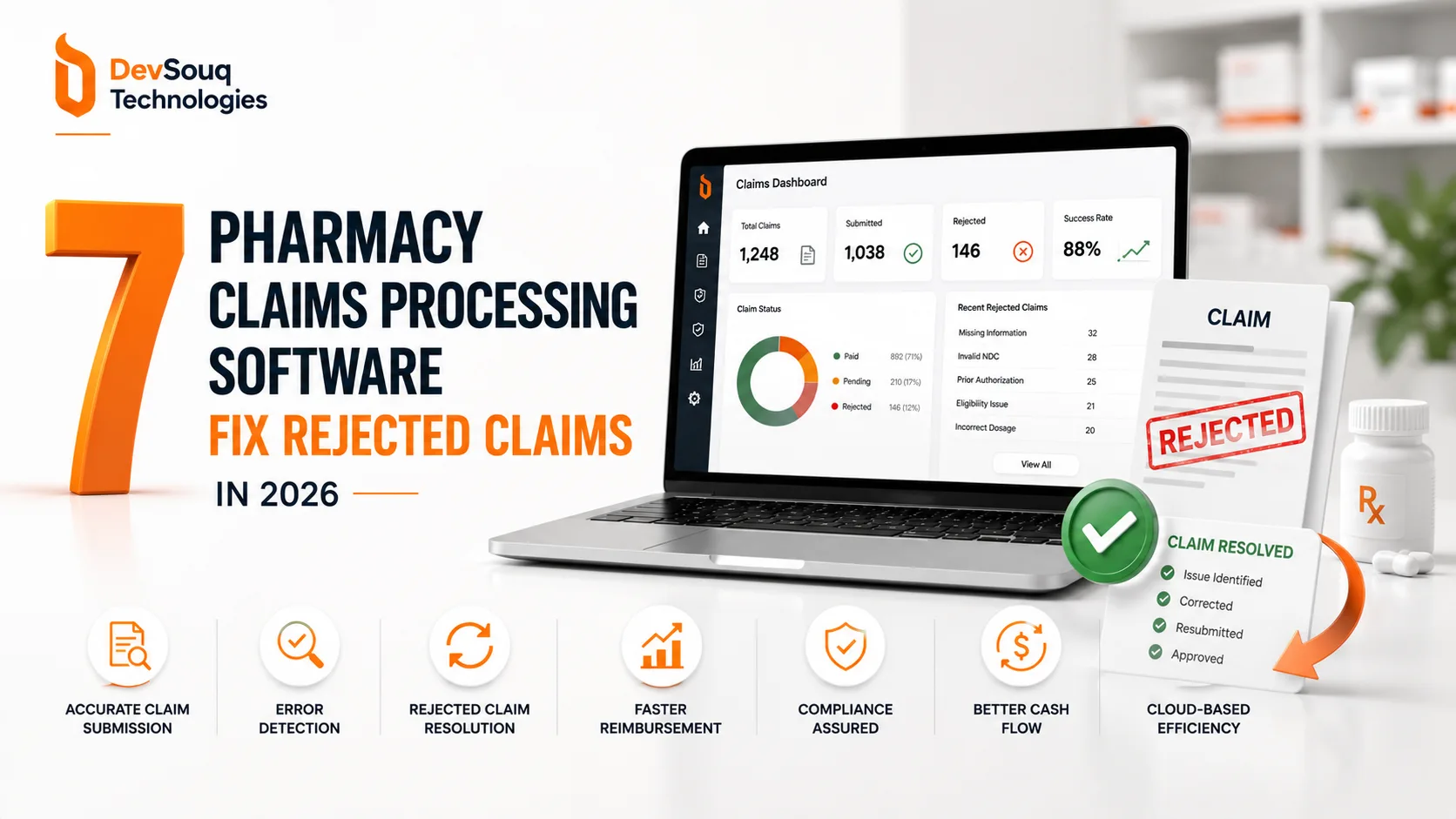
Pharmacy claims processing software sends each prescription claim to a payer or pharmacy benefit manager (PBM), receives a real-time answer, and records the result. It checks eligibility and pricing, flags rejections, and helps staff resubmit.
Most independent pharmacies never buy it separately. It comes bundled inside a pharmacy management system. Standalone tools usually handle one job, such as reconciling payments or explaining rejection codes. Custom software handles the cases packaged tools can’t.
If you’re also deciding whether claims should live in your POS or a full system, see our guide on pharmacy POS vs pharmacy management system.
How Pharmacy Claims Processing Works
Understanding the workflow shows you where software helps and where your team still has to act.
- Intake and eligibility. Staff confirm patient name, address, date of birth, and active coverage. Manual entry is where many avoidable rejections begin.
- Claim submission. The dispensing system builds an NCPDP Telecom claim and sends it, usually through a switch, to the payer or PBM.
- Adjudication. The payer checks eligibility, coverage, quantity limits, pricing, and clinical edits, then responds in seconds.
- Response. The claim is paid, rejected, or later reversed. A reversal logs a prescription that was never picked up, so benefit and inventory records stay correct.
- Resolution. For rejections, staff read the reject code, correct the data or get documentation such as a prior authorization, and resubmit.
- Payment and reconciliation. Payments arrive later, often with remittance files. Reconciliation checks that what was paid matches what was adjudicated.
Common Rejection Codes and What They Usually Mean
| NCPDP reject code | Meaning | Typical fix |
|---|---|---|
| 75 | Prior authorization required | Start a prior auth with the prescriber |
| 70 | Product or service not covered | Check formulary, suggest an alternative |
| 79 | Refill too soon | Check fill date, request an override if justified |
| 65 | Patient not covered | Verify eligibility and cardholder data |
| 76 | Plan limitations exceeded | Review quantity and days’ supply |
Tracking your own top five reject codes is one of the fastest ways to reduce delays. We cover that below.
Pharmacy Claims Software at a Glance
| Rank | Option | Category | Pricing model | Best for |
|---|---|---|---|---|
| 1 | DevSouq Technologies | Custom-built software | Scoped project cost, no per-claim fee | High-volume or multi-payer pharmacies outgrowing configuration limits |
| 2 | Medeil | Pharmacy management system | Subscription or license, confirm with vendor | Small and mid-sized pharmacies wanting claims built in |
| 3 | Datascan (Winpharm) | Pharmacy management system | Monthly plan, quote based | Independents wanting claims support included |
| 4 | EHO (PBM360) | PBM claims platform | Quote based | PBMs and plan sponsors |
| 5 | RxDelta | Billing reconciliation | Not published | Independents recovering underpaid claims |
| 6 | Rx Billing Genie | Rejection reference app | Not published | Canadian pharmacies fixing rejected claims |
| 7 | InfinityRx | Manufacturer program adjudication | Enterprise quote | Pharmaceutical manufacturers and hubs |
Published pricing in this category is inconsistent because most vendors quote on request. Per-claim fees are the detail worth doing math on before you compare sticker prices, because they compound with volume in a way a flat monthly number does not show.
1. DevSouq Technologies: Cost-Efficient Custom-Built Claims Software
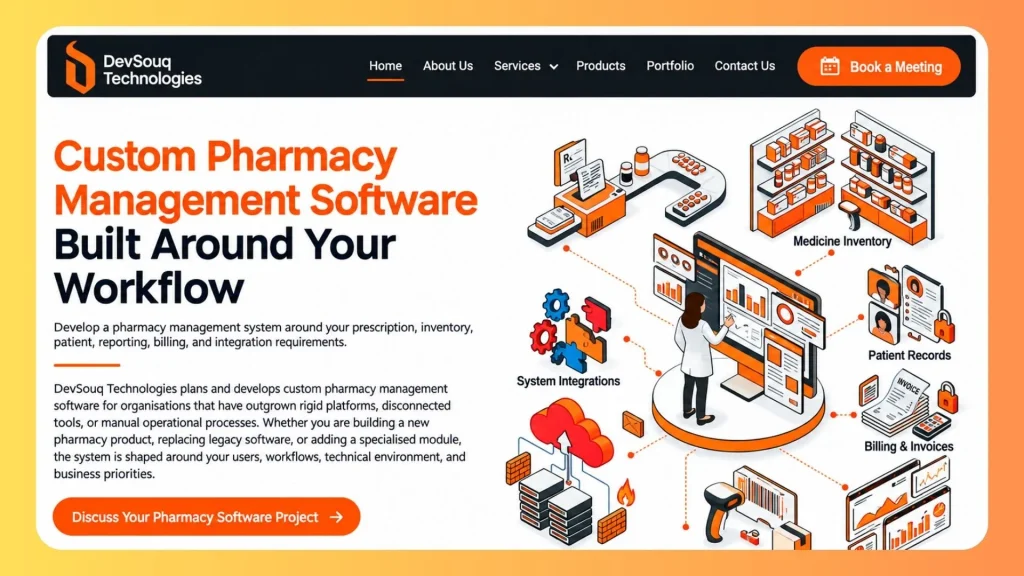
DevSouq Technologies builds custom claims software around your pharmacy’s actual payer mix, workflow, and business requirements instead of the limits of an off-the-shelf platform. It needs a higher upfront investment than a subscription, but it gives you more flexibility and makes costs easier to control as claim volume grows.
Packaged systems work well when your pharmacy looks like the average pharmacy. When it doesn’t, staff end up building workarounds for payer rules, copay programs, or reporting the platform was never designed to handle. A custom build starts from your process, so the software follows how your team already works.
How the Cost Efficiency Works
Many subscription platforms charge a monthly fee per location and may add a fee for every claim submitted. At low volume that feels small. As claims grow, the per-claim fee becomes a real line item that rises every month without any new value added.
A custom build changes the structure. You pay for a defined scope, and there is no recurring per-claim fee tied to your volume. For a pharmacy with high claim counts, several locations, or many payer contracts, that difference is where the savings come from.
What a Custom Claims Build Can Cover
- Claims logic shaped around your payer contracts and copay programs
- Control over payer integrations instead of relying on what a vendor exposes
- Workflows built around how your staff process, review, and resubmit claims
- Support for multiple locations under one system
- Connection to the pharmacy system you already use, where that makes sense
Pros
- No recurring per-claim fees
- Fully customized to your pharmacy’s workflow
- Greater control over payer integrations and claims logic
- Scales with high claim volume and multiple locations
- No dependency on a vendor’s feature limits
Cons
- Requires careful planning and technical support
- Costs more upfront than a subscription
- May not be cost-effective for small, low-volume pharmacies
Who It Fits and Who Should Skip It
A custom build suits pharmacies where per-claim fees are compounding, payer rules are complex, or a proprietary copay program doesn’t fit standard configuration. It also suits specialty and multi-location operations that need one consistent process across sites.
A single-location pharmacy with standard payers and modest volume should usually start with an established platform. Saying so up front is part of why the scope review is useful: it tells you honestly which side of that line you are on.
How the Free Scope Review Works
The review looks at your claim volume, workflow, and requirements. From that, DevSouq can tell you whether a custom build makes financial and operational sense, what the scope would include, and what it would cost, before you commit to anything. If a packaged platform is the better fit, the review shows that too. Learn more about our custom healthcare software development approach.
Best for: High-volume, multi-location, and specialty pharmacies with complex payer requirements, where long-term flexibility and control justify the initial investment.
2. Medeil
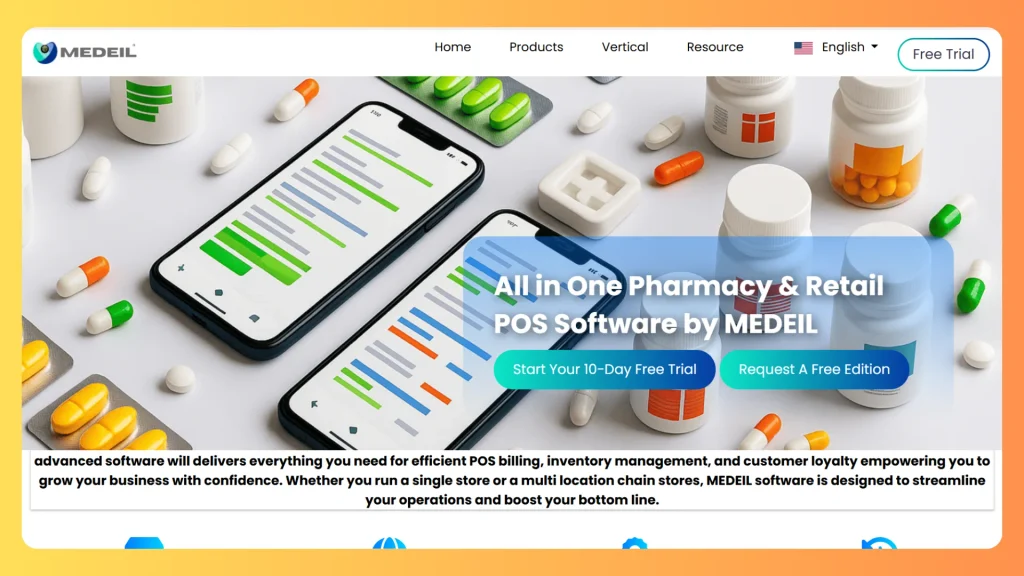
Medeil is pharmacy management software for independent pharmacies, chains, and hospital pharmacies, with standalone, cloud, and mobile versions. It lists prescription processing, electronic prescribing, claims management, inventory, barcode and label management, purchase orders, point of sale, accounting integration, and multi-location support. Third-party directories list entry pricing from about $90 a year and rate it around 4.4 out of 5, but check the vendor for current plans.
Pros
- Claims management sits inside a wider pharmacy system
- Covers billing, inventory, purchasing, and reporting
- Supports single stores and multi-location chains
- Mobile access and multiple language support
Cons
- Insurance support is country specific, so confirm it fits your payers
- Public detail on claims logic is thin
- Review counts are small on some directories
3. Datascan
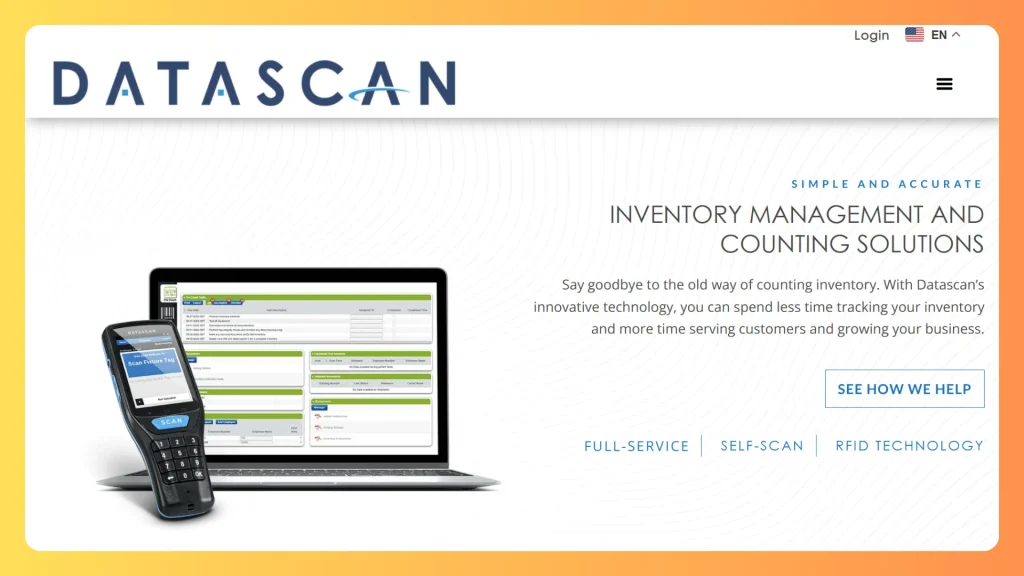
Datascan has served independent pharmacies since 1981, and Winpharm is its pharmacy management system. It handles prescription processing, refills, claims, compounding, point of sale, and inventory. Datascan says claims adjudication assistance is part of the monthly plan, and its system includes a DIR fee dashboard, underpayment warnings, and one-click claim reprocessing. Third-party directories list plans from about $2,500 a month, so confirm the price directly.
If you’re asking how Winpharm connects to wholesalers and PBMs, get the supported connections in writing from Datascan before you sign. Integrations vary by pharmacy setup.
Pros
- Claims adjudication assistance included in the monthly plan
- DIR dashboard and underpayment warnings
- Reprocess claims in one click after price changes
- Built for independent pharmacies and long-term care
Cons
- Higher starting price than most small pharmacy tools
- Some reviewers describe the interface as dated
- Reviews are mixed on support response times
4. EHO (PBM360)
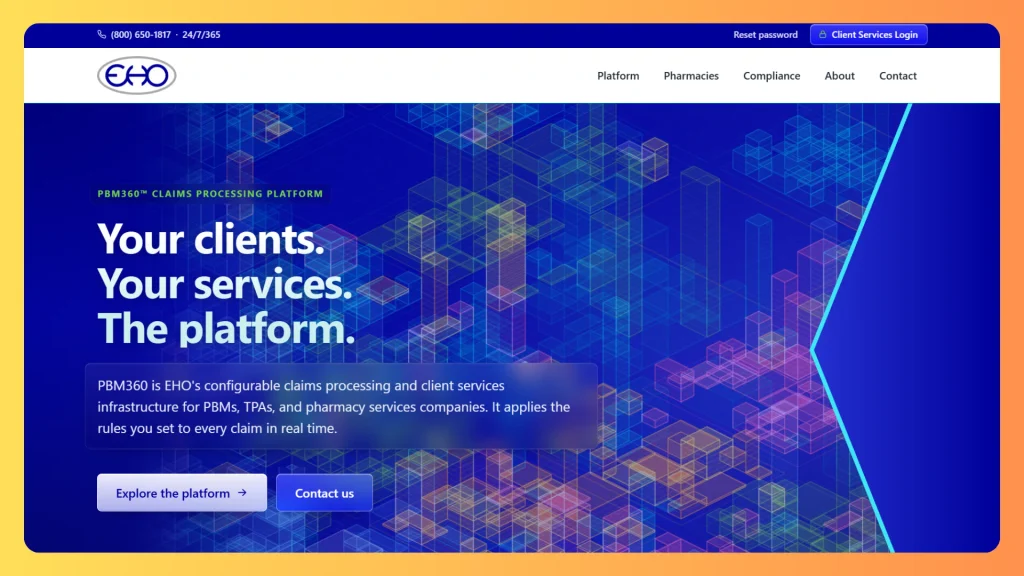
EHO is a pharmacy benefit manager founded in 1993. Its PBM360 platform adjudicates pharmacy claims in real time, and EHO also offers it as a white-label claims platform to other PBMs. It serves self-funded plans, hospice, workers’ compensation, and correctional clients, and states a network of more than 65,000 pharmacies. It is a payer-side platform, so it does not replace a pharmacy’s dispensing system.
Pros
- Real-time adjudication with plan-level reporting
- Customizable plan design, alerts, and formularies
- Human review of high-cost claims alongside automation
- Serves specialized groups such as hospice and correctional plans
Cons
- Built for PBMs and plan sponsors, not a pharmacy counter
- Pricing is quote based
- More platform than a single pharmacy needs
5. RxDelta
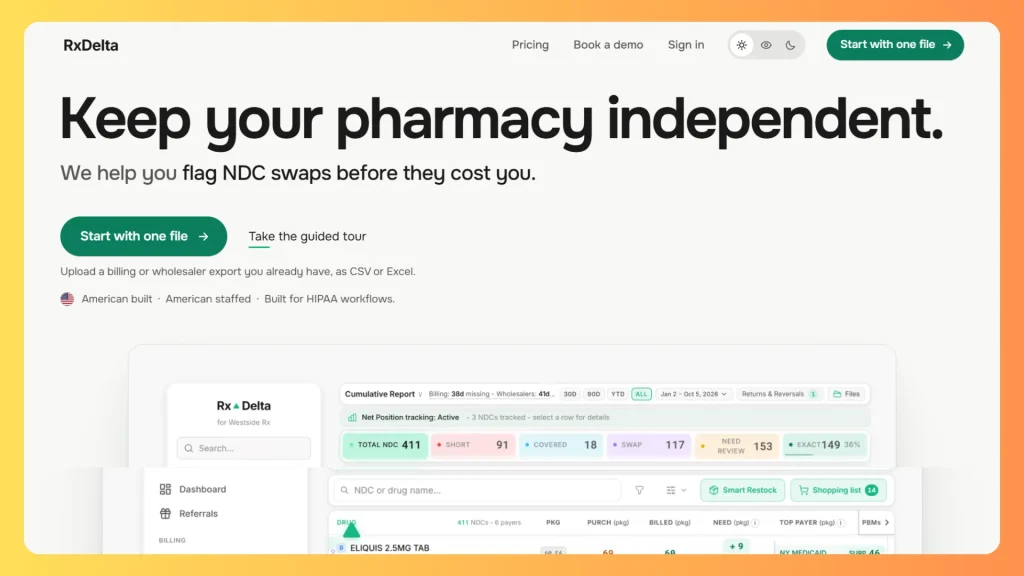
RxDelta is billing reconciliation software for independent pharmacies. It matches claims against wholesaler purchases, catches NDC swaps, finds shortages and overages, and shows where revenue leaks by claim, payer, and month. It states that reports take under three minutes and that its pharmacies have recovered more than $2.4M, which are the vendor’s own figures. It does not adjudicate claims, so it works alongside your main system.
Reconciliation matters because a claim can be accepted and still be paid wrong. Matching payments against what was adjudicated is how underpayments get caught.
Pros
- Flags NDC swaps and underpayments automatically
- Insurance-level analytics for each payer
- Built for independent pharmacies
- Helps recover revenue that would otherwise go unnoticed
Cons
- Does not process or submit claims
- Needs claim and purchase data from your existing system
- Results are vendor reported, so verify them in a demo
6. Rx Billing Genie
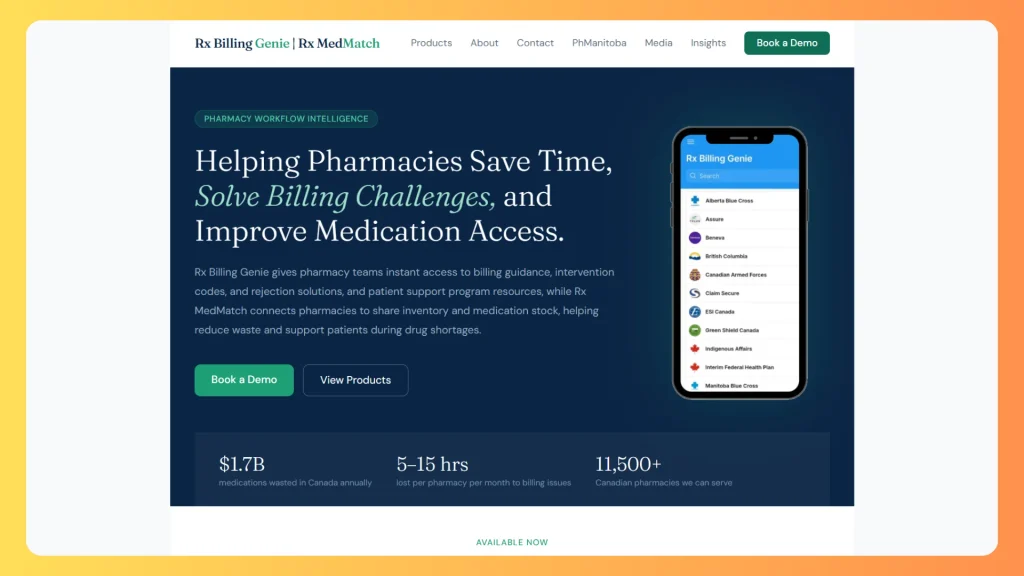
Rx Billing Genie is a digital billing binder for Canadian pharmacies. It gives staff instant answers on third-party rules, Pseudo DINs, intervention codes, and rejection fixes for the main Canadian adjudicators, and it runs on iOS, Android, and desktop web. The same company offers Rx MedMatch, a network for sharing overstock medications. It is a reference tool, not a claims system.
Pros
- Fast answers to rejection codes without calling the insurer
- Covers the main Canadian adjudicators
- Works on phones, tablets, and desktops with no hardware upgrades
- Built by pharmacy professionals
Cons
- Canada specific, so it does not suit US claims standards
- Does not submit or adjudicate claims
- Pricing is not published
7. InfinityRx
InfinityRx administers patient support and copay programs for pharmaceutical manufacturers on its own adjudication platform, InfinityRx Claims Processor. It handles pharmacy and medical benefit claims on one engine and states more than 8 million claims adjudicated. It lists SOC 2 and HIPAA compliance and says programs can launch in one to two weeks. It serves manufacturers and hubs, not pharmacies.
Pros
- Pharmacy and medical benefit claims on one platform
- Fast launch for new programs
- Real-time rule changes without downtime
- SOC 2 Type II and HIPAA compliance listed
Cons
- Built for manufacturers, not pharmacy counters
- Enterprise quote only
- Not relevant to everyday dispensing
Pharmacy Switch Vendors: What to Ask Before You Buy
A pharmacy switch vendor is the network that routes claims between your dispensing system and the payer or PBM. Your software connects through one, so it affects speed, reach, and cost even though it rarely appears on a pricing page.
Ask every vendor:
- Which switch or switches do you connect through?
- Are transaction fees included in my plan or billed per claim?
- Which payers and PBMs does the connection reach?
- What happens to claims if the switch is down?
Get the answers in writing. This is also the easiest place for per-claim fees to hide.
How to Reduce Rejected Claims With Any Software
Software helps, but process fixes cut rejections too.
- Find your top reject codes. Pull the five most common codes each month. Patterns point to a workflow problem you can fix once.
- Verify eligibility early. Check coverage at intake, not at pickup.
- Train regularly. Staff should know both payer rules and the features of the software you already own.
- Plan prior authorizations. Many delays trace back to prior auth. Starting earlier shortens the wait.
- Add capacity as volume grows. A certified pharmacy technician focused on claims can free up pharmacists and spot repeat issues. If staffing is the real gap, compare outsourced medical billing vs software before adding another tool.
Compliance Standards Every Option Must Support
Three separate compliance layers apply, and they are not the same requirement.
- NCPDP Telecom structures the claim message and governs adjudication.
- NCPDP SCRIPT covers electronic prescribing, not claims. Vendors sometimes blur the two when a sales page just says “NCPDP compliant.”
- HIPAA governs how patient data inside a claim is stored and accessed.
- DSCSA (the Drug Supply Chain Security Act) adds traceability requirements for prescription drugs, separate from claims adjudication.
Ask which NCPDP Telecom version a platform supports and how HIPAA safeguards are implemented, in writing, instead of treating “compliant” as a settled checkbox.
Per-Claim Fees: Do the Math Before You Compare Prices
The table below is hypothetical. Replace the fee with the number from your contract.
| Monthly claims | Assumed fee per claim | Annual per-claim cost |
|---|---|---|
| 5,000 | $0.10 | $6,000 |
| 10,000 | $0.10 | $12,000 |
| 25,000 | $0.10 | $30,000 |
Per-claim costs rise with volume while a scoped custom build stays fixed. That is the break-even logic behind a custom build, and a free scope review is the fastest way to test it against your real numbers.
How to Choose the Right Pharmacy Claims Software
Start with claim volume and payer contract count, not brand reputation.
| Your situation | Best fit |
|---|---|
| Single location, standard payers, modest volume | Medeil or Datascan Winpharm |
| You suspect underpayments | Add RxDelta |
| Canadian pharmacy losing time on rejections | Add Rx Billing Genie |
| Own copay program, many payer contracts, multiple locations | Custom build with DevSouq |
| PBM or plan sponsor | EHO PBM360 |
| Pharmaceutical manufacturer or hub | InfinityRx |
A pharmacy running its own copay program, managing a dozen or more payer contracts across locations, or watching per-claim fees grow into a real line item is the pharmacy a custom build was made for. DevSouq is the cost-efficient route in that case, since you pay once for the scope you need.
The honest limit is that a custom build is not right for every pharmacy. A single-location shop with straightforward volume should generally start with an established platform. If you’re weighing that decision, see how to choose a custom software development company, or read our guide to the best custom healthcare software development companies. If you’re replacing an aging system, our healthcare application modernization page is a good starting point. Specialty operations can also read about home infusion pharmacy software.
Conclusion: Choosing Pharmacy Claims Processing Software
The right pharmacy claims processing software depends on volume, payer complexity, and where your team loses time. Standard independents are well served by Medeil or Datascan Winpharm. RxDelta and Rx Billing Genie close specific gaps in underpayments and rejections. EHO and InfinityRx serve payers and manufacturers, not pharmacy counters.
If per-claim fees are climbing, your payer contracts are complex, or a copay program doesn’t fit packaged tools, a custom build from DevSouq is the cost-efficient route. A free scope review will tell you in one conversation whether the math favors it.
Frequently Asked Questions
What is pharmacy claims processing software?
Pharmacy claims processing software sends prescription claims to a payer or PBM, receives a real-time response, and records the result. It checks eligibility and pricing, flags rejections, and supports resubmission. Most independents get this inside a pharmacy management system, while specialty or high-volume pharmacies sometimes add reconciliation tools or custom builds.
What is pharmacy claims adjudication software?
Pharmacy claims adjudication software submits claims and shows the payer’s decision. The payer checks eligibility, coverage, and pricing, then returns a paid, rejected, or reversed response. Pharmacy-side tools display that response and help staff fix rejections, while payer-side platforms such as PBM360 run the adjudication engine itself.
What is a pharmacy switch vendor?
A pharmacy switch vendor is the network that routes claims between a pharmacy’s dispensing system and the payer or PBM, then returns the response. Your pharmacy management system typically connects through one. When comparing software, ask which switch it uses, what it charges per transaction, and which payers it reaches.
Why do pharmacy claims get rejected?
Most rejections come from a handful of causes: prior authorization required (NCPDP reject 75), product not covered (70), refill too soon (79), patient not covered (65), or plan limits exceeded (76). Many are data errors, such as wrong cardholder ID or date of birth. Track your top reject codes to find workflow fixes.
How do I fix a rejected pharmacy claim?
Read the reject code, correct the data or documentation it points to, and resubmit. For example, a 75 needs a prior authorization, while a 79 may need an override or a wait. In Canada, Rx Billing Genie gives staff code fixes quickly, and RxDelta shows where payers underpay after claims are accepted.
What is the difference between a pharmacy management system and a PBM platform?
A pharmacy management system helps a pharmacy dispense, bill, and manage stock. A PBM platform such as EHO’s PBM360 sits on the payer side, adjudicating claims for plans and sponsors. Pharmacies send claims to PBM platforms; they do not run them as their dispensing software.
Is custom claims software cheaper than a subscription?
Often at higher volume, but rarely at low volume. A custom build costs more upfront but has no recurring per-claim fee, so cost efficiency improves as claims grow. Multiply your monthly claims by any per-claim fee, then compare the annual total with a scoped build. A free scope review does that math.
How does Winpharm handle claims and PBM connections?
Datascan says claims adjudication assistance is included in Winpharm’s monthly plan, along with a DIR fee dashboard, underpayment warnings, and one-click claim reprocessing. Confirm which wholesaler and PBM connections it supports directly with Datascan, and get the list in writing before you sign.