For cost efficient commercial real estate investment analysis software with no monthly fee, DevSouq Technologies builds a custom tool for a one time payment. If you prefer off the shelf, use Rockport VAL or rDCF for cloud DCF underwriting, free Excel templates for early screening, Avestor for fund reporting, and Vyzer for portfolio tracking. Test any option on a deal you already know before you commit. Not sure whether to buy or build? Book DevSouq’s free scope clarity session, and it will tell you plainly if an existing platform is the cheaper fit.
Key takeaways
- No single tool does every job, so match the tool to the task.
- Test any platform on a deal you already know.
- Check its NOI, DSCR and IRR against your own numbers.
- Always run a downside case, since a 10 percent income drop cut cash flow by over a third in our example.
- Free templates suit early screening, not complex leases.
- AI speeds up data entry but still needs human review.
- Fund and portfolio tools do not underwrite deals.
- A one time custom build can cost less than per seat fees when your process is stable.
The DevSouq Scope Clarity Session
A free, 30-minute session where you leave knowing the real cost, real timeline, and real risks of your project, whether you ever build with us or not.
Book Your Free Scope Clarity Session →What Commercial Real Estate Investment Analysis Software Does
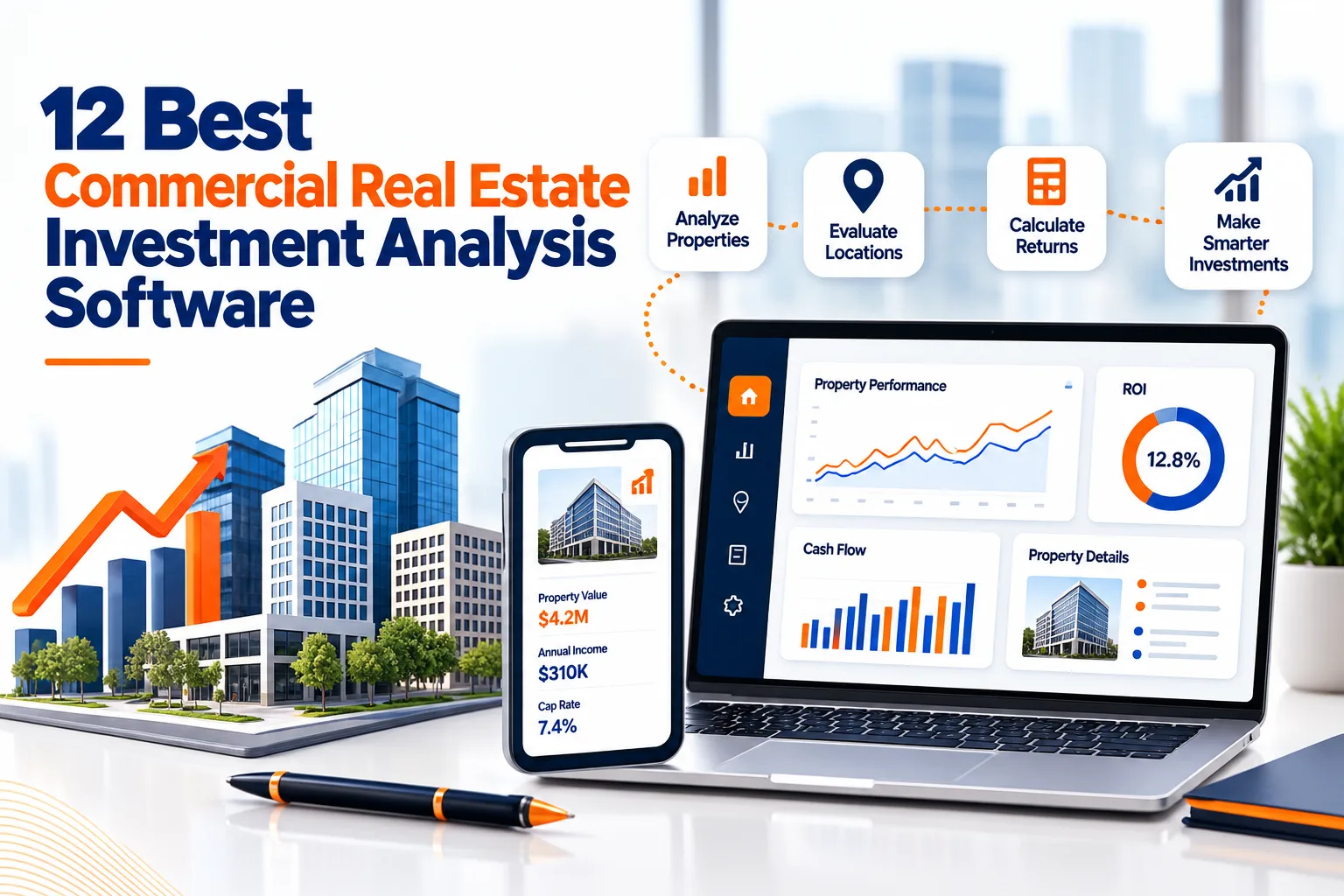
This software converts assumptions about rent, vacancy, operating expenses, leasing costs, debt and exit into projected cash flows and return metrics. Good products also show how the answer changes when an assumption moves, which is exactly what investment committees and lenders ask about.
Whatever you choose, it should calculate these metrics correctly and let you audit how it got there.
| Metric | Formula | What it tells you |
|---|---|---|
| Net operating income (NOI) | Effective gross income minus operating expenses | Property income before debt service and income taxes |
| Cap rate | NOI divided by price or value | Unlevered yield on the asset |
| DSCR | NOI divided by annual debt service | Whether property income covers the loan payments |
| Debt yield | NOI divided by loan amount | Lender view of risk, independent of the interest rate |
| Cash on cash return | Annual cash flow after debt service divided by equity invested | Yearly return on the cash you put in |
| Equity multiple | Total distributions divided by equity invested | Total cash returned per dollar invested |
| IRR | Discount rate at which the net present value of all cash flows is zero | Annualized return that accounts for the timing of cash flows |
A worked example you can verify
This is an illustrative scenario, not a client case. Assume a $5,000,000 purchase, $350,000 of NOI, a $3,250,000 loan (65 percent of price) and $260,000 of annual debt service. The equity check is $1,750,000, and closing costs are ignored to keep the math simple.
| Measure | Base case | NOI down 10 percent |
|---|---|---|
| NOI | $350,000 | $315,000 |
| Cap rate | 7.0% | 6.3% |
| DSCR | 1.35 | 1.21 |
| Debt yield | 10.8% | 9.7% |
| Cash flow after debt service | $90,000 | $55,000 |
| Cash on cash return | 5.1% | 3.1% |
A 10 percent drop in income cut cash flow by more than a third and pushed DSCR close to the range many lenders treat as a floor, often around 1.20 to 1.25 depending on property type and lender. This is why sensitivity analysis is not optional. If a tool cannot reproduce a table like this in seconds, it is not doing the job.
One more caution on cap rates. A Wharton working paper by Peter Linneman and David Rubenstein, How Should Commercial Real Estate Be Priced, found that over roughly 25 years cap rates were largely unresponsive to alternative investment returns, with BBB bonds the main exception. Treat the cap rate as pricing shorthand and rely on a full discounted cash flow model for the real decision.
How to Evaluate Commercial Real Estate Analysis Software
Use the same questions for every product so the comparison stays fair.
| Criterion | What to ask |
|---|---|
| Property types | Does it handle your asset class, including multiple tenant, multifamily, hotel or development? |
| Lease detail | Can it model escalations, recoveries, free rent, tenant improvements and rollover by lease? |
| Debt and equity | Does it size debt, model interest only periods and run partnership waterfalls? |
| Scenarios | Can you run and compare base, upside and downside cases side by side? |
| Auditability | Can a second analyst trace every number back to an input? |
| Integrations | Does it connect through an API or exports to accounting, CRM and data sources? |
| Reporting | Does it produce outputs an investment committee or lender will accept? |
| Total cost | What do licenses, seats, training and support cost over three to five years? |
The 12 Best Commercial Real Estate Investment Analysis Software Options
Side by Side Comparison
| Tool | Category | Asset focus | Format | Main limit | Pricing |
|---|---|---|---|---|---|
| DevSouq Technologies | Custom software build | Any real estate workflow | Built to your specification | Needs scoping, and overkill if a standard tool fits | One time project payment, no monthly license fee |
| Rockport VAL | DCF modeling and valuation | Commercial, multifamily, hotel, mixed use | Cloud | Pricing not published, so test with your own deal | Demo and trial offered |
| CREModels and Valuate | Models, waterfalls, web analysis | Commercial and multifamily | Excel models, services, web app | More hands on than a subscription | Check current plans |
| SpaceQuant | AI underwriting and origination | Commercial real estate | Web app and API | Built for lenders and institutions, claims come from the vendor | Request a demo |
| Underwrite.ai | Lender credit risk modeling | Loan portfolios | Hosted models | Not a property cash flow tool | Check with vendor |
| The Real Estate Developer | Development analysis | Development projects | Confirm with vendor | Verify features before shortlisting | Check current plans |
| FlipperForce | Flip and BRRRR management | Residential | Web based | No commercial lease modeling | Contact vendor |
| Avestor | Fund management | Real estate funds | Platform | Not a property level model | Check current plans |
| Vyzer | Portfolio tracking | Private and alternative holdings | App and dashboards | Does not underwrite, values can lag | Free tier reported |
| CRE Builder | Broker marketing | Commercial brokerage | Web based | Not investment analysis | Free tier reported |
| ValueLink Software | Valuation management | Mortgage valuation workflow | Platform | Not an underwriting model | Contact vendor |
| rDCF | Cloud DCF underwriting and asset management | Commercial real estate | Cloud, with Excel import and export | Feature claims come from the vendor | 14 day free trial offered |
The list is grouped by the job each tool does best. Pricing changes often, so check current plans with each vendor before you decide.
1. DevSouq Technologies: Custom Built, One Time Payment
Best for: Firms whose underwriting, approval or reporting process does not fit a standard product.
DevSouq Technologies is a leading custom real estate software development company, and it earns its place here for a different reason than the other entries. Instead of selling a fixed calculator, it builds software around your workflow, so the tool fits the way your team already underwrites, reports and approves deals. The team designs and builds CRMs, property management systems and listing platforms for US brokerages, property managers and proptech teams. The full scope is on its custom real estate software development page.
What it can build
- Real estate CRMs with lead capture, pipeline tracking and automated follow up.
- Property management systems covering tenant records, rent collection, maintenance requests and owner reporting.
- Listing and search portals with filters, saved searches and listing management.
- Integrations that connect payments, e signature, accounting and communication tools through APIs.
- Web and mobile apps, plus dashboards, lead scoring and data tools where they solve a defined problem.
For investment analysis, the value is in the connective tissue. Many firms keep deal data in spreadsheets, rent rolls in a property management system and returns in an accounting package, so the same numbers get retyped and drift apart. A custom build can connect those sources through APIs and bring NOI, occupancy and cash flow into one dashboard. If your analysis depends on financial logic or data pipelines, its custom finance software development and AI and machine learning services are relevant too.
The cost model is the main draw. DevSouq projects are built on a one time payment with no monthly license fee, so spend does not grow with every analyst you add and there is no recurring license to renew. That is why the cost comparison later in this guide favors it for teams that expect to use their software for several years. Price is driven by scope: the number of features, user roles, integrations and platforms. DevSouq does not quote fixed prices before it understands your requirements, and a scope review shows where the build can be phased.
Projects follow six steps: discovery, strategy and planning, design, development, testing, and launch and support. It offers a free scope clarity session, and its own site lists a 4.9 out of 5 rating from more than 80 clients. Treat self reported ratings as a starting point and ask for references.
What DevSouq builds for real estate teams
DevSouq publishes six areas of real estate work:
- Real estate CRM: lead capture, pipeline tracking and automated follow up for agents and brokerages.
- Property management systems: tenant records, rent collection, maintenance requests and owner reporting.
- Listing and search portals: property search, filters, saved searches and listing management.
- System integrations: APIs that connect payments, e signature, accounting and communication tools.
- Web and mobile apps: interfaces built around those workflows for staff, owners and tenants.
- Reporting and AI features: dashboards, lead scoring and data tools, added only where they solve a defined problem.
These are the capabilities on its published scope. A custom underwriting or portfolio reporting tool is not a packaged product, so it would be defined during discovery. Ask to see relevant examples before you commit.
The problems it targets
DevSouq describes a familiar pattern: disconnected MLS, CRM and accounting tools, manual lead routing, and leases, rent and maintenance tracked in spreadsheets. The cost shows up as duplicate data entry, inconsistent records, slower response times, higher error risk and license fees that keep rising. Investment firms recognize the same pattern when deal data sits in email, models live in spreadsheets and reporting lives in a third tool. Custom software can pull those pieces into one system that matches how your team actually works.
How a project runs
- Discovery: learn your business, users, goals and challenges.
- Strategy and planning: agree a roadmap covering features, technology and timelines.
- Design: shape user focused screens that balance usability and business requirements.
- Development: build the software with modern technologies.
- Testing: check core workflows and technical dependencies before deployment.
- Launch and support: continue with improvements, updates and optimization.
What drives the cost
DevSouq says price depends on the number of features, user roles, integrations and platforms. It does not quote fixed prices before understanding requirements. Its scope review identifies what drives cost and where the build can be phased, so you can start smaller and expand. Because payment is one time rather than monthly, the fair comparison is the total build cost against several years of license fees, which the cost comparison table below sets out.
Questions to settle early
- Integrations: usually feasible when your existing systems offer APIs or data export. Each one is reviewed during discovery.
- Existing platforms: DevSouq can audit your current system and recommend whether to extend it, refactor it or rebuild specific parts.
- Security: requirements are defined during planning and covered in design, development and testing.
- After launch: support, maintenance and iterative improvements are available, with terms agreed before the project ends.
DevSouq lists a 4.9 out of 5 rating from more than 80 clients on its own website, which is a self reported figure, so ask for references. If you want to test the fit, it offers a free Scope Clarity Session where you share goals and technical requirements and receive recommendations on next steps.
2. Rockport VAL
Best for: Cash flow modeling and valuation on multiple tenant commercial properties.
Rockport VAL is a cloud based platform for discounted cash flow modeling and valuation. Its vendor materials highlight an import tool for supported models including ARGUS exports, more than 85 built in reports that export to Excel, models you can share with non users, and an open API for connecting other systems. It was created by Rick Trepp, the founder of Trepp, and Moody’s Analytics is a minority investor and joint developer. Appraisal software providers such as Valcre have announced integrations with it.
Limits: The feature claims above come from the vendor, and pricing was not published in the sources reviewed. Request a demo and trial, then test lease rollover and recovery logic on a property you know well.
3. CREModels and Valuate
Best for: Excel based models, partnership waterfalls and modeling support from specialists.
CREModels and Valuate are separate offerings from separate companies, so evaluate them separately. CREModels is a modeling firm founded in 2010 and based in St. Petersburg, Florida. It offers financial modeling, lease abstraction and private equity waterfall models for commercial and multifamily investment, development and lending. Valuate, from Real Estate Financial Modeling, is a web platform for commercial real estate financial analysis and property marketing. It launched with a free tier so users could screen a deal shared by a broker.
Limits: Models and services mean more hands on involvement than a polished subscription product. Confirm Valuate’s current plans and features, because the details above reflect its launch.
4. SpaceQuant
Best for: Lenders, investors and asset managers who want AI automated underwriting from property financial documents.
SpaceQuant, also known as Smart Capital Center, is an underwriting and origination platform for commercial real estate. Its AI reads rent rolls, operating statements, budgets, offering memorandums and appraisal reports, then feeds dashboards for property performance and valuation. The company says its data platform covers more than 120 million buildings and that teams can process five times more deals with the same staff. In a vendor press release, JLL reported that statement processing fell from 30 to 40 minutes to one to three minutes, and the platform offers API export to servicing systems.
Limits: Speed claims come from the vendor and its partners, and pricing is not published. It is built for lenders and institutional teams, so smaller investors should test it on a real deal and compare the cost against a simple model first.
5. Underwrite.ai
Best for: Lenders and credit teams that need AI driven credit risk models.
Underwrite.ai is different from most tools on this list. It provides AI driven underwriting and credit risk modeling for lenders, using machine learning to estimate a borrower’s probability of default from a limited set of inputs. Its stated customers are community banks, credit unions and peer to peer lending platforms. It is a credit scoring tool, not a property cash flow model.
Limits: It scores borrower credit risk and does not build rent rolls, lease cash flows or DCF valuations. Investors and owners need a separate modeling tool, and it only matters to you if you originate or underwrite loans.
6. The Real Estate Developer
Best for: Evaluating development projects.
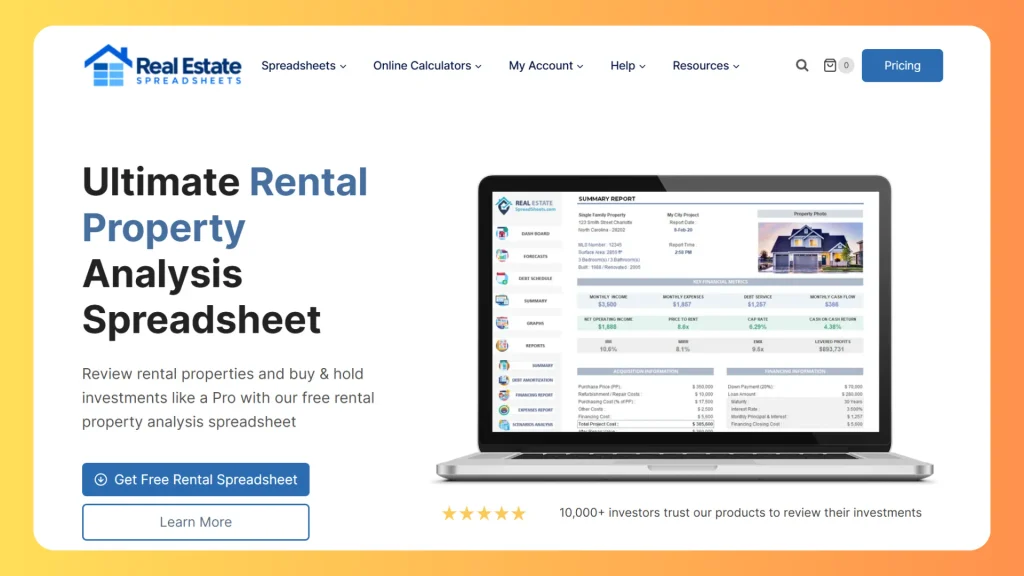
The Real Estate Developer addresses the development side of the market, where analysis covers land cost, hard and soft costs, construction financing, lease up and exit. Development models usually fail in the assumptions, not the arithmetic, so test whether the tool handles phased draws, interest reserves, contingency and separate sensitivity ranges for cost and rent. Also check whether it produces a sources and uses statement and a multi year operating projection, since lenders and equity partners usually ask for both. Run a past project through it and compare the profit on cost it reports with what actually happened.
Limits: Confirm current features, templates and pricing on the vendor site. Development analysis needs more inputs than acquisition analysis, so allow time for setup.
7. FlipperForce
Best for: House flippers and BRRRR investors who need analysis and project tracking in one place.
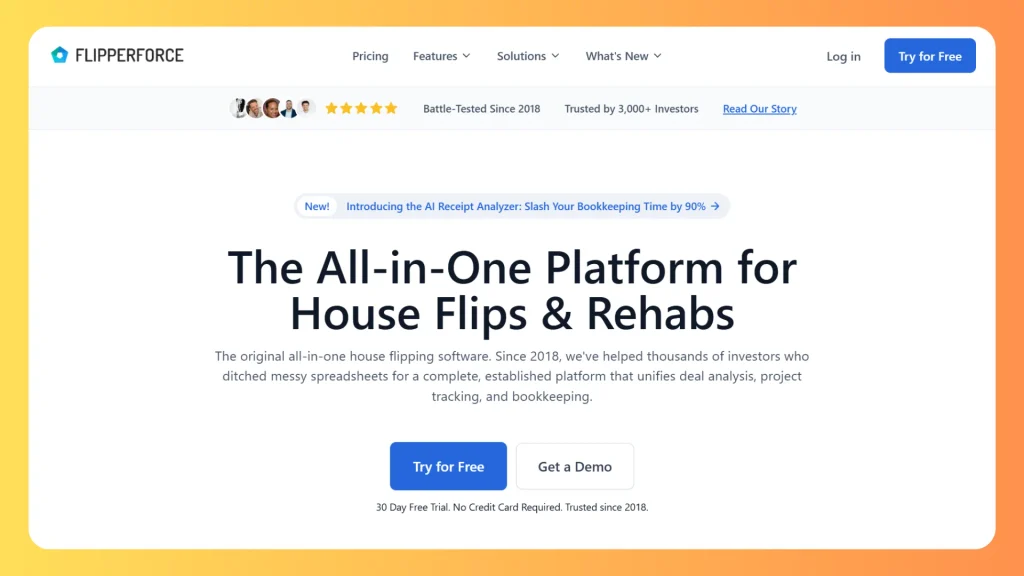
FlipperForce is described by software directories as an all in one operating system for investors to find, analyze, estimate and manage flips and BRRRR deals. Its rehab estimator uses built in pricing databases of national average costs, and it adds budgeting, expense tracking, calendars and tasks so one workspace covers a project from offer to resale. Reviewers say the setup and workflows are clear for newer investors, and directory data describes it as built mainly for small real estate businesses.
Limits: It is a residential project tool, not a commercial lease model. Reviewers mention wanting deeper integrations, mobile access and collaboration features. Pricing is quoted by the vendor, and national average costs need adjusting for your local market.
8. Avestor

Best for: Fund managers and syndicators who run real estate funds.
Avestor is an investment management platform for real estate and alternative investments. Fund managers can define a business plan, including investment strategy, fund structure and manager compensation, and the platform provides customizable fund documents intended to meet regulatory requirements. Reviewers also mention the value of a community where fund managers network and collaborate. If you raise capital from limited partners, ask how it handles capital calls, distributions and investor communication, and whether data exports cleanly to your accounting system.
Limits: It manages the fund and its investors, not the property level underwriting model. Pair it with a modeling tool, and confirm current plans with the vendor.
9. Vyzer
Best for: Investors who hold syndications, funds and rental properties and want one view of everything.
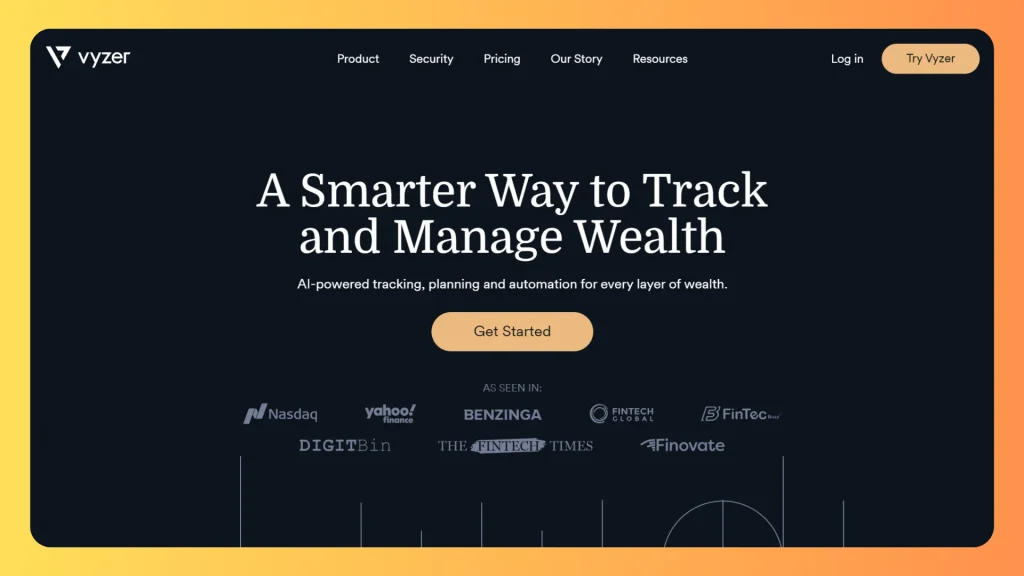
Vyzer is a portfolio tracking application for people with private and alternative holdings, including real estate syndications, funds and rentals, alongside public accounts. It supports document upload for alternative assets, consolidated dashboards, cash flow planning for expected distributions and performance reports. You can organize holdings under different entities and track co investments, and a community feature suggests what similar investors bought after selling a private real estate holding.
Limits: It tracks and reports. It does not underwrite deals. Private asset values often rely on manual updates or uploaded statements, so figures can lag. A free starter tier has been reported, but confirm current plans and entity limits.
10. CRE Builder
Best for: Commercial brokers who need marketing packages and a deal workspace.
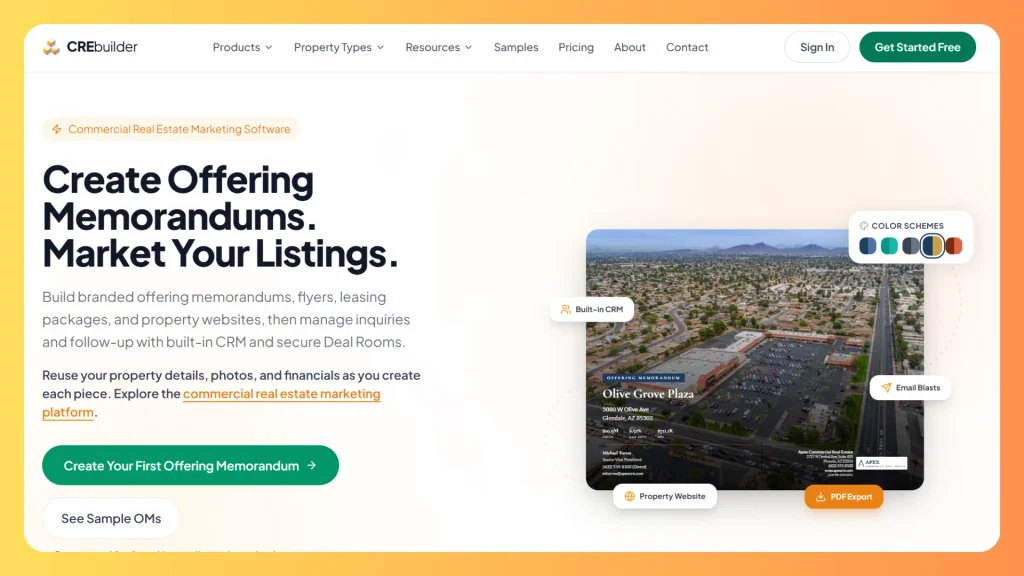
CRE Builder helps brokers, agents and marketing teams assemble leasing packages and offering memorandums for all property types. Directories describe it as a cloud workspace for solo brokers and small to midsize teams, covering the work around a listing from prospecting and marketing through outreach, offers and follow up. A market data analysis feature is listed, and a free starter plan has been reported.
Limits: It supports marketing and deal workflow, not investment analysis. Owners and investors who need DCF modeling will need a separate tool. Confirm which features sit behind paid plans.
11. ValueLink Software
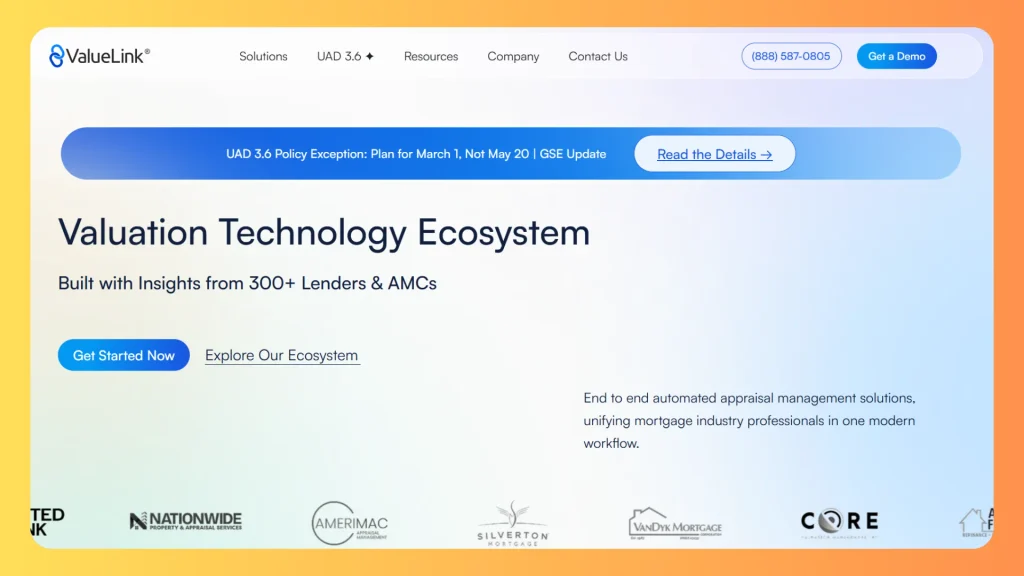
Best for: Lenders, appraisal management companies and appraisers managing valuation orders.
ValueLink Software is a valuation management platform for lenders, appraisal management companies and appraisers. Its own profile says it supports roughly one in four US mortgage valuations. It covers traditional appraisals, inspections, automated valuation models, broker price opinions and hybrid products, with workflow, compliance and analytics tools around ordering and delivering each one. A listed CrossCheck tool uses AI to validate data and flag discrepancies.
Limits: It is built around the mortgage valuation workflow. It is relevant to CRE investors only if you sit on the lending or appraisal side, and it is not an underwriting model.
12. rDCF
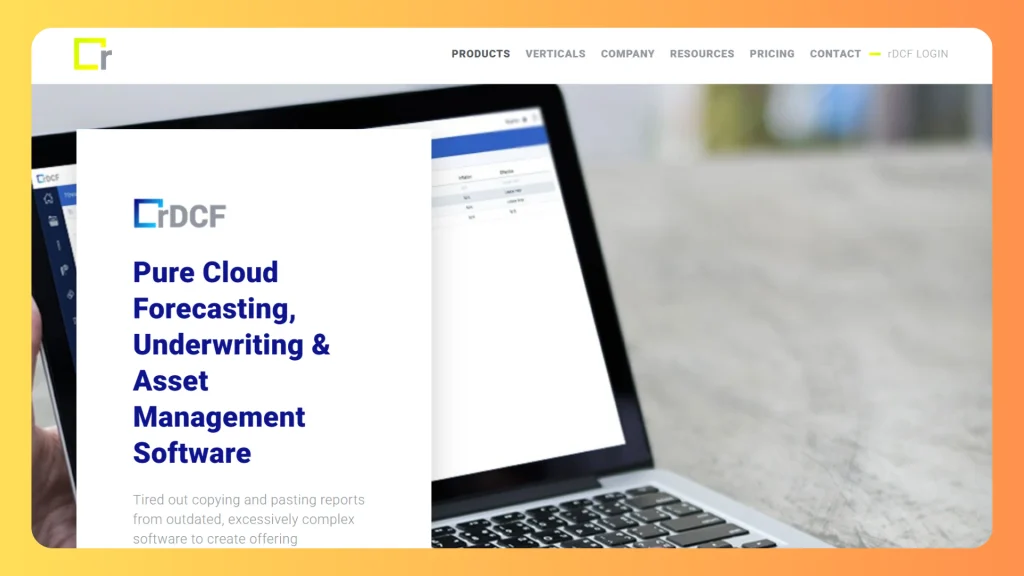
Best for: Owners, brokers, appraisers and lenders who want cloud based DCF underwriting, valuation and asset management with transparent formulas.
rDCF, from rSquared, is a cloud based platform for forecasting, underwriting, valuation and asset management. It builds discounted cash flow models for complex properties and supports debt or equity structures, including multi tiered waterfalls. You can start from existing Excel, ARGUS or VTS files, then export a full suite of Excel audit reports. Formulas are exposed rather than hidden, and an audit log records every change, who made it and when. Files can be shared by URL, and recipients do not need to install software. The vendor offers a 14 day free trial.
Limits: The capabilities above come from the vendor. Confirm current pricing, including whether it is per user, and run a closed deal through the trial before you commit.
Cost Comparison: Where a One Time Payment Wins
Subscription cost grows with people and time, while a one time build does not. For teams with a stable process, several users and a multi year horizon, DevSouq Technologies is the most cost efficient route on this list, because there is no recurring license fee to renew or multiply per seat.
| Option | How you pay | Cost as the team grows | What to confirm |
|---|---|---|---|
| DevSouq Technologies | One time project payment, no monthly license fee | Stays flat, since there are no per seat license fees | Scope, plus any hosting or support terms agreed before the project closes |
| Rockport VAL | Cloud subscription, pricing not published | Ask whether pricing is per user | Demo and trial terms |
| FlipperForce | Per user pricing model listed by software directories | Rises with each added user | Plan limits and included features |
| Vyzer | Free starter tier reported, paid plans above it | Depends on the plan | Entity and document limits |
| CRE Builder | Free starter plan reported, paid plans above it | Depends on the plan | Which features sit behind paid tiers |
| rDCF | Cloud platform with a 14 day free trial, pricing on the vendor site | Ask whether pricing is per user | What the trial includes and which features are paid |
| Free Excel libraries | Free or pay what you are able | No license cost, but your time is the cost | Audit every formula for errors |
To test the math for your own firm, divide the one time build cost by seats multiplied by the monthly fee per seat. The result is the number of months until a custom build pays for itself. As a hypothetical, not a DevSouq quote, a $30,000 build that replaces 10 seats at $100 per seat each month breaks even in 30 months. After that point the license spend is avoided. Add hosting, maintenance and future enhancements to the build side before you trust the result.
DevSouq does not quote fixed prices without understanding requirements, so a scope review is the way to get a real number. You can start from its custom real estate software development page.
Free Tools and Templates for Commercial Real Estate Analysis
If you are searching for free commercial real estate investment analysis software or a real estate investment template, start with spreadsheets before paying for a platform.
- Adventures in CRE library. The A.CRE library of Excel models offers models for many property types either free or on a pay what you are able basis. The publisher notes that not every model has been fully audited, and that comparable equity waterfall models often sell for $100 to $300 or more per license. Audit any model before relying on it.
- PropertyMetrics development template. PropertyMetrics publishes a downloadable real estate development pro forma template for back of the envelope feasibility checks, which suits anyone searching for a free development pro forma template in Excel.
- Free tiers. Some web tools, including Valuate at launch, have offered free accounts for screening shared deals. Plans change, so verify.
Free options usually limit lease detail, debt modeling, scenario comparison or reporting. Use them to learn and to screen, then move to paid software or a custom build when volume or complexity grows.
Courses That Build the Skills Behind the Software
Software only speeds up good judgment. If you are searching for commercial real estate investment courses, two paths stand out. The MIT School of Architecture and Planning offers an online short course on commercial real estate analysis and investment, taught by Dr. David Geltner, with six modules that run from financial economic concepts through property valuation, leverage and financing, portfolio management and development project analysis. A.CRE also runs a real estate financial modeling course for hands on spreadsheet skills. Pair a course with a free model and you will understand every number a platform produces.
AI Tools for Real Estate Investors and Property Screening
AI assisted screening has become the fastest growing part of this category. The common workflow is to upload an offering memorandum, rent roll and T12, let the tool extract the data, and review a draft model within minutes instead of hours.
Use it with discipline:
- Spot check extracted rents, vacancies and expenses against the source documents.
- Keep your own underwriting standards for vacancy, reserves and expense growth, and apply them consistently.
- Make sure every output can be traced to an input, so a second reviewer can audit it.
- Use AI for the tedious extraction work and keep the judgment calls with an analyst.
Build or Buy: Which Path Fits Your Firm
| Situation | Lean toward |
|---|---|
| You analyze a few deals a year with standard assets | Free templates or a low cost subscription |
| You underwrite complex multiple tenant leases | A dedicated modeling platform |
| You raise capital and report to limited partners | Fund management software plus a modeling tool |
| Your process, data sources or approvals are unique | Custom development |
| Per seat fees keep climbing as the team grows | Compare against a one time custom build |
Custom development is not automatically better. It pays off when your workflow is stable enough to specify and different enough that standard tools force workarounds. A scope review is the cheapest way to find out, and teams like DevSouq Technologies will say plainly when configuring an existing platform is the better value.
Common Mistakes When Choosing Analysis Software
- Buying on the demo. Demos use clean data. Test with a messy deal you already closed.
- Ignoring the human step. Faster output means errors travel faster too.
- Mixing up the jobs. A fund reporting tool will not underwrite a property, and a marketing tool will not model a lease.
- Underestimating training time. Deep platforms take time to learn. Budget for it.
- Skipping sensitivity analysis. A single base case hides risk, as the worked example shows.
- Looking only at subscription price. Count seats, training, support and the cost of switching later.
Conclusion
The best commercial real estate investment analysis software is the one that matches your job, your asset type and your team size. Use free templates to learn, a dedicated modeling platform for complex leases, fund software for investor reporting, and AI tools for fast screening with human review. When your process is specific enough that every product forces a workaround, a custom build is worth pricing. If that sounds like your firm, DevSouq Technologies can scope it with you and quote a one time cost instead of a recurring license.
The DevSouq Scope Clarity Session
A free, 30-minute session where you leave knowing the real cost, real timeline, and real risks of your project, whether you ever build with us or not.
Book Your Free Scope Clarity Session →Frequently Asked Questions
What is commercial real estate investment analysis software?
It turns rents, expenses, leases, debt terms and exit assumptions into projected cash flow, valuation and return metrics such as NOI, DSCR, IRR and equity multiple, so you can compare deals consistently and test assumptions before committing capital.
Is there free commercial real estate investment analysis software?
Partly. Free Excel models and templates exist, including pay what you can libraries, and some web tools offer free tiers. Free options usually limit lease detail, debt modeling or reporting, so confirm they cover your property type first.
Which software is best for complex lease modeling?
Platforms built for lease by lease cash flows, such as Rockport VAL, suit multiple tenant assets with escalations and rollover. Match the tool to your property type, and test it by rebuilding a deal you already understand.
Should I build custom software or buy a platform?
Buy when an existing platform covers most of your workflow. Build when your process, data or approvals are specific to your firm, or when per seat license fees keep rising. A scoped requirements review usually settles it.
Can AI replace underwriting analysts?
No. AI can read rent rolls and operating statements and draft a model quickly, but an analyst should verify extracted figures, challenge assumptions and own the final judgment on risk.