Build investment portfolio management software around your investment processes, users, data, reporting requirements, and existing technology environment.
DevSouq Technologies helps investment businesses plan and develop custom portfolio platforms when spreadsheets, disconnected applications, or packaged systems no longer fit the way the organization operates.
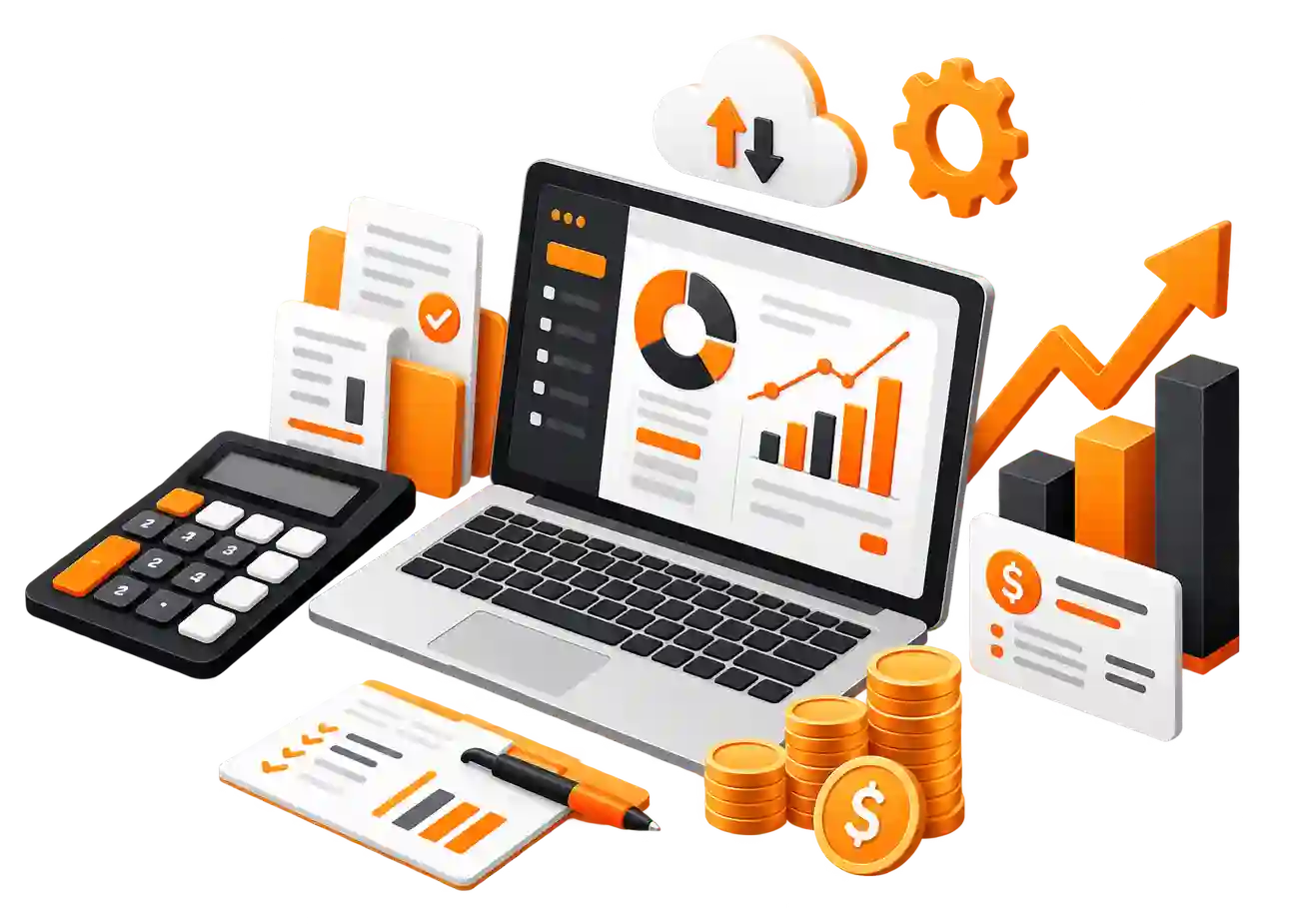







Portfolio-management teams often work across market data, investment records, reporting systems, spreadsheets, accounting platforms, research tools, and internal databases.
As complexity increases, fragmented systems can make portfolio information harder to access and operational workflows harder to control.
Common challenges include:
Information stored across separate applications can create manual reconciliation work and make it harder for teams to maintain one reliable view of portfolio activity.
Spreadsheets remain useful for analysis, but operational processes can become difficult to manage when critical calculations, approvals, reporting, and portfolio data depend on manual files.
Standard applications may not support the reporting structure, calculations, portfolio hierarchy, or client views required by a particular investment business.
Portfolio managers, analysts, administrators, advisors, clients, and operations teams may each require different information, permissions, dashboards, and workflows.
An investment platform becomes significantly more useful when it can exchange information reliably with the systems already used across the organization.
Custom investment portfolio management software gives your organization control over how investment information is collected, processed, displayed, and used.
Depending on your requirements, a platform may support portfolio monitoring, investment dashboards, performance information, reporting, workflow automation, user management, document processes, data exchange, and integrations with existing financial systems.
The goal is not to reproduce every feature available in established investment platforms.
It is to determine which workflows are important to your organization and develop the software required to support them effectively.
Create role-specific dashboards that organize investment information around the metrics and workflows your teams actually use.
Views can be planned for portfolio managers, analysts, administrators, advisors, clients, or other authorized users according to project requirements.
Build reporting and analytics workflows around the calculations, data structures, time periods, and portfolio views required by the business.
Calculation methodology and source data should be defined during discovery rather than assumed during development.
Centralize relevant portfolio information and develop reporting workflows for internal teams, management, advisors, or clients.
Reports can be designed around business requirements rather than being limited to predefined templates in packaged software.
Replace repetitive manual activities with structured workflows for tasks such as data review, approvals, portfolio updates, alerts, document handling, and reporting preparation.
Automation priorities should be based on measurable operational problems rather than adding automation for its own sake.
Different users often require different permissions.
A custom platform can be structured around defined roles, authentication requirements, data-access rules, administrative controls, and approval processes.
Portfolio software may need to exchange information with accounting systems, CRM platforms, financial-data services, internal databases, identity systems, analytics tools, document platforms, or other third-party APIs.
Integration feasibility depends on the APIs, data rights, security requirements, and technical limitations of each external system.
Our process is structured to guarantee quality, predictability, and efficiency.
Discovery and Planning
In order to begin, we need to understand your goals and requirements, as well as those of the users.
Design and Architecture
Our team creates scalable architectures for systems, secure frameworks, and user-friendly interfaces to support growth.
Development and integration
We develop software iteratively using agile methods. Stability and performance are ensured by continuous integration and testing.
Testing and QA
Our software is tested for performance, security, and functionality to make sure it meets our high standards.
If existing portfolio tools cannot support your workflows, reporting, integrations, or product strategy, a custom solution may provide the control your organization needs.
Share your current challenges, users, systems, and desired outcomes so the project can be evaluated before development begins.
A responsible estimate requires reviewing the actual project requirements.
Important scope factors include the number of user roles, portfolio types, workflows, calculations, dashboards, integrations, data sources, data migration requirements, reporting complexity, security requirements, deployment environment, testing requirements, design complexity, approval process, and post-launch support.
Replacing an entire portfolio-management ecosystem will normally require a different level of effort from adding a focused internal dashboard or workflow layer to an existing stack.
An established off-the-shelf platform may also be the better investment when it already covers most required workflows without extensive customization.
Software development company efforts have been rewarded with respect by reputable organizations and leaders in the industry. These accolades are a reflection of our dedication to quality, client success, and innovation.
Acknowledgement by prestigious organizations highlights our attention to providing high-quality, reliable solutions.




Blog
Discover helpful guides and expert insights on software development, AI solutions, web and mobile app development, DevOps, UI/UX, and modern technology. Learn how businesses can use technology to build smarter products and improve digital experiences.
If existing portfolio tools cannot support your workflows, reporting, integrations, or product strategy, a custom solution may provide the control your organization needs.
Share your current challenges, users, systems, and desired outcomes so the project can be evaluated before development begins.
Posted on GoogleTrustindex verifies that the original source of the review is Google. Posted on GoogleTrustindex verifies that the original source of the review is Google. Posted on GoogleTrustindex verifies that the original source of the review is Google. Excellent service and user-friendly experience – highly recommended!Posted on GoogleTrustindex verifies that the original source of the review is Google. Posted on GoogleTrustindex verifies that the original source of the review is Google. Posted on GoogleTrustindex verifies that the original source of the review is Google. Posted on GoogleTrustindex verifies that the original source of the review is Google.
Potentially. The first step is identifying the systems involved and reviewing their available APIs, data formats, authentication requirements, permissions, and technical restrictions. Integration scope should be confirmed before architecture and delivery estimates are finalized.
Yes, modernization or replacement can be evaluated, but a complete rebuild is not always necessary. Discovery should identify which parts of the existing environment create genuine limitations and which components should remain in place.
Yes. Custom development can support dashboards and reporting structures based on defined roles, data, calculations, workflows, and business requirements. Exact calculations and data sources must be specified and validated during the project.
There is no responsible fixed figure without scope. Cost depends on functionality, integrations, number of users and roles, data requirements, analytics, reporting, migration, architecture, security, testing, deployment, and ongoing support.
Delivery depends on project scope and dependencies. A focused workflow application and a multi-role investment platform with extensive integrations represent very different projects. A realistic schedule should follow discovery and scope review.
Security considerations should be incorporated into requirements, architecture, access controls, data handling, integrations, testing, deployment, and ongoing maintenance. Any specific regulatory or compliance obligation must be identified and validated for the organization and project.
Post-launch requirements may include maintenance, issue resolution, performance improvements, infrastructure work, integrations, security updates, and additional product development. The appropriate support model should be agreed as part of the project scope.
Tell us what you want to build. Our experts will review your requirements and provide an initial scope, timeline, and cost estimate within 24 hours.